

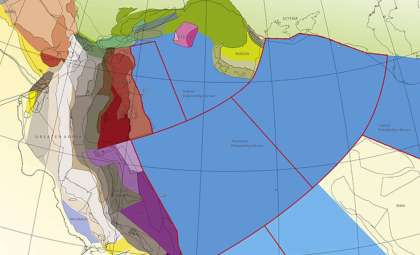
Far below the ocean's surface near Indonesia, a remarkable find is reshaping our understanding of ancient human existence in Southeast Asia. Between the islands of Java and Madura, researchers uncovered what is believed to be the region’s inaugural underwater hominin fossil site. This discovery could represent physical traces of the vanished prehistoric landmass called Sundaland, which once linked much of Southeast Asia during the Pleistocene era.
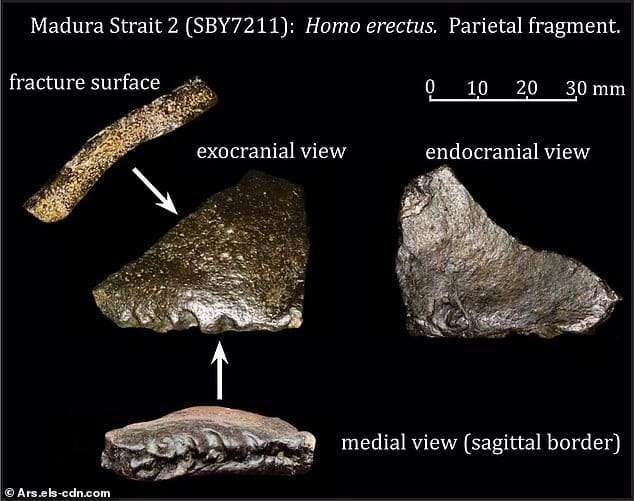
At the core of this find are two skull fragments attributed to Homo erectus, an early human predecessor. According to ScienceDirect, these ancient bones, concealed beneath sediment for over 140,000 years, surfaced during marine sand mining activities in the Madura Strait in 2011. However, it was only more recently that experts, led by archaeologist Harold Berghuis from the University of Leiden, verified their age and species.
Serendipitous Excavation Leads to Thousands of Ancient Fossils
The breakthrough happened near Surabaya, capital of East Java, where workers dredging the sea floor encountered fossil remains exceeding 6,000 vertebrate specimens. Protected by thick layers of sand and marine deposits, the site yielded an unexpected diversity of creatures including Komodo dragons, buffalo, deer, and an extinct elephant-like beast called Stegodon, which could grow taller than 13 feet.

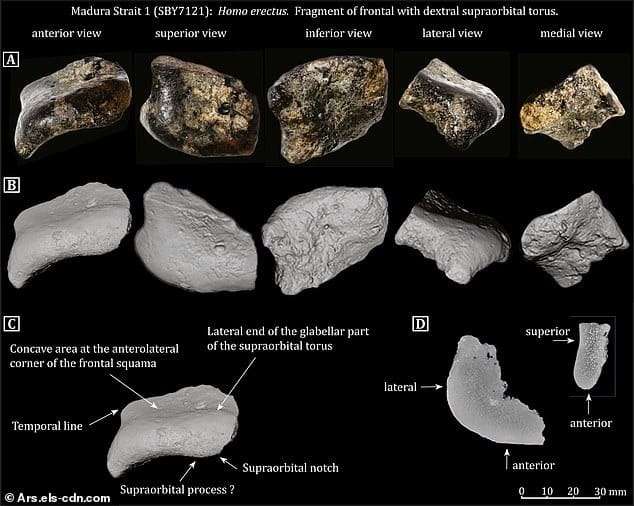
Among this trove were two human skull fragments—a frontal and a parietal bone—bearing a strong resemblance to Homo erectus fossils previously excavated at the Sambungmacan site in Java. Researchers applied Optically Stimulated Luminescence (OSL) dating, which measures the last exposure of sediment to sunlight, estimating the fossilized valley to be between 162,000 and 119,000 years old.
Traces of Life Along a Sunken Ancient River
Geological studies further disclosed the outline of a former river system, part of the ancient Solo River, believed to have run eastward across what is now submerged Sundaland. Sediment analysis indicates this waterway supported a rich fluvial habitat through the late Middle Pleistocene, inhabited by a mixture of herbivores and predators. Bones and teeth from various deer species were prevalent across the site.
This submerged landscape vanished due to rising sea levels between 14,000 and 7,000 years ago, caused by melting glaciers post-Ice Age. Scientists estimate global ocean waters rose by more than 120 meters, flooding Sundaland’s coastal plains and severing mainland Asia’s links to its surrounding islands.
Butchery Marks Reveal Skilled Hunting Practices
Close inspection of animal bones uncovered clear cut marks, indicating deliberate butchering by early hominins using tools. “This era features notable diversity in hominin morphology and increased mobility,” explained Berghuis. The evidence points to an ability to hunt and process large game with sophisticated techniques relative to their time.
Fossil remains of antelope-like species adapted to open grasslands support the hypothesis that this submerged region more closely resembled a savanna rather than dense forest. The abundance of herbivores suggests sufficient resources for both wildlife and early humans.
Broadening the Known Habitat of Homo erectus
The fossilized skull fragments from the Madura Strait broaden the geographical range of Homo erectus in Southeast Asia. Renowned for their upright stature, long legs, and relatively shorter arms, these hominins displayed body proportions approaching those of modern humans. Finding them in Sundaland enriches our understanding of early human migration and adaptability amid fluctuating landforms.
What started as an incidental sand mining discovery has evolved into a transformative chapter for tracing the ancient human story in Asia. Integrating archaeological, geological, and paleoenvironmental data, scientists are revealing a submerged epoch of human evolution concealed beneath ocean depths for millennia.
- Categories:
- News








0 comments
Sign in to Comment