
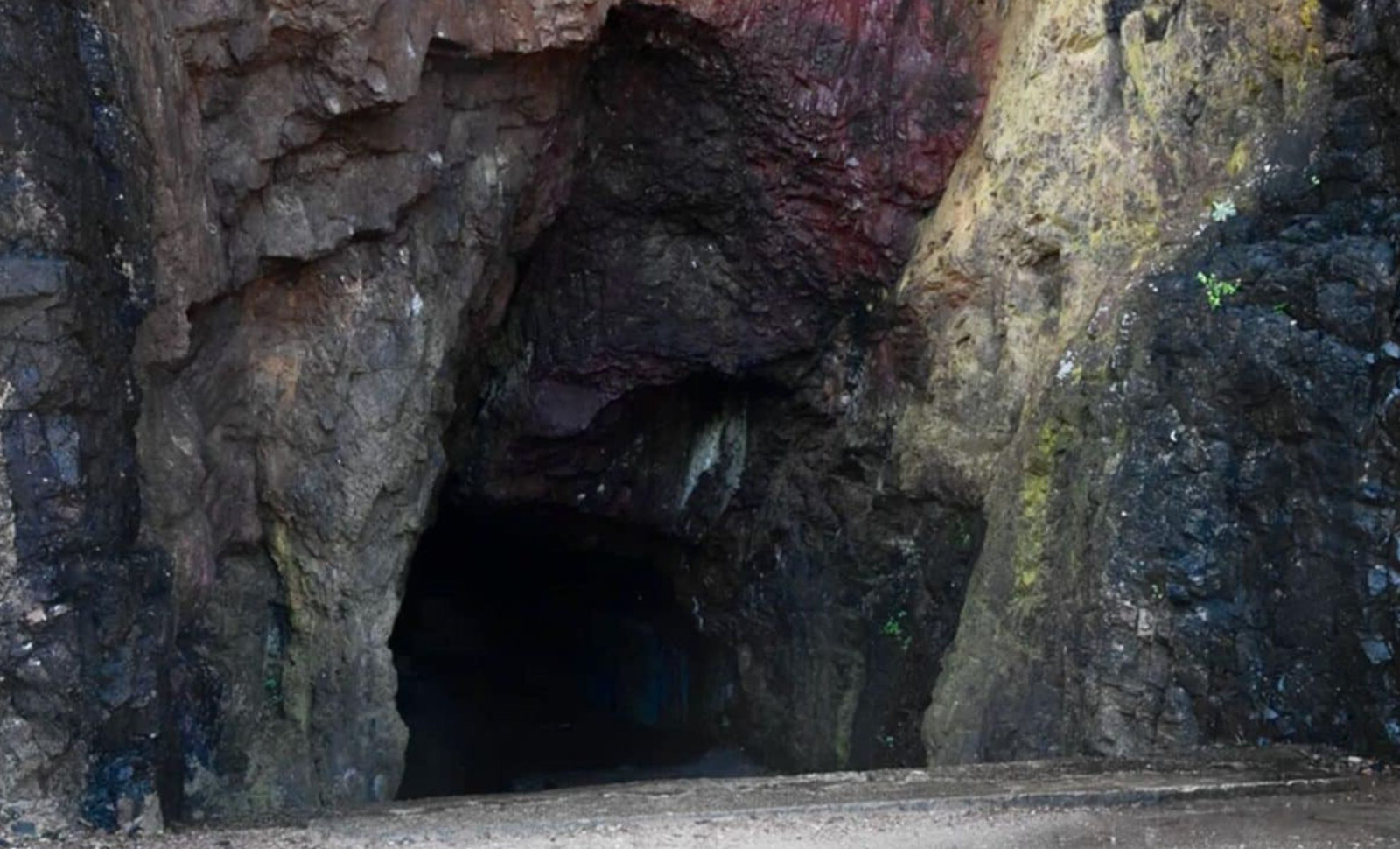
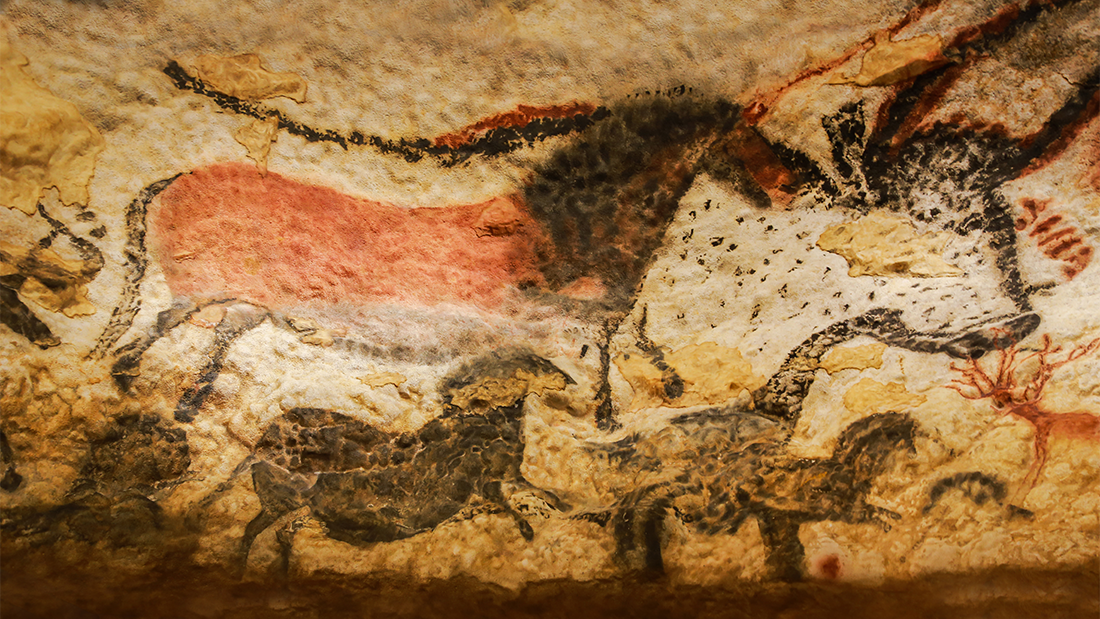
On September 12, 1940, an 18-year-old apprentice mechanic named Marcel Ravidat trailed his dog, Robot, into a small opening near a fallen tree outside Montignac, located in southwestern France. A few days later, joined by friends Jacques Marsal, Georges Agnel, and Simon Coencas, they expanded the entrance and ventured inside a cave adorned with ancient paintings of aurochs, deer, horses, ibex, and wild cats.
The group had uncovered the Lascaux cave. According to the French Ministry of Culture’s records, Ravidat initially explored the hole alone but lacked the tools to enter fully. Upon returning with the others, he carefully descended a narrow vertical shaft, landed on a debris cone, and slid to the cave’s floor.
Holding a makeshift lamp, they followed a nearly 30-meter gallery and encountered the first artworks in what is today called the Axial Gallery. After inspecting the entire cave, they paused before a dark shaft leading deeper underground. The next day, armed with a rope, Ravidat lowered himself eight meters down and discovered a striking scene depicting a man confronting a bison.

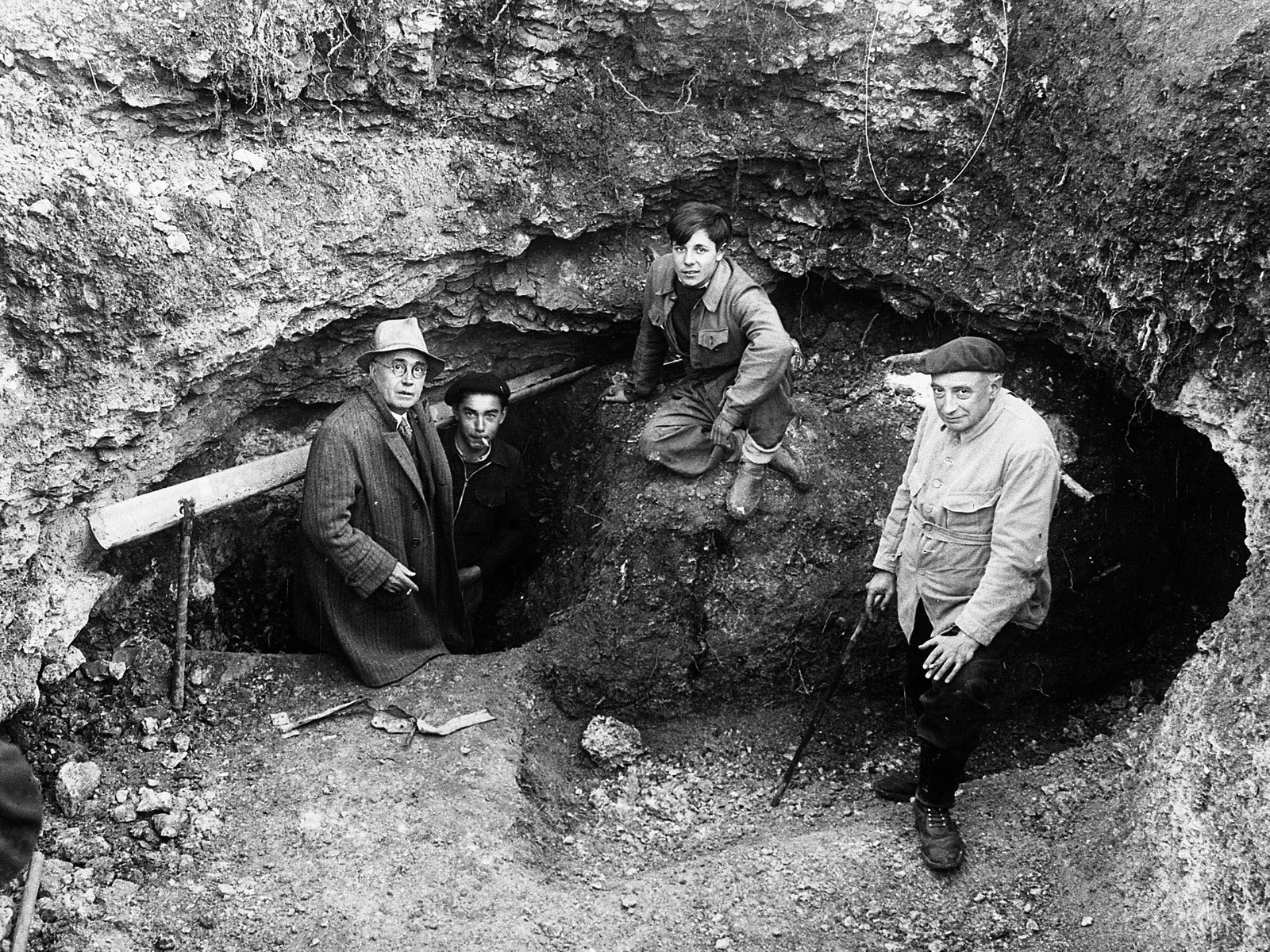
They informed their teacher, Léon Laval, on September 18. Upon visiting, Laval recognized these as prehistoric images. Two days later, renowned French archaeologist Henri Breuil, who was sheltering in the region during the war, examined the site and confirmed its archaeological importance.
The cave comprises roughly 2,000 painted images and 6,000 engraved figures spanning nine chambers, including the Hall of the Bulls, The Nave, and The Shaft. Some paintings reach over six feet in length and capture animals in vivid motion. Experts attribute the artwork to the Magdalenian culture, dating it between 17,000 and 19,000 years ago. The artists utilized pigments such as red ochre, hematite, charcoal, and manganese oxide. Evidence hints they constructed scaffolds to reach high ceilings and worked using firelight or oil lamps.
Sealed off from the world for 17 millennia, the cave’s fragile environment was nearly compromised within twenty years of its discovery.
The Impact of Thousands of Daily Visitors on a Timeless Cave
After renovations delayed by World War II, Lascaux opened to the public in 1948. At its busiest, around 1,200 people entered each day. This influx altered the cave’s delicate atmosphere by introducing carbon dioxide, moisture, and temperature changes that had not occurred since the last Ice Age. Artificial lighting also caused irreversible damage to the pigments.
By 1963, green algae began to spread across the walls, prompting the French government to close the site.
However, closure did not prevent further harm. In 2001, maintenance work on the air conditioning accidentally introduced Fusarium fungus. According to a 2003 ABC Science report, the fungus spread across surfaces yet had not affected the artwork at that point. Specialists applied fungicides and later used Polymexin antibiotics to control associated bacteria. The site’s biological balance remains delicate.
The original cave is now permanently closed to the public, with access reserved for conservation experts and selected researchers.
Experiencing Lascaux Today: Replicas and Digital Tours
French authorities quickly developed alternatives for public viewing. In 1983, four years after Lascaux was named a UNESCO World Heritage site, a partial replica including the Great Hall of the Bulls and the Painted Gallery was displayed at Paris’s Grand Palais before relocating near the original cave. Known as Lascaux II, these reproductions employed the same techniques and natural materials as the original paintings.
Lascaux III, a touring exhibition sponsored by the Musée d’Archéologie Nationale, has showcased replicas of The Nave and The Shaft internationally since 2012.
Opened in 2016, the most advanced replica, Lascaux IV, located at the Centre International de l’Art Pariétal, combines high-resolution 3D models with spatial sound to faithfully recreate the cave’s sensory experience. Designer Dinah Casson remarked, “You see this, or you see nothing.”
About a decade ago, the French Ministry of Culture launched a digital tour enabling virtual exploration of all nine chambers via a three-minute 3D film. This platform gained popularity during the COVID-19 pandemic.
Why Were These Animals Painted Deep Underground?
The motivations behind the cave’s artwork remain debated. Some paintings are in remote areas requiring artificial light and constructed pathways, suggesting they were made for ritual or ceremonial purposes.
Art historian Frances Fowle explained in an article for The Conversation that the layering of images and their secluded placement may indicate symbolic meaning in the act of creation. Some scenes, like the “birdman”—an ithyphallic figure beside a gutted bison with a bird perched on a vertical staff—are interpreted as shamanic or mythical, though some scholars urge caution when applying modern interpretations to prehistoric art.
Others theorize the images were forms of hunting magic, intending to grant power over depicted animals, or served as territorial markers or narrative storytelling about prehistoric life.
With no written records, all interpretations remain conjectural.
A Delicate Legacy Preserved for Future Generations
Designated a UNESCO World Heritage site in 1979, the Lascaux cave complex remains off-limits indefinitely according to the French Ministry of Culture. Conservation staff vigilantly monitor the fragile ecosystem still recovering from the 2001 fungal outbreak.
In 2024, Lascaux IV welcomed approximately 300,000 visitors, according to local tourism data. The Centre International de l’Art Pariétal plans to enhance its digital exhibition in late 2026 with higher-definition scans of the Axial Gallery.
- Categories:
- News




0 comments
Sign in to Comment