
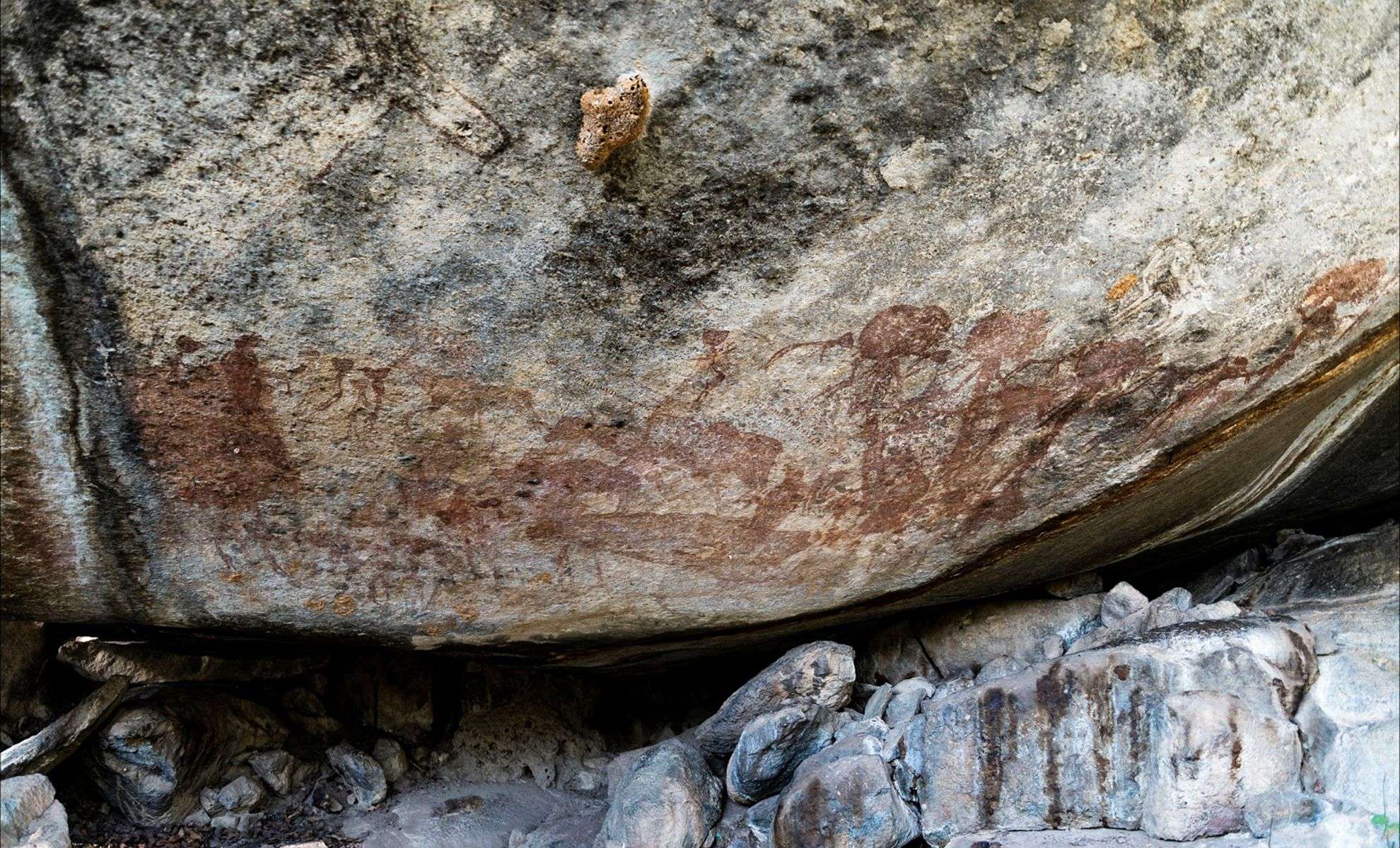
In a remote region of central Tanzania, a team of archaeologists has uncovered a fascinating set of ancient rock paintings depicting three unusual humanoid forms characterized by disproportionately large heads. Discovered at the Amak’hee 4 site in 2018, recent studies are now shedding new light on this enigmatic artwork.
Unusual Figures Amidst Typical Wildlife Imagery
The investigation, spearheaded by Maciej Grzelczyk from Poland’s Jagiellonian University, was published in the journal Antiquity, produced by Cambridge University Press. While the exact age of the paintings remains undetermined, the primary intrigue stems from their distinctive visual style.
Amak’hee 4 is part of a larger network of 52 rock shelters, many already damaged when found. However, this particular shelter stands out. Its walls illustrate typical fauna such as giraffes, buffalo, elands, and wildebeest, all consistent with regional rock art traditions. Yet, centrally positioned amidst these animal depictions are three strikingly odd figures.

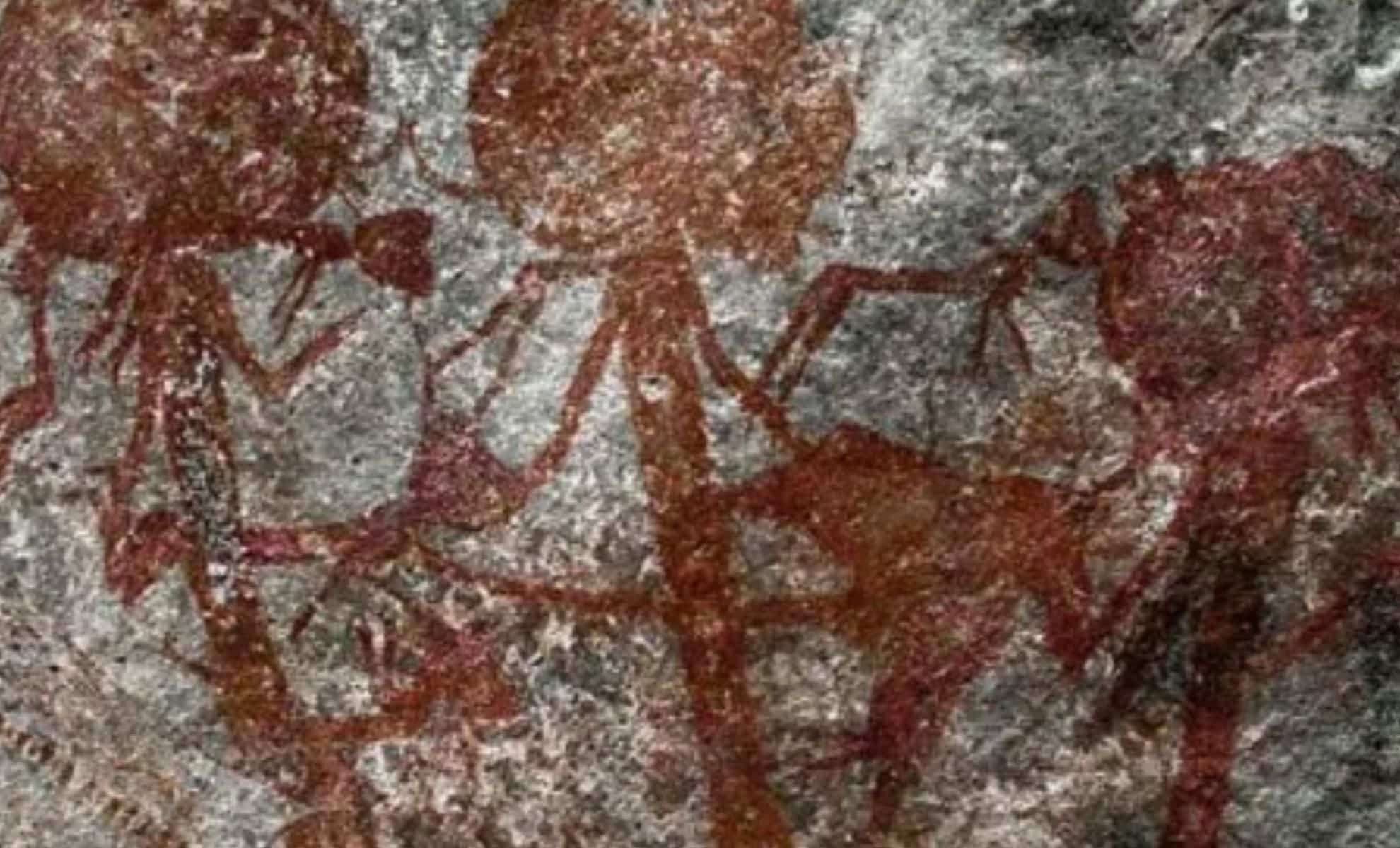
These figures stand upright with elongated bodies and marked oversized heads. According to Grzelczyk, these heads resemble “stylised buffalo heads,” particularly in their horn shapes that curve outward and ears slant downward. Nonetheless, these forms have no clear parallels within local cultural narratives, deepening the mystery around them.
Recurring Motif at Multiple Locations
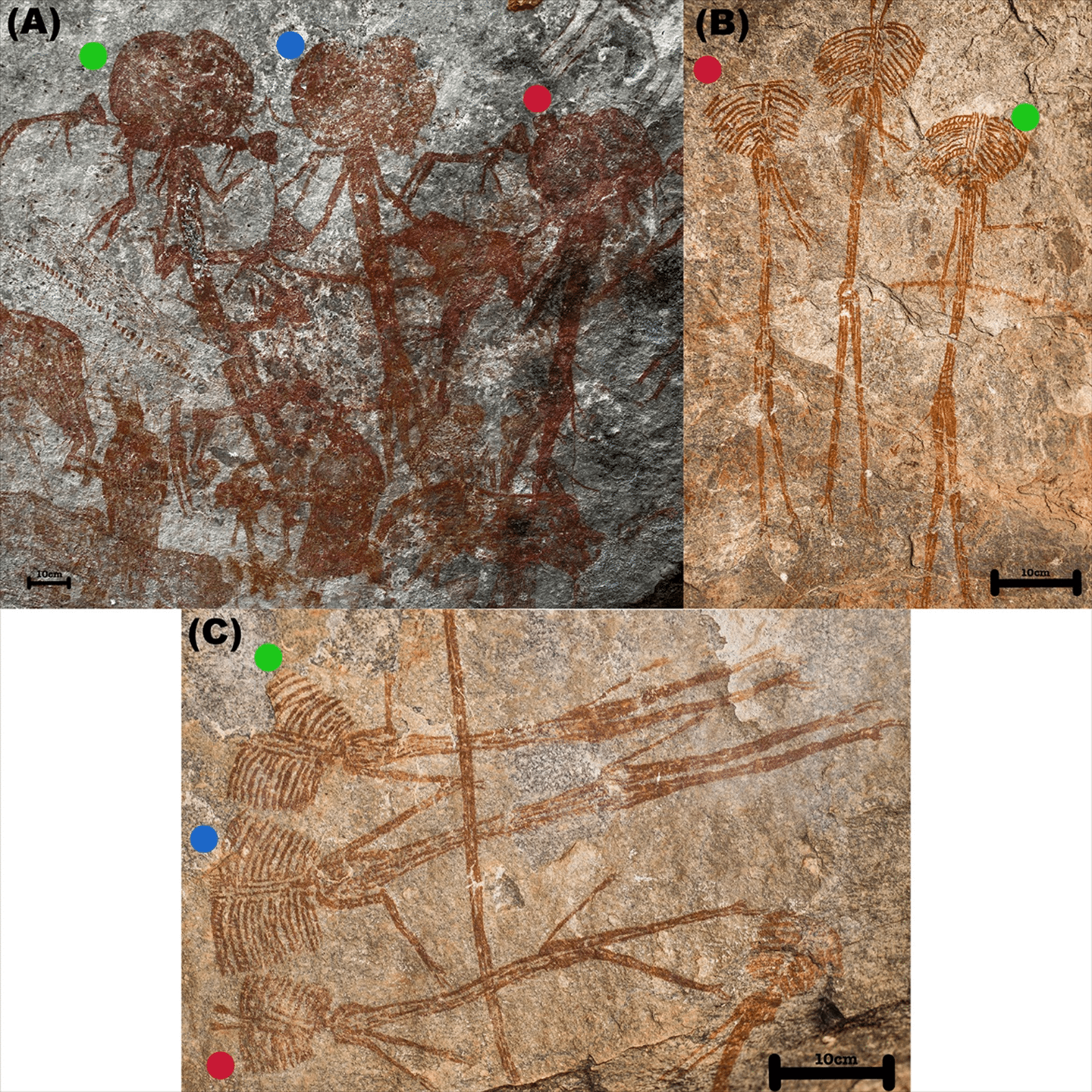
Interestingly, these triads of figures are not unique to Amak’hee 4. Comparable designs have been spotted at two additional sites in central Tanzania, including one near Kolo. Each set displays a similar pattern: three humanoid figures aligned side-by-side with a horizontal band crossing their bodies. Their hands and arms also share consistent positioning, suggesting this was a deliberate motif rather than chance.
That said, some distinctions exist. The Amak’hee 4 trio is notably larger and occupies a central focal point in the artwork, implying that other images might have been painted around them. In contrast, at other locations, the figures are more dispersed and don’t appear integrated into a comprehensive scene.
Interpreting the Unfamiliar Imagery
The figures defy straightforward explanation, especially since they don’t align with established Sandawe cultural symbols, even though the Sandawe people are thought to be descendants of the area's original inhabitants. Buffalo horns hold ritual importance in Sandawe culture, but the idea of buffalo-headed humanoids has no known precedent.
This has sparked various speculative theories, including fringe ideas about ancient extraterrestrials. Nevertheless, archaeologists are concentrating on deciphering possible symbolic meanings. Could these figures represent spiritual entities, mythological characters, or ceremonial icons that have been forgotten over generations? The truth remains elusive for now.
Dating Challenges and Key Observations
Determining when the paintings were created has proven difficult. The absence of domesticated animals implies they predate the advent of animal herding in the region, suggesting an age of several hundred years or more. The heavy erosion of the red pigment used supports this ancient origin.
Almost the entire mural is rendered in red pigment, except for five white figures, a detail whose significance remains unknown. What is clear is that the creators invested significant effort, especially in highlighting the central group of three figures.
The research team continues to document the remaining shelters and is comparing these findings with documented cultural traditions to better understand their origins.
- Categories:
- News






0 comments
Sign in to Comment