
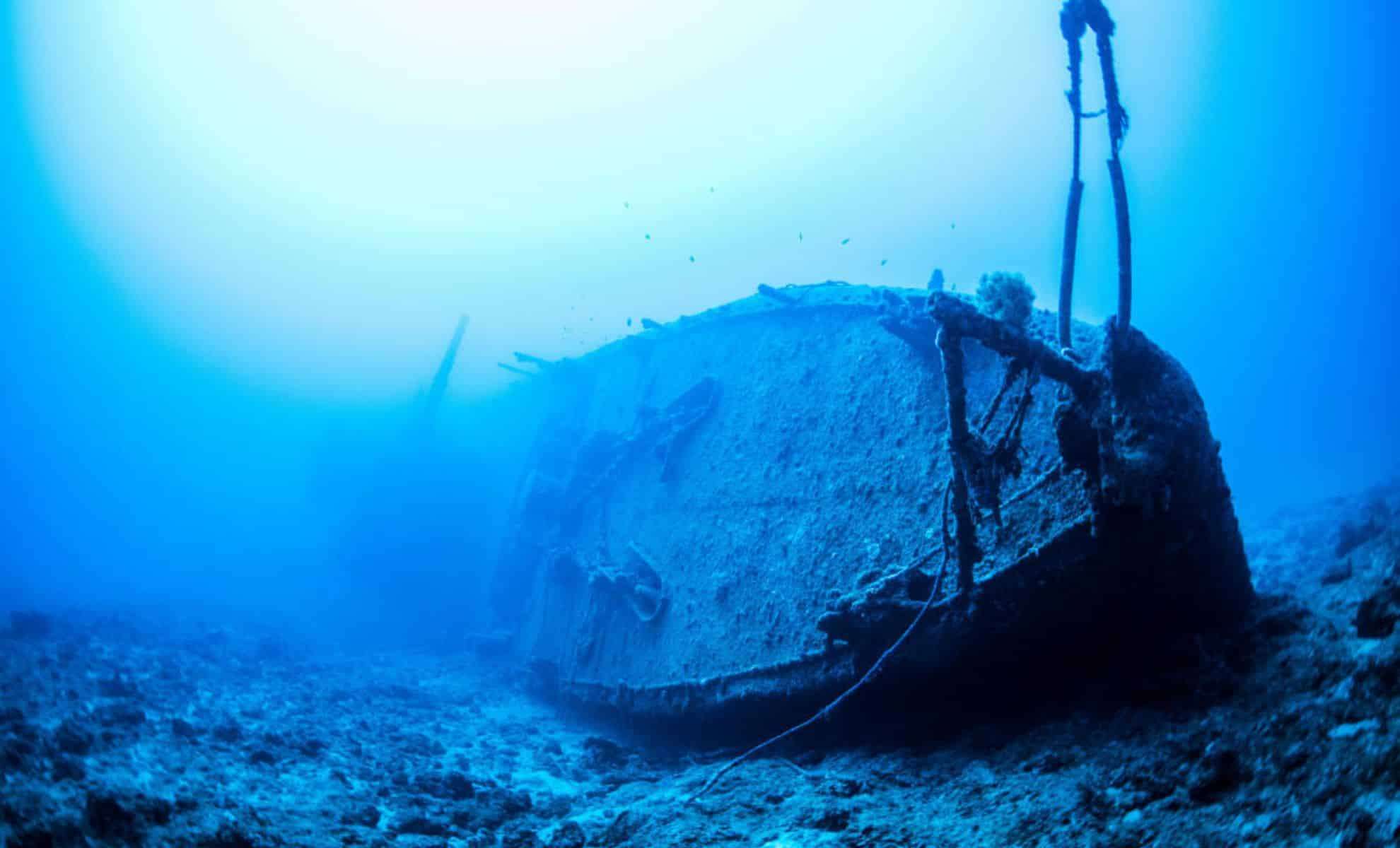
A maritime archaeologist has uncovered roughly 250 shipwrecks laden with treasures scattered across the shores of mainland Portugal, the Azores, and Madeira, potentially concealing vast quantities of gold and silver below the ocean floor. As reported by the Herald News, Alexandre Monteiro, a scholar affiliated with the History, Territories and Communities Institute at Nova University of Lisbon, has compiled this information after a quarter-century of diving expeditions and archival research. His findings catalog over 8,600 shipwrecks lost in Portuguese waters dating back to the 1500s.
A Groundbreaking Shipwreck Registry
Monteiro’s extensive database includes approximately 7,500 wrecks near Portugal’s mainland, 1,000 around the Azores, and 120 close to Madeira. These ships are documented primarily after the year 1500, when maritime record-keeping improved. His work now offers the most detailed overview of Portugal's submerged historical fleets and their potential riches.
The starting point for Monteiro’s research was a specific quest. “I aimed to locate a particular vessel,” he said, referring to the Nossa Senhora da Luz, a 1615 captain’s ship lost by Faial in the Azores. “I combed through archives for four years, and during my very first dive after that, I discovered the shipwreck site.”

Previously, local authorities had only vague ideas about what lay beneath regional waters. “When treasure hunters approached the Azores Regional Government, our biggest challenge was the absence of concrete information on how many ships existed or their locations,” Monteiro explained. “We had suspicions, but no real data.”
His efforts have since transformed this lack of knowledge into a vital strategic asset. Monteiro says the shipwreck database not only preserves historical heritage but also serves as a tool for safeguarding culture against commercial exploitation threats.
Massive Riches Lying Beneath the Sea
One of the most remarkable revelations is the identification of several vessels verified to be carrying valuable treasure. Among them is the Nossa Senhora do Rosário, a Spanish ship that sank near Tróia in 1589. “Off the coast of Tróia (Setúbal region), there’s that Spanish ship named Nossa Senhora do Rosário from 1589,” Monteiro stated. “I have researched it extensively, even know the captain’s mother’s name, and official records note some 22 tons of gold and silver onboard.”
These findings rely on solid historical evidence and thorough archival vetting, not mere tales. Armed with such precise insights, Monteiro cautions that these relics face significant risks from unauthorized salvage operations and infrastructure projects.
Protecting Portugal’s Underwater Heritage
Despite Monteiro’s prolific research, he notes the absence of formal protection policies or unified governmental initiatives following his releases. Numerous wrecks are located within or near zones slated for port expansion or other developments, heightening the threat of accidental exposure and potential plundering.
He highlights that most shipwrecks remain obscured beneath layers of sand and thus presently shielded but remain vulnerable to excavation or construction activities. Without a clear preservation strategy, any unplanned find could trigger complex legal and preservation challenges.
Monteiro emphasizes that even brief archaeological campaigns could swiftly yield major discoveries. “If given a month, I’m confident I would locate the ship,” he said. The real question is not about the possibility of finding these wrecks, but if anyone is prepared to defend them once found.
- Categories:
- News










0 comments
Sign in to Comment