

NASA's mission to land astronauts near the Moon’s south pole is being reconsidered following comments from Artemis II astronaut Victor Glover, who proposed starting with landings closer to the lunar equator. This viewpoint came up during a session at the Ames Research Center, where Glover emphasized that a gradual approach could enhance crew safety and provide crucial experience before tackling the harsh polar environment.
Questioning the Initial Choice of the Lunar South Pole
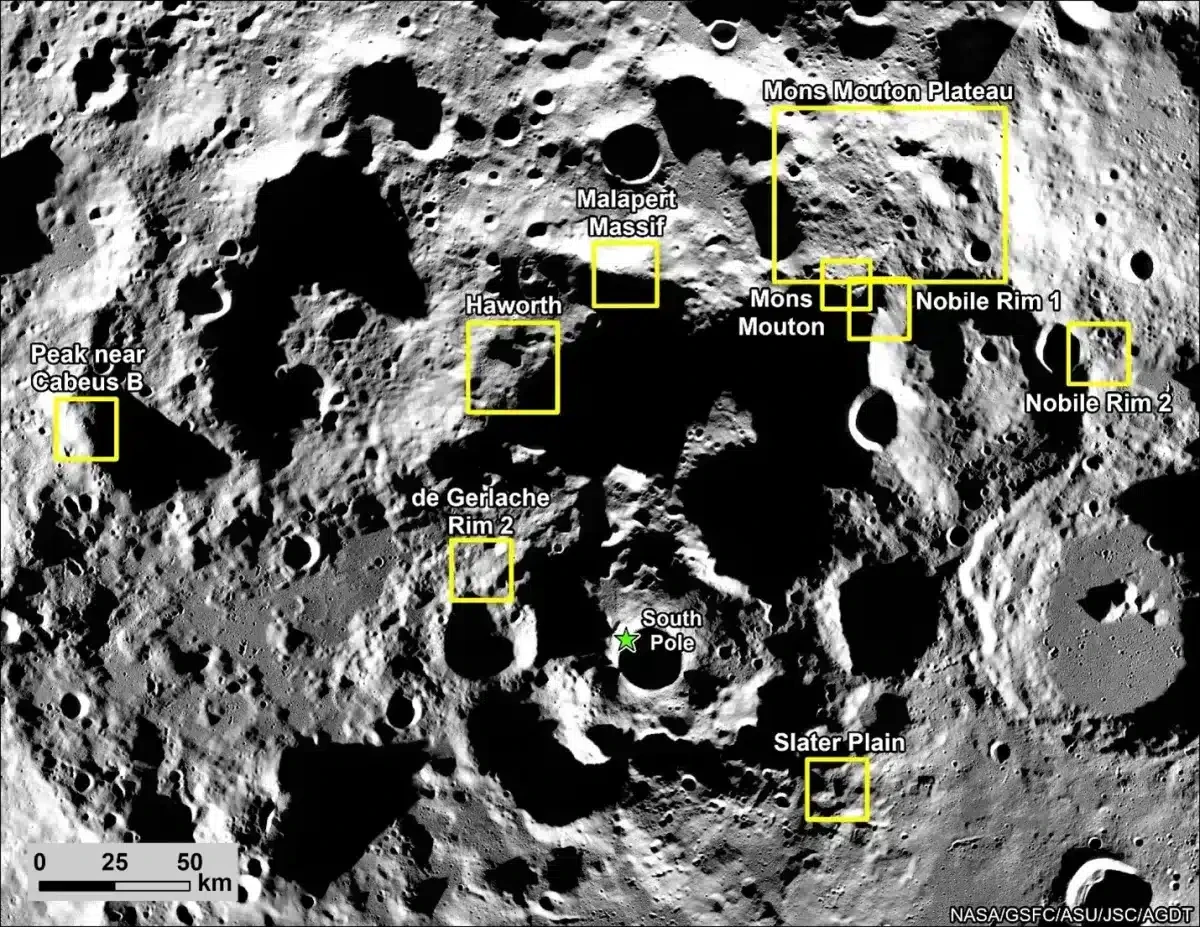
NASA’s Artemis initiative has prioritized the Moon’s south pole due to its potential deposits of water ice in permanently shadowed craters. These ice reserves are vital because they could supply drinking water, radiation shielding, and fuel for rockets. By establishing a presence there, NASA aims to lay the groundwork for future Mars missions.
At the NASA Exploration Science Forum held on July 21 at the Ames Research Center, Glover, the pilot of Artemis II, presented a contrasting opinion on the agency’s lunar landing priorities. He questioned whether landing at the south pole should be the first step for returning astronauts.

“I think we need to be realistic and work our way to the south pole, and maybe not try to go there first,” Glover said.
Glover’s perspective is grounded in practical considerations. A landing near the lunar equator would provide astronauts with a more familiar setting, better communication links, and more straightforward contingency plans. He advocates that initial Artemis surface missions focus on mission safety and dependability as NASA develops capabilities for the tougher polar expeditions.
Equatorial Landings Enable Quicker Emergency Responses
A key worry Glover expressed involves the challenges of performing emergency evacuations from the lunar south pole. NASA’s initial mission design uses a near-rectilinear halo orbit (NRHO) that connects to the planned Gateway orbital platform, enabling crew transfers before descent.
However, the timing tied to NRHO complicates departures. Because of its orbital mechanics, opportunities to leave the lunar surface and rendezvous with orbiting spacecraft occur sporadically. In medical emergencies, waiting several days to lift off may increase risk.
“You’re stuck for a week,” Glover said. “That’s a big deal to me, and I don’t like that plan … The equator gives me opportunity to save that person.”
He suggests that selecting a landing site nearer to the equator could provide more flexible launch windows and emergency evacuation options. Glover believes that after gaining sufficient operational knowledge from these more accessible missions, NASA can then proceed toward the south pole.
“If you want to go fast, go familiar … If we want to land soon, familiar, daylight, equator,” Glover argued.
This outlook mirrors a broader debate in the space sector: whether to achieve scientific milestones quickly in the most valuable locations or to build operational safety with progressive mission complexity.
New Artemis IV Mission Concepts from NASA and SpaceX
As discussions about Artemis IV continue, NASA and its commercial collaborators are refining mission designs. Initially, lunar operations centered on the Gateway station and NRHO, but evolving priorities now emphasize surface activities.
SpaceX, NASA’s transportation partner, has explored alternative mission architectures involving its Starship lunar lander. One such idea bypasses some NRHO constraints by docking Starship with the Orion spacecraft earlier in the mission.
At a June Artemis III event, Jessica Jensen, SpaceX’s VP of Customer Operations and Integration, described this revamped concept developed jointly with NASA.
“We have an updated plan with NASA that includes docking Starship with Orion in Earth orbit instead of NRHO, and then we use Starship to actually do the translunar injection with Orion attached,” Jensen explained, highlighting benefits similar to those raised by Glover at Ames.
This tactic might streamline mission procedures by reducing the fuel needed for complex orbital maneuvers and offering a more straightforward path to the Moon. It also helps minimize delays as NASA advances crewed lunar exploration.
“The crew can also abort off the lunar surface nearly any time, versus waiting up to days from NRHO,” Jensen added. “In addition to improving crew safety, these new Artemis IV orbits also significantly lower the amount of propellant Starship needs to aggregate in space, since we now just have a more direct route to the moon, and this lower schedule risk overall.”
Balancing Risks, Rewards, and Resources in Lunar Exploration
The ongoing Artemis IV deliberations underscore the challenge NASA faces in reconciling rapid progress, astronaut safety, and lunar resource utilization. Landing near the south pole offers proximity to valuable materials for sustained exploration, but equatorial sites present a simpler environment for initial missions.
This decision unfolds amid heightened international activity. China is advancing its robotic lunar exploration with landings and sample returns, and has announced ambitions for a crewed lunar mission before 2030, adding urgency for NASA.
NASA must weigh scientific objectives, geopolitical dynamics, and astronaut well-being. A direct south pole mission could showcase early resource exploitation, while a stepwise strategy might reduce operational hazards during humanity’s return to the Moon.
As preparations for Artemis IV progress, the agency’s chosen landing approach will reflect its balance between ambitious goals and pragmatic mission safety.
- Categories:
- Nasa










0 comments
Sign in to Comment