
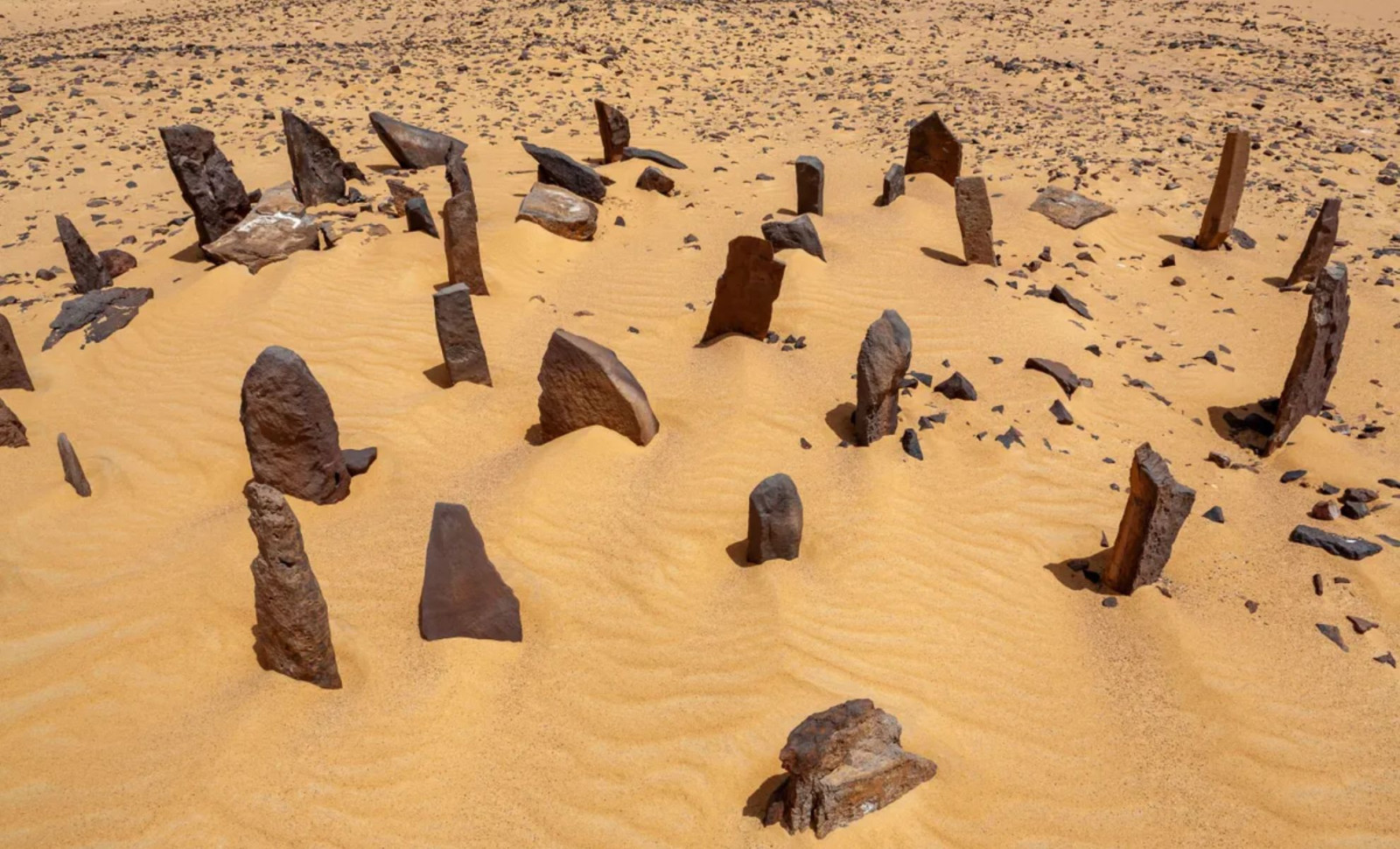
More than seven millennia ago, inhabitants of what is now Egypt’s western desert constructed an enigmatic stone circle that may have served as a tool for celestial observation and seasonal tracking. Nabta Playa stood as a prehistoric link between humans, stars, and the desert’s cyclical changes long before the construction of the pyramids.
Although the Sahara is currently an immense expanse of sand, in ancient times its environment was drastically different. During the Neolithic era, this area boasted grasslands and lakes, allowing early communities to thrive, domesticate animals, and innovate their ways of life.
Archaeologists Fred Wendorf and Romuald Schild detailed in their 2004 ArcheoNil publication that human settlements existed in Egypt’s western desert from the early Holocene until roughly 3000 BCE, when increasing desertification forced their migration.

Revealing an Ancient Desert Civilization
Investigations into Nabta Playa began in the 1960s under the leadership of Fred Wendorf. Searching for Egypt’s early past, his team uncovered signs of prehistoric habitation in these desert landscapes.
Among the findings were stone implements, potsherds, beads, decorated eggshell fragments, animal remains, and charred plant residues. Evidence of previous hearths indicated that the site was used for cooking and daily living activities.
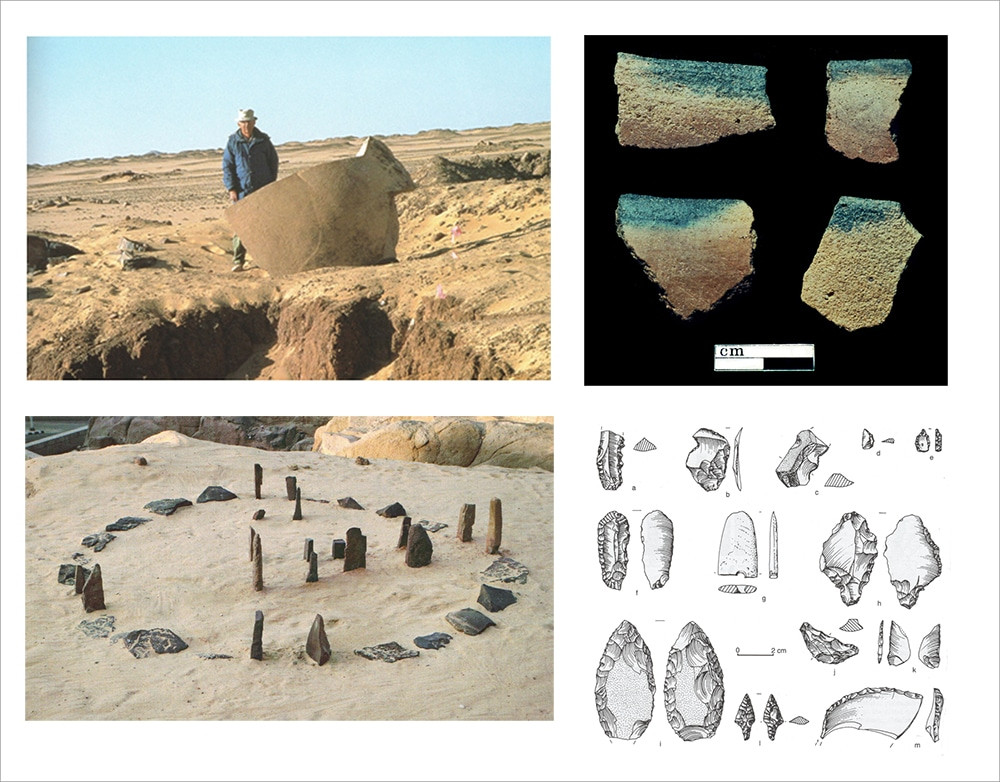
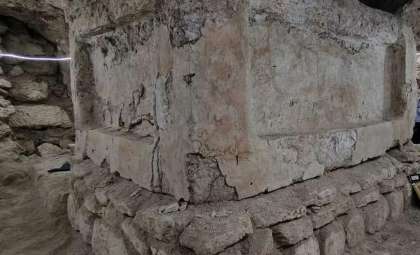
In 1973, guided by a Bedouin, Wendorf reached a dry lakebed located about 60 miles from the Nile, where several sizable stones were arranged unusually. Initially believed to be natural, these stones were later confirmed by researchers to have been deliberately placed, as the ancient lake’s water would have eroded natural rock formations over time.
Stones Aligned With the Night Sky
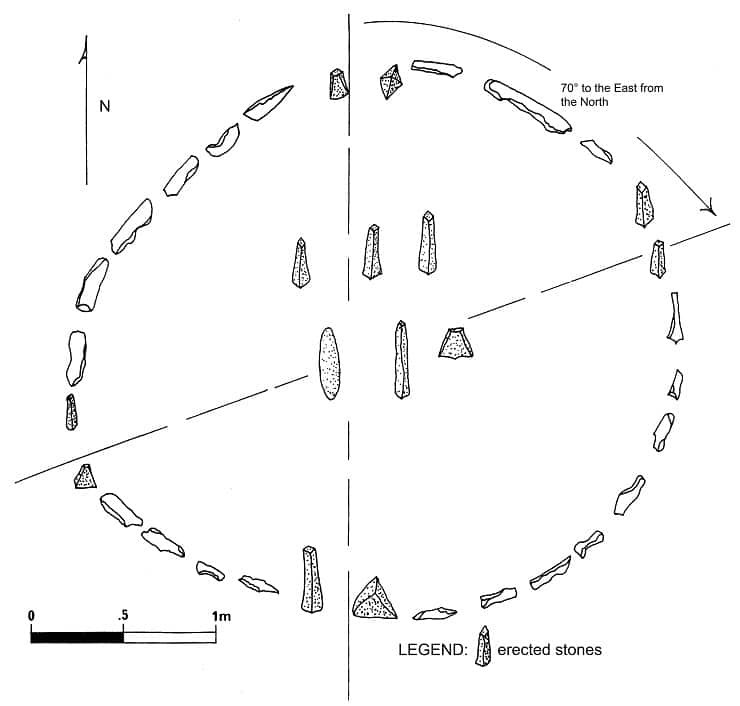
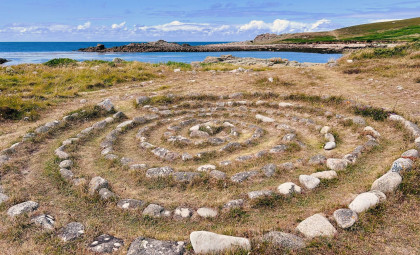
Excavations in the early 1990s led by Wendorf uncovered a stone circle designed with astronomical significance. The stones were positioned to align with particular horizon points, linking the architectural structure to celestial phenomena.
J. McKim Malville, an archaeoastronomer, suggested that this monument was oriented toward prominent stars and key solar calendar events. This ancient site is often referred to as the “Stonehenge of the Sahara” because of its proposed function as an early astronomical observatory.
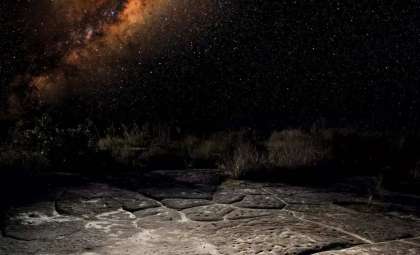
The arrangement corresponds with stars such as Sirius, Arcturus, the Alpha Centauri system, and the Orion’s Belt. Although star positions have shifted slightly over millennia, the stones’ placement matches the celestial positions from the monument’s era.
Moreover, the circle likely assisted early peoples in recognizing seasonal shifts. Reflections of the stars on the ancient lake’s surface provided a method to monitor the night sky and anticipate rainfall periods vital for survival.
A Culture Defined by Cattle and Climate
The creators of Nabta Playa belonged to the Ru’at El Baquar, a nomadic tribe that integrated cattle deeply into their social and spiritual practices. Archaeological excavations revealed burial sites featuring large stones resembling cows.
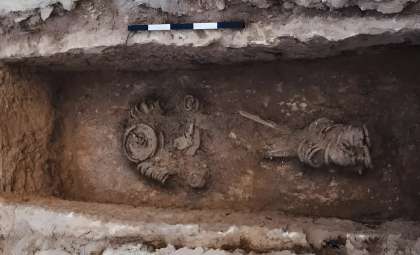
One burial contained a complete cow skeleton, implying it was sacrificed in a ritualistic context.
“During much of that time […] people in the desert were domesticating cattle, making fine, decorated pottery and learning how to live in the desert year-round,” stated Wendorf and archaeologist Romuald Schild.
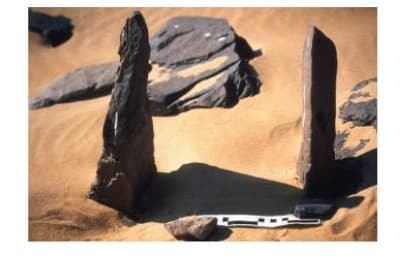
Despite ongoing research including Malville’s 2015 study in the Handbook of Archaeoastronomy and Ethnoastronomy, the full significance of the buried stones and their astronomical ties remain partly elusive.
- Categories:
- Science







0 comments
Sign in to Comment