
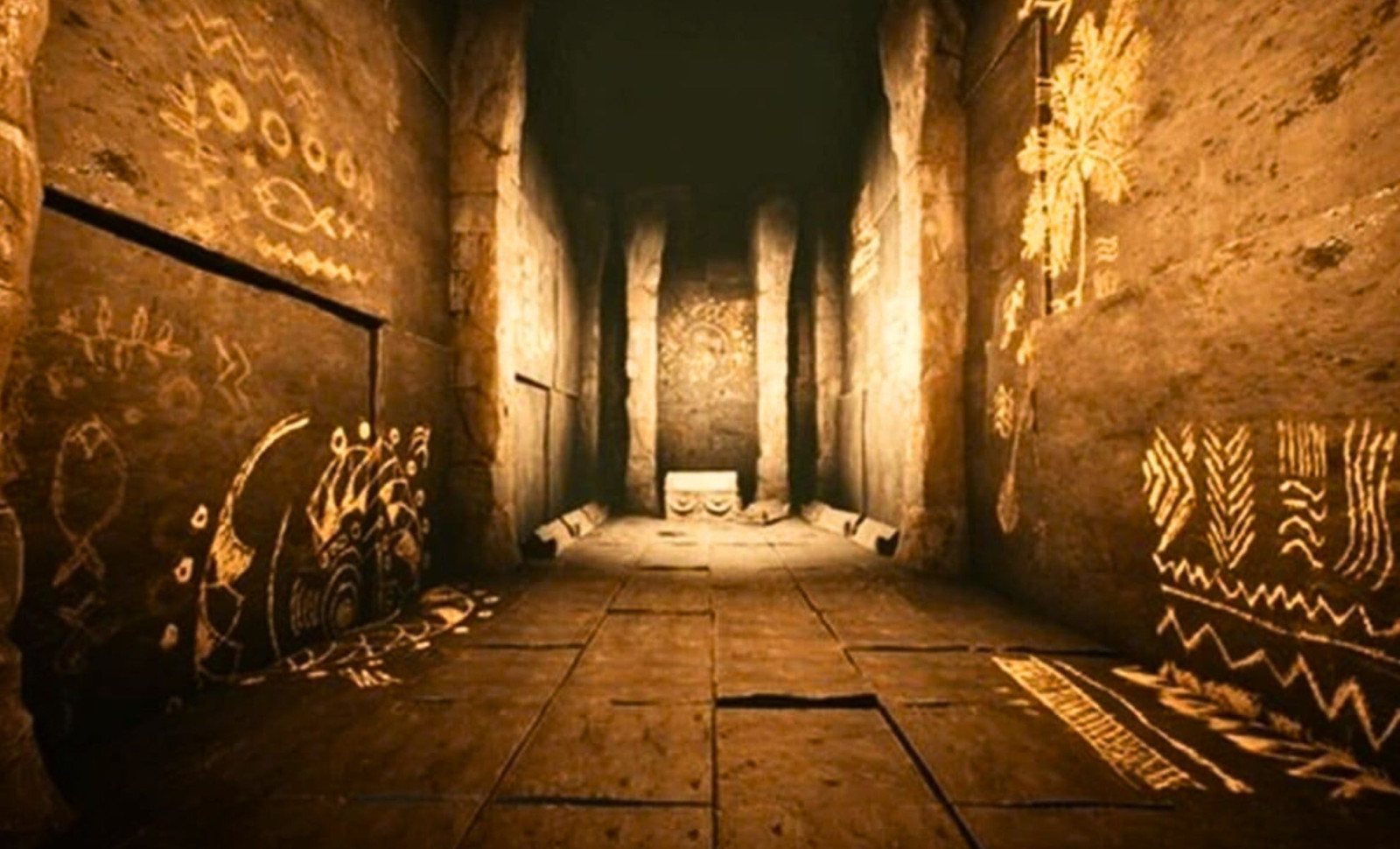
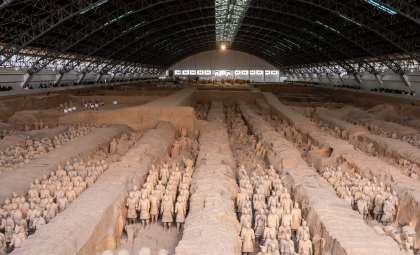
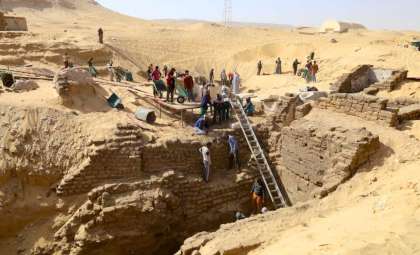
Hidden beneath a pyramid-shaped mound in Lintong, roughly 30 kilometers northeast of Xi’an, is an ancient burial site that has remained undisturbed for over two thousand years. Ancient historian Sima Qian described Emperor Qin Shi Huang's subterranean palace as containing vast rivers and lakes of liquid mercury, mapped out as a detailed underground replica of China. For centuries, these descriptions hovered between historical fact and myth.
A new study featured in Scientific Reports now presents the first atmospheric data confirming mercury is indeed leaking from the site. Led by physicist Sune Svanberg from Lund University and South China Normal University, researchers detected elevated mercury vapor levels in the air directly above the Qin Shi Huang Mausoleum, coinciding with spots previously identified as containing increased mercury concentrations in the soil.
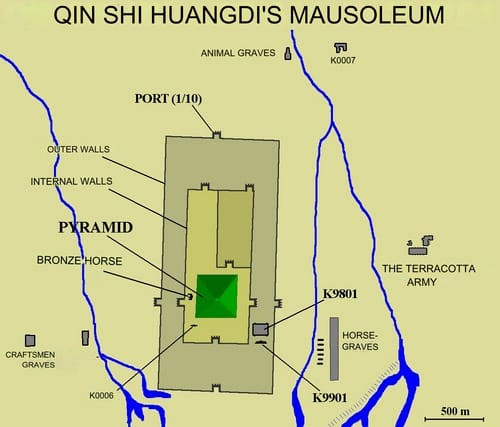
Construction of the tomb began in 246 BC and took 38 years, employing an estimated 700,000 laborers. Geophysical imaging estimates the underground complex spans approximately 140 by 110 by 30 meters, with the main coffin chamber positioned about 30 meters below ground. Archaeologists agree the tomb has never been disturbed. Historical accounts also mention Qin’s ingestion of mercury to prolong life; ironically, the study highlights this likely caused his mercury poisoning.

Laser Technology Pinpoints Invisible Mercury Emissions
The research employed differential absorption lidar (DIAL), a laser-based detection method that sends ultraviolet light pulses targeting mercury’s absorption wavelength and compares returns to a nearby reference wavelength that mercury doesn’t absorb. Differences in returned signals identify mercury presence in the atmosphere at 30-meter intervals, providing remote, real-time gas-phase measurements unlike traditional soil sampling.
This mobile system, developed by South China Normal University and truck-mounted, emitted laser pulses near the mercury absorption peak at 254 nanometers, stabilized by a closed-loop circuit ensuring precision. The detection range was about 700 meters, limited by Xi’an’s hazy summer air, which reduced the laser’s effective distance.

The survey took place from July 24 to August 12, 2016, with measurements mostly at night to minimize interference from ambient light. Temperatures regularly hit 35°C, conditions that help increase mercury vapor pressure and maximize emission detection. Wind speed and direction were monitored continuously from the mound’s peak and sampling spots. Establishing a baseline outside the mound revealed typical background mercury levels between 5 and 10 ng/m³.
Mercury Hotspots Aligning With Soil Anomalies
At two tested sites, local mercury concentrations soared above background levels. The peak reading reached 27 ng/m³ about 650 meters from the first site, directly above the mound’s western slope. Averaged scan maps consistently showed persistently elevated mercury in this region, with another hotspot on the southern base detected from the second site.
These high atmospheric mercury areas matched prior independent soil studies identifying the mound’s western and southern faces as zones with heightened mercury content—soil concentrations up to 2,204 parts per billion have been documented. The DIAL approach therefore independently corroborated earlier geographic distributions found through ground sampling.
No noticeable mercury peaks emerged at the third location, likely due to higher wind speeds averaging 5.4 meters per second, which dispersed the vapor below detection limits. This finding aligns with the other results rather than contradicting them.
The researchers conclude that the detected mercury vapor likely escapes via fissures or structural shifts that have developed in the tomb over centuries. Given mercury vaporizes readily at room temperature, any large sealed reservoir underground would result in gradual continuous gas release if containment integrity diminished over this timescale.
The paper confirms that this leak does not significantly raise mercury contamination in surrounding areas, matching previous water and soil monitoring data from Xi’an.
Mercury Emission Rate and Tomb Contents Insights
Using measured concentrations and wind data, the team estimates a mercury emission rate of roughly 5 x 10⁻⁸ kilograms per second, with possible uncertainties up to twice that value. By extrapolating emissions over 2,200 years—assuming release only during warmer months and for half the total timeline—the cumulative mercury loss to the atmosphere approximates one metric ton. Soil analyses independently suggest a similar magnitude of loss.
These losses represent only a small portion of the mercury quantities ancient texts imply were initially stored—estimated to exceed 100 tons based on Qin dynasty production capacities. Thus, about one percent of the original mercury may have vaporized over time, leaving the vast majority still underground.
While not definitive proof of exact amounts, the study reinforces Sima Qian’s narration by demonstrating that a substantial mercury reservoir underground is plausible.
Lessons From the Tomb on Long-Term Hazard Containment
Drawing comparisons with modern challenges, the researchers highlight the Qin mausoleum as a real-world example of attempting millennia-long containment of hazardous materials. Contemporary efforts in countries like Sweden, Finland, and the U.S. aim to store highly radioactive waste deep underground, sometimes needing isolation for over one million years due to isotopes like zirconium-93 and cesium-135.

The Qin tomb’s sealing rested on massive resources and care, effectively preserving it for thousands of years. However, the appearance of cracks and ongoing mercury emissions illustrate the difficulty of ensuring absolute containment over geological time spans. The study stops short of declaring solutions for nuclear waste storage but emphasizes that unanticipated variables arise over such vast durations.
The authors also suggest the DIAL method could be adapted for monitoring future underground storage sites, providing a non-invasive way to detect trace gas emissions from sealed facilities without physical disturbance.
- Categories:
- Science




0 comments
Sign in to Comment