
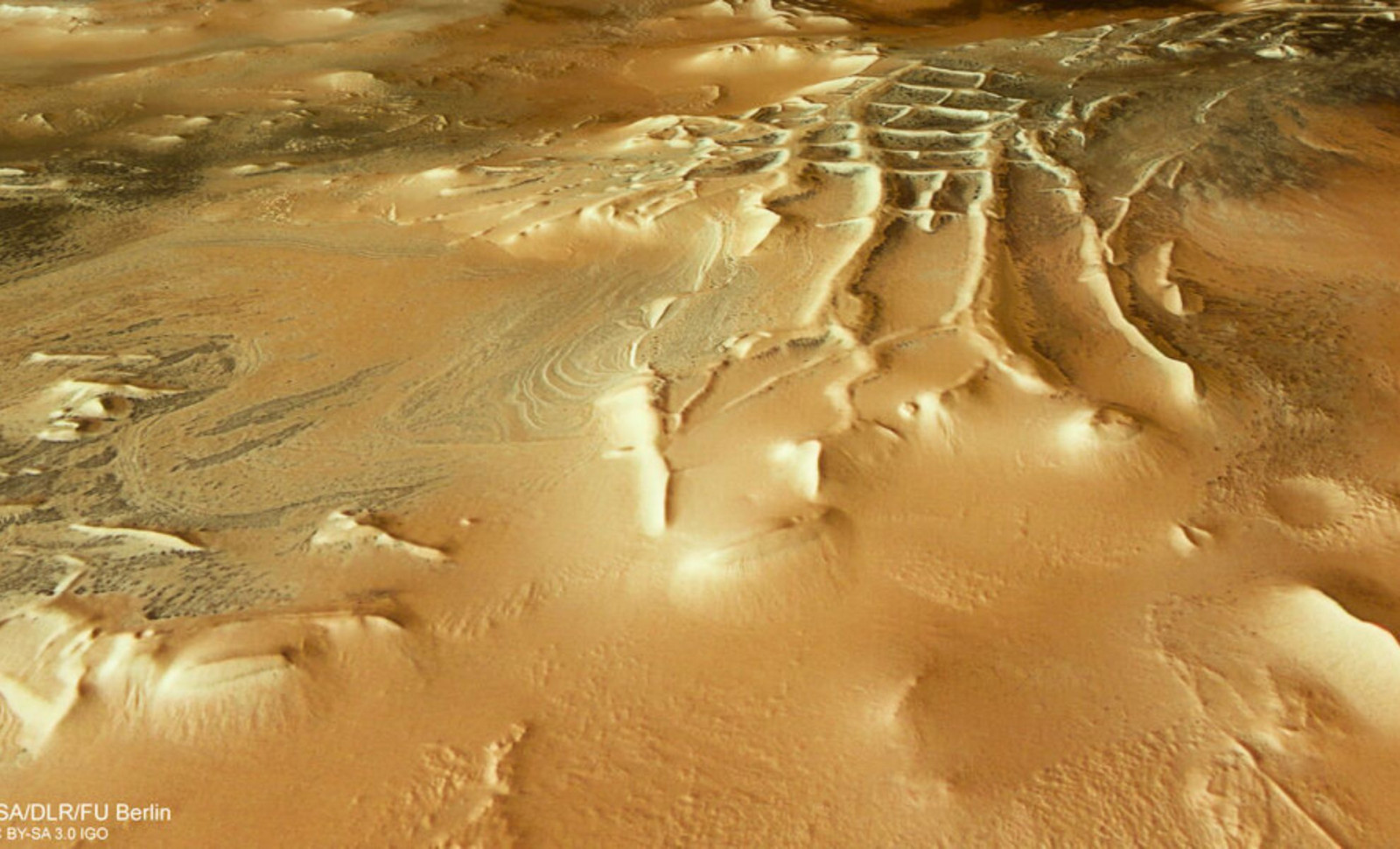
Extensive dark patterns resembling spiders pepper sections of Mars’ southern polar zone, particularly in a region known as Inca City. These striking images, captured by the European Space Agency’s Mars Express orbiter, reveal these spider-shaped formations scattered across plateaus, hills, and the edges of ridges near the planet’s south pole.
These intriguing marks aren't biological creatures. They emerge each Martian spring when sunlight heats layers of seasonal carbon dioxide ice from underneath. Trapped gas accumulates beneath the icy surface until it breaks through, propelling dark particles onto the ice and producing spots ranging from 45 meters to 1 kilometer in diameter.
Underneath these dark spots, escaping gas etches intricate branching channels into the ice. The narrow, radiating grooves from the center create the spider-like designs documented in detailed orbital photos, which inspired the informal name for these features.

Sunlight Initiates Gas Release from Beneath the Ice
During the prolonged Martian winter darkness, atmospheric carbon dioxide freezes onto the ground in polar regions. When spring sunlight returns, it penetrates the translucent ice layer, warming its base where the ice contacts the darker Martian surface.
This warming triggers sublimation—a direct shift from solid carbon dioxide ice into gas. Since the gas is trapped beneath the ice, pressure increases until it fractures slabs of ice that can be as thick as one meter.
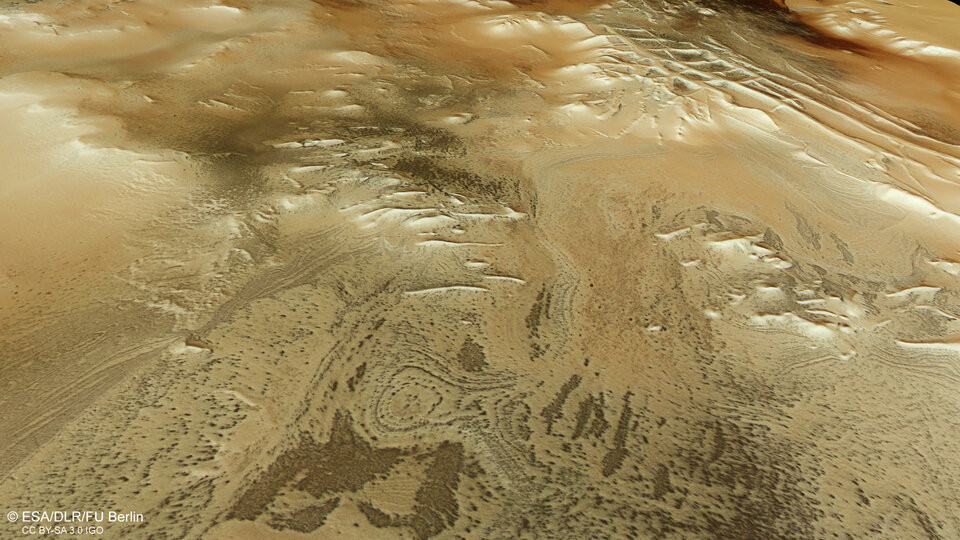
The released gas and entrained dust blast through the cracks. According to the European Space Agency, these events resemble “tall fountains or geysers.” The dark dust travels upward through these openings before settling back and spreading across the bright icy surface.
As pressurized gas moves underneath the ice, it branches into multiple pathways leading to the openings. These routes carve out the radiating channels that resemble spider legs extending from a central point. While the dust settles atop the ice, the channels persist below the seasonal layer.
Complementary Views Capture Different Aspects of the Phenomenon
The Mars Express orbiter has imaged the broad landscape along with the dark deposits left by gas eruptions. Its High Resolution Stereo Camera captures varied angles that help scientists analyze the shapes and elevations of ridges, plateaus, and hills nearby.
In addition, ESA’s ExoMars Trace Gas Orbiter provides detailed views of the delicate spider-like channels hidden beneath the ice. These formations lie near but outside the regions shown in Mars Express’s recent images.
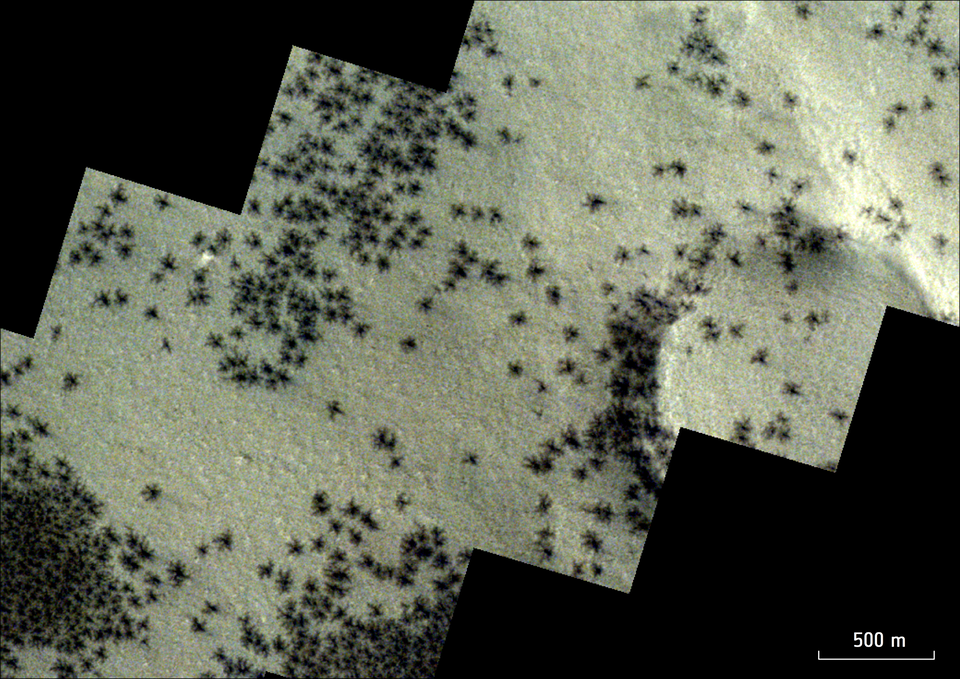
When examined together, the spacecraft data illustrate how the dark spots on the surface and the underlying channels are part of the same seasonal phenomenon. While Mars Express captures the dust deposits from escaping gas, the Trace Gas Orbiter reveals the intricate network of channels formed underneath the ice.
These spider-like shapes recur each Martian spring as polar ice warms, revealing where gas pressure builds and breaks through the seasonal ice layer.
Clusters of Spiders Surround Mars’s Inca City
A large concentration of these peculiar dark spots appears near Inca City, also formally known as Angustus Labyrinthus. Its nickname comes from the straight, intersecting ridges that resemble the ruins of ancient structures when viewed from space.
First discovered by NASA’s Mariner 9 in 1972, this region is seen in ESA’s images featuring widespread spider formations and an especially dense grouping near the darkened terrain bordering the ridge complex.
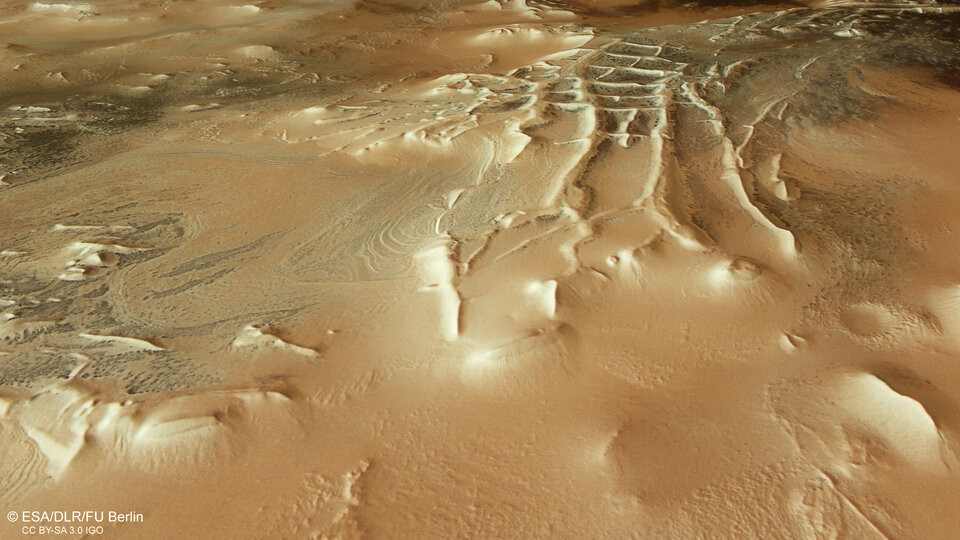
The ridge formations circle an area about 86 kilometers wide, likely representing the remnants of a massive impact crater. Scientists theorize the impact fractured the plain, enabling lava to push into cracks before erosion revealed more resilient materials.
Other geological processes might have shaped this unusual ridge network too. Some ridges may be hardened sand dunes, eskers formed by glaciers, or features created by magma or sand moving through crustal faults, adding to the region’s complex patterns.
Erosion Shapes the Terrain Around the Spider Features
Besides the linear ridges, the Mars Express images reveal rounded, swirl-like formations similar to marble patterns. ESA attributes these to erosion of layered deposits, which gradually exposes different rock types as the surface wears down.
Steep, flat-topped hills rise over 1,500 meters above the nearby landscape. These landforms resulted from wind, ice, or water erosion that wore away softer materials, leaving more resistant rock standing.
Parts of the northern side of the region are covered by smooth, pale dust. Spider formations remain visible on some plateaus, interspersed with canyons, troughs, and other surface features.
The combined observations from Mars Express and the ExoMars Trace Gas Orbiter offer complementary insights: one capturing large-scale terrain and dust patterns, the other unveiling the web-like channels beneath seasonal ice layers.
- Categories:
- Science


0 comments
Sign in to Comment