
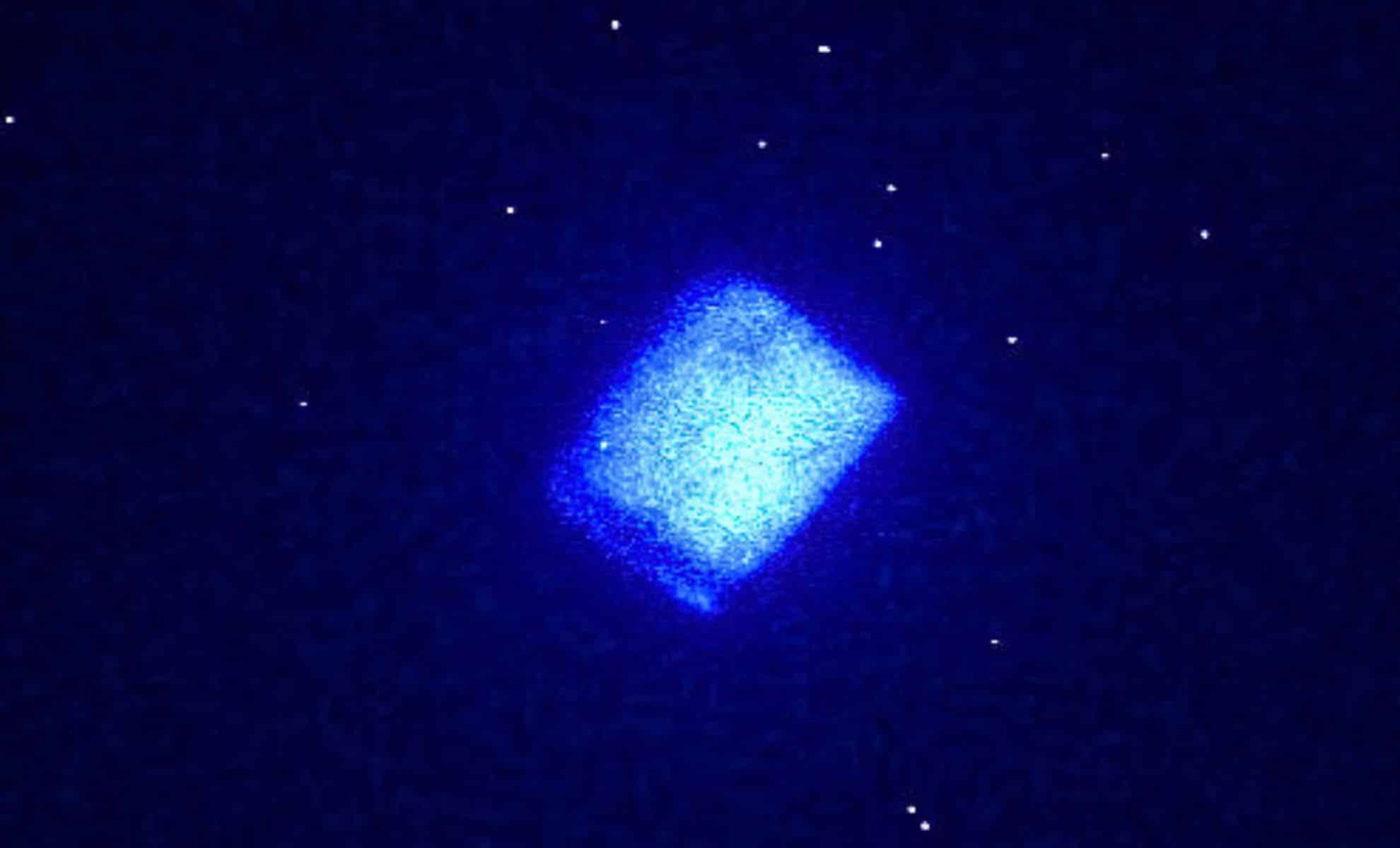
Envision batteries that never require recharging, powering medical devices, satellites, and spacecraft reliably for millennia. This vision is now a reality thanks to the innovative carbon-14 diamond battery created by scientists at the University of Bristol and the UK Atomic Energy Authority (UKAEA). Boasting an operational span of up to 5,700 years, this breakthrough could transform energy solutions and nuclear waste management.
Harnessing Energy from Radioactive Decay
This novel battery utilizes carbon-14, an isotope commonly known from radiocarbon dating, but here it serves as a potent power source.
The operating principle involves capturing the energy emitted during carbon-14's radioactive decay and converting it into electrical energy. The system is entirely self-powered, requiring no external electricity or charging cycles. The radioactive material is encapsulated within diamond layers, which not only contain the radiation safely but also enable continuous energy extraction.

Think of this technology like a nuclear-powered analogue of a solar cell, one that generates power by collecting electrons propelled by radioactive decay instead of sunlight. The outcome? A battery with an extraordinary lifetime, retaining half its charge even after 5,700 years.
Converting Nuclear Waste into Sustainable Power
A remarkable advantage of this technology is its dual role in resolving energy storage challenges and nuclear waste reduction. The carbon-14 isotope used is recovered from irradiated graphite blocks, a byproduct of nuclear reactors that would otherwise be treated as hazardous waste.
Transforming this waste into durable power sources aids in minimizing nuclear waste stockpiles while supplying a clean, safe, and dependable energy option.
Additionally, the diamond shell ensures zero radiation leakage, making it perfectly safe for everyday applications, and the battery is designed to be fully recyclable after millennia of service.
A Broad Spectrum of Uses: Medical Devices to Deep Space Exploration
This breakthrough technology promises to revolutionize several fields. Generating continuous power at the microwatt scale, it suits environments where replacing or recharging batteries is impractical or impossible.
- Medical devices: Pacemakers, hearing aids, and other critical implants could function for decades or even centuries without battery replacements, reducing surgical risks and healthcare costs.
- Space technology and satellites: Unlike solar panels, which rely on sunlight, these batteries can sustain satellites and spacecraft indefinitely, even in the deepest, darkest parts of space.
- Remote and extreme locations: Equipment in deep ocean ventures, Arctic expeditions, and remote military settings could operate uninterrupted for centuries.
Professor Tom Scott, a lead figure at the University of Bristol, emphasizes the vast potential this battery holds:
“We’re excited to explore these possibilities with our partners in the industry and research sectors.”
Redefining Sustainable Power
Though this carbon-14 diamond battery remains in early development stages, it marks a significant evolution in energy storage and sustainable technology.
Its extraordinary longevity, minimal environmental footprint, and innovative reuse of nuclear waste position it as a promising alternative to conventional batteries, which typically last only a few years before replacement. This technology could supply uninterrupted energy for centuries or even millennia.
This article is adapted from source material. The content may have been adjusted for clarity and length. Please refer to the original source for more details.
- Categories:
- Science










0 comments
Sign in to Comment