
In Thailand, archaeologists have discovered an extraordinary assortment of ancient gold, silver, and bronze objects concealed beneath a reclining Buddha statue that dates back nearly 1,300 years. The announcement was made by Thailand’s Fine Arts Department, and these artifacts are now housed at the Phimai National Museum for detailed examination.
Secret Treasures Under Thailand’s Longest Reclining Buddha
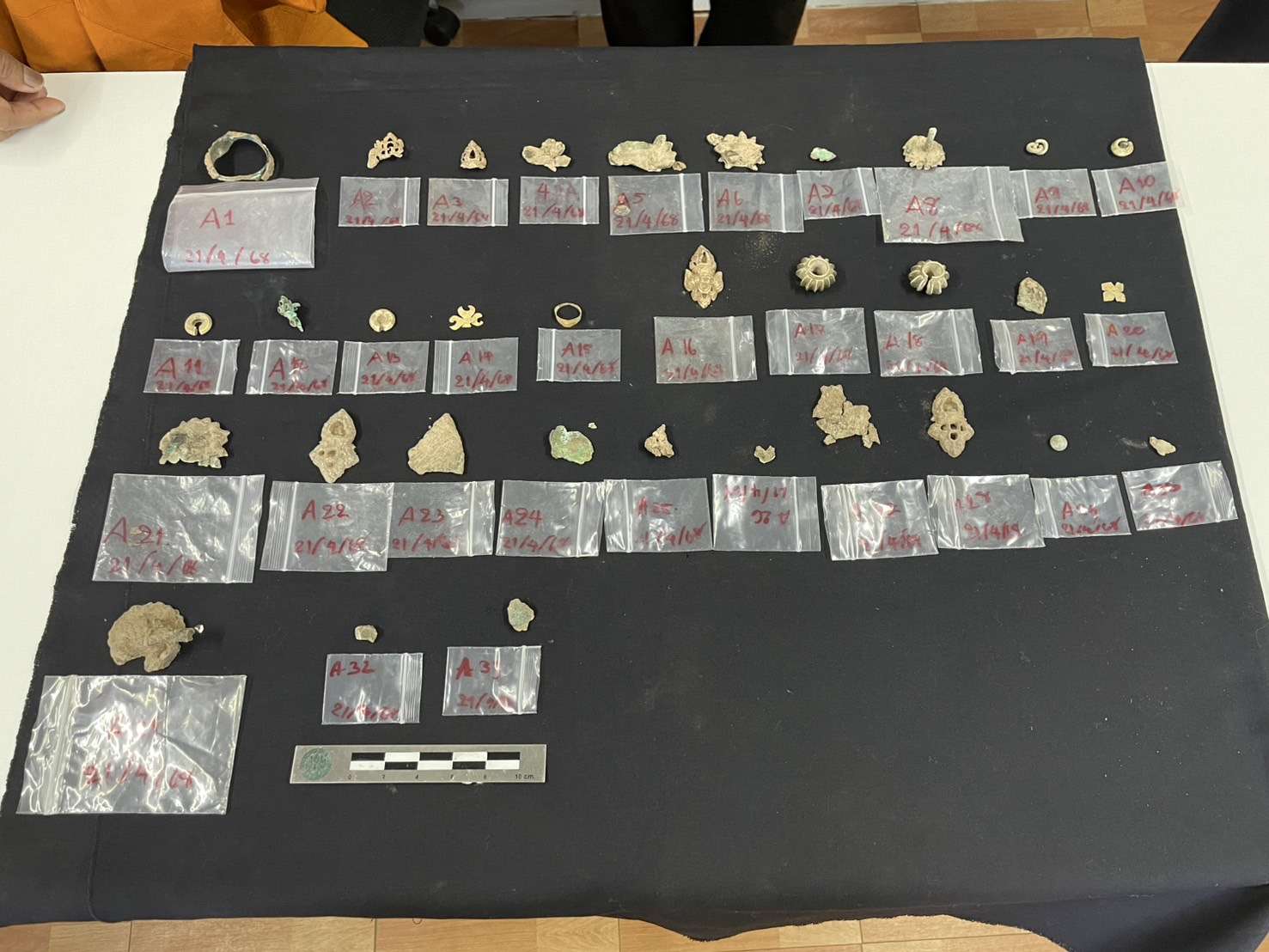
As reported by Popular Mechanics, the discovery occurred when workers excavated more than four feet below an imposing sandstone reclining Buddha statue—which stretches 43 feet in length and is recognized as Thailand’s oldest of its kind—and found a ceramic vessel. Inside were numerous ornate items fashioned from gold, silver, and bronze. These included gold rings, silver earrings, and bronze hoop earrings similar to artifacts discovered at other Dvaravati culture sites.
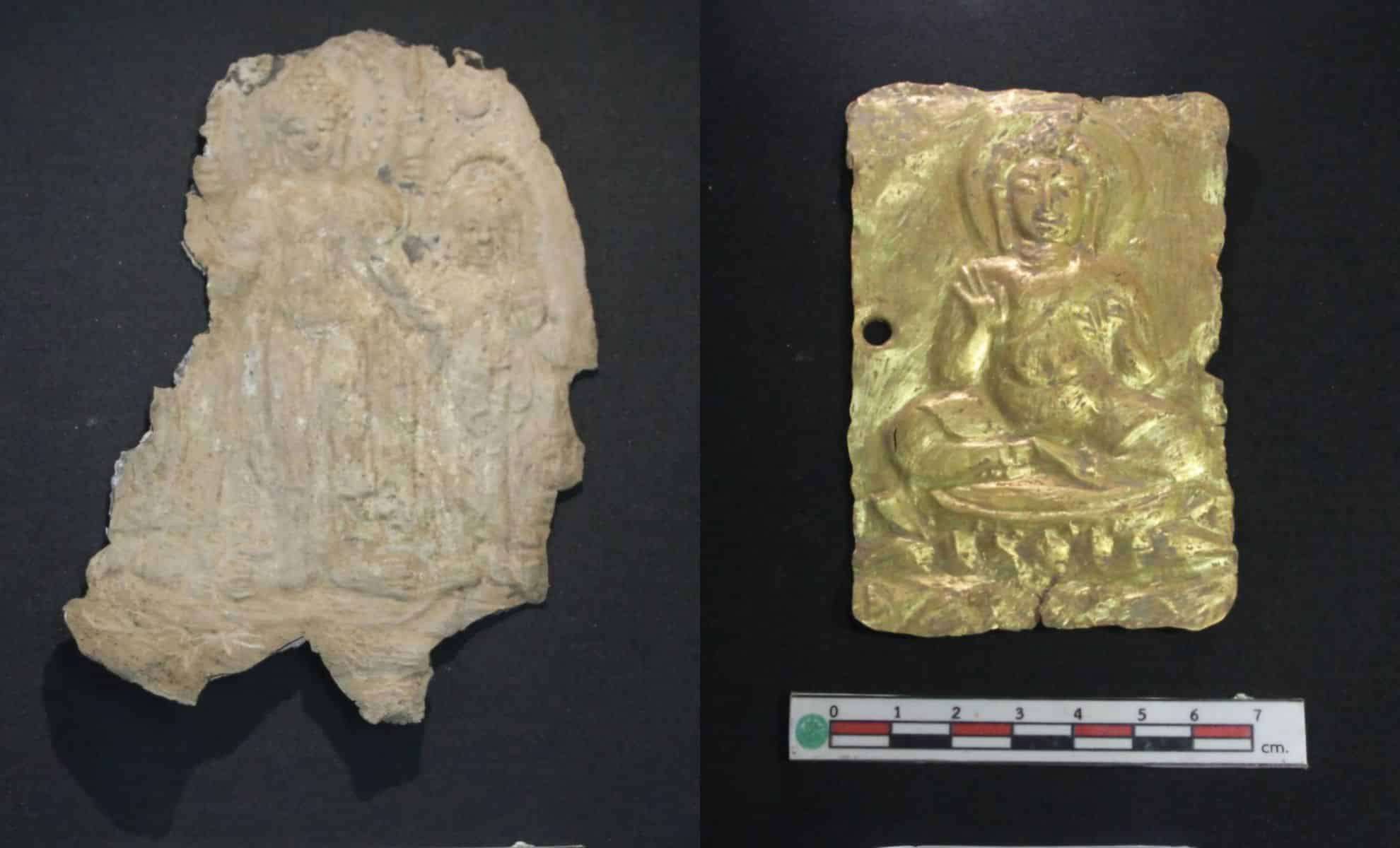
The initial find spurred more thorough digging around the statue, which revealed three additional important objects. Among these was a rectangular gold plate around three by five inches in size, embossed with a seated Buddha in a teaching pose. This repoussé artwork features the Buddha adorned with distinct spiral curls, a prominent halo, elongated earlobes, and a flowing robe.

Revealing Ancient Religious Art via Metalwork
A second repoussé plate, crafted from a lead-tin alloy, depicts a standing Buddha framed by an arch, accompanied by two attendants. The figure on the right is believed to be the Hindu deity Brahma, though damage has obscured the left-hand figure.
Phanombutr Chantrachot, head of Thailand’s Fine Arts Department, noted, “A small hole located in the upper right corner indicates it was probably suspended by string and may have served as jewelry or an ornamental piece.”
The third significant item is a bundle of metal sheets sealed with clay and cement. Although its imagery is difficult to discern due to wear, its position—directly behind the reclining Buddha’s head—implies it was intentionally placed as part of a ritual.
Chantrachot further explained, “The placement behind the Buddha’s reclining head leads experts to conclude the object was a deliberate ritual offering.”
Safeguarding Cultural Heritage
These remarkable artifacts are currently curated and documented by the Phimai National Museum, ensuring their preservation for ongoing research and display. This discovery offers fresh insights into the Dvaravati period, a pivotal era in Thai history spanning approximately from the 6th to the 11th centuries.
The items highlight the advanced metal crafting skills and ritualistic traditions employed by ancient artisans, emphasizing the region’s rich heritage as a cultural crossroads influenced by both Buddhist and Hindu beliefs. This find greatly enhances our comprehension of the symbolic art and religious life that shaped Southeast Asia well over a thousand years ago.
- Categories:
- News








0 comments
Sign in to Comment