
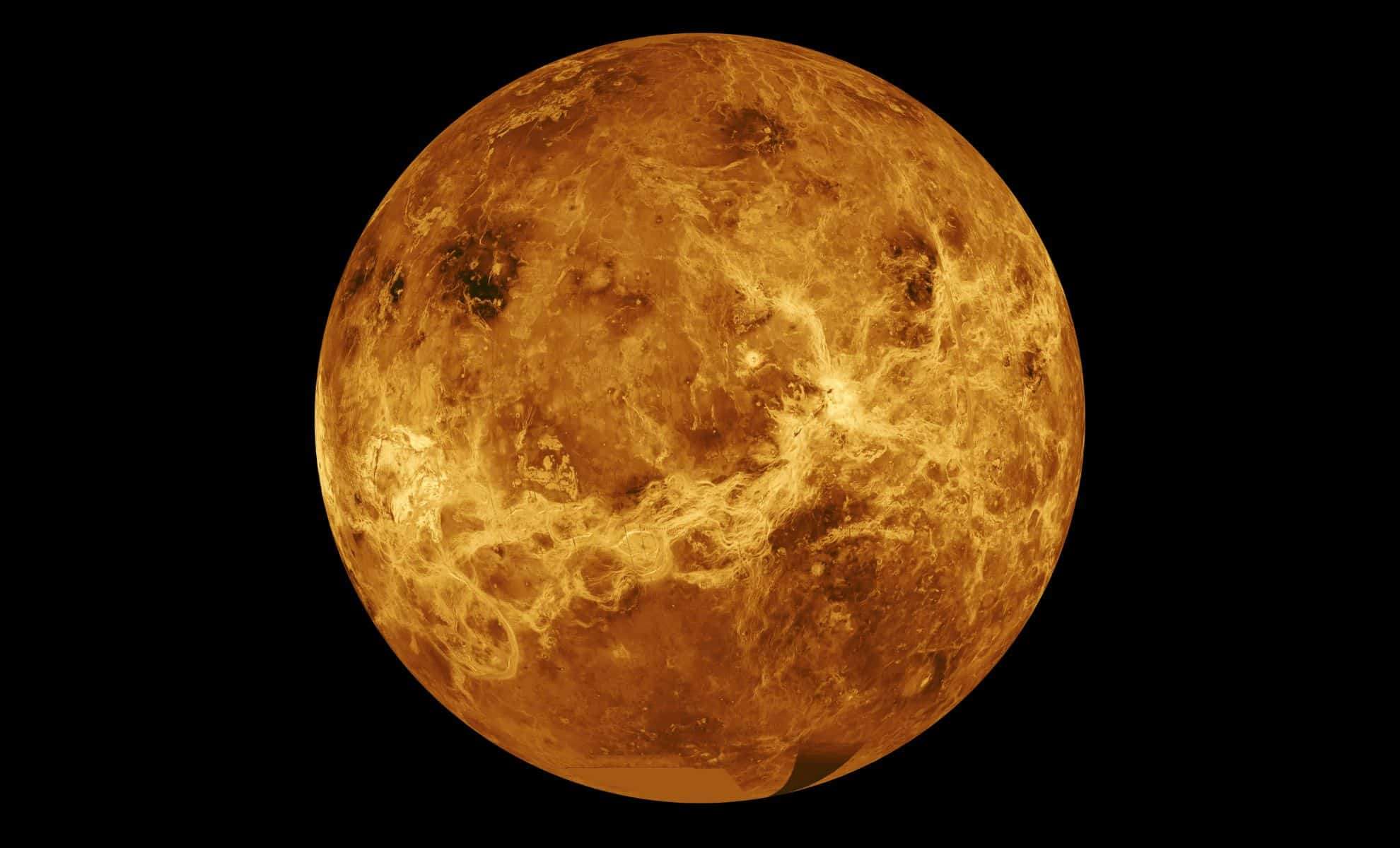
A newly published NASA-supported investigation has shed light on Venus’ crust, overturning prior beliefs about the planet’s geological dynamics. Featured in Nature Communications, the study delivers fresh perspectives on how Venus’ outer layer behaves and changes over time. The findings indicate that the Venusian crust is remarkably thin, which has important consequences for understanding volcanic activity on the planet and suggests ongoing geological processes despite the absence of plate tectonics.
Unexpectedly Thin Crust on Venus
Venus—often dubbed Earth’s sister planet—has intrigued researchers for decades. With scorching surface temperatures near 900 degrees Fahrenheit (475 degrees Celsius) and a dense, hostile atmosphere, Venus’ geological past remains enigmatic. Conventional theories predicted a relatively thick crust, owing to the planet’s lack of tectonic recycling. However, this new research reveals the crust averages just 25 miles (40 kilometers) thick, peaking at around 40 miles (65 kilometers).
“This thinness is unexpected given the planet's conditions,” explained Justin Filiberto, deputy chief of NASA’s Astromaterials Research and Exploration Science Division. Models from the study propose that as Venus’ crust thickens, its lower layers become denser and eventually detach or melt into the mantle. This cycling of dense material could be a key driver of volcanic activity, challenging earlier notions of Venus’ crustal processes when compared to Earth’s tectonic-driven landscape.

How Venus Maintains Geologic Change Without Tectonic Plates
Unlike Earth, where shifting tectonic plates cause earthquakes, mountain formation, and volcanism, Venus possesses a continuous crust. Scientists have long questioned how geological activity persists on Venus in the absence of plate movement. The research suggests that instead, Venus’ crust undergoes metamorphism induced by internal density and thermal variations, leading to gradual rock transformation.
Filiberto and his colleagues’ simulations indicate that despite the lack of tectonic shifts, Venus’ crust undergoes substantial alteration fueled by extreme internal heat and pressure. “Our models show that as the crust thickens, its lower portion grows so dense that it either breaks off into the mantle or melts,” Filiberto remarked. This metamorphic process likely facilitates the recycling of crustal material back into Venus’ interior, compensating for the absence of subduction zones.
Implications for Volcanic Behavior on Venus
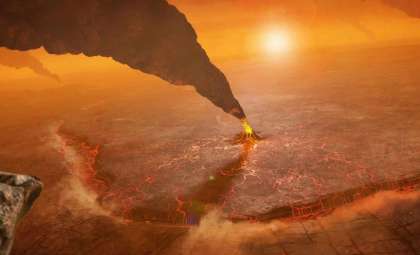
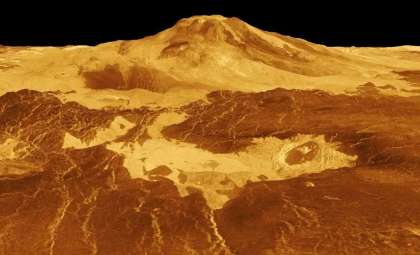
The study also has important ramifications for understanding volcanic phenomena on Venus. Observations have hinted at ongoing volcanism, yet concrete proof remains limited. The model of crustal metamorphism offers a potential mechanism behind such volcanic activity.
“When parts of the crust break away or melt, they can transport volatile components like water and other elements back into the mantle, potentially fueling volcanic eruptions,” Filiberto explained. This cyclical activity replenishes the mantle with fresh material, which could result in lava flows and surface eruptions. These new insights suggest Venus’ volcanism operates through processes more intricate than previously assumed, bearing some resemblance to Earth's but adapted to Venus’ unique environment.
Furthermore, continuous volcanic activity could be linked to atmospheric changes on Venus. Emissions of gases such as carbon dioxide and water vapor from volcanic vents might influence the planet’s climate. Nevertheless, as Filiberto emphasizes, additional observations are crucial to determining the true extent of Venus’ volcanic activity: “We don’t actually know how much volcanic activity is on Venus,” he said. “We assume there is a lot, and research says there should be, but we’d need more data to know for sure.”
- Categories:
- News






0 comments
Sign in to Comment