

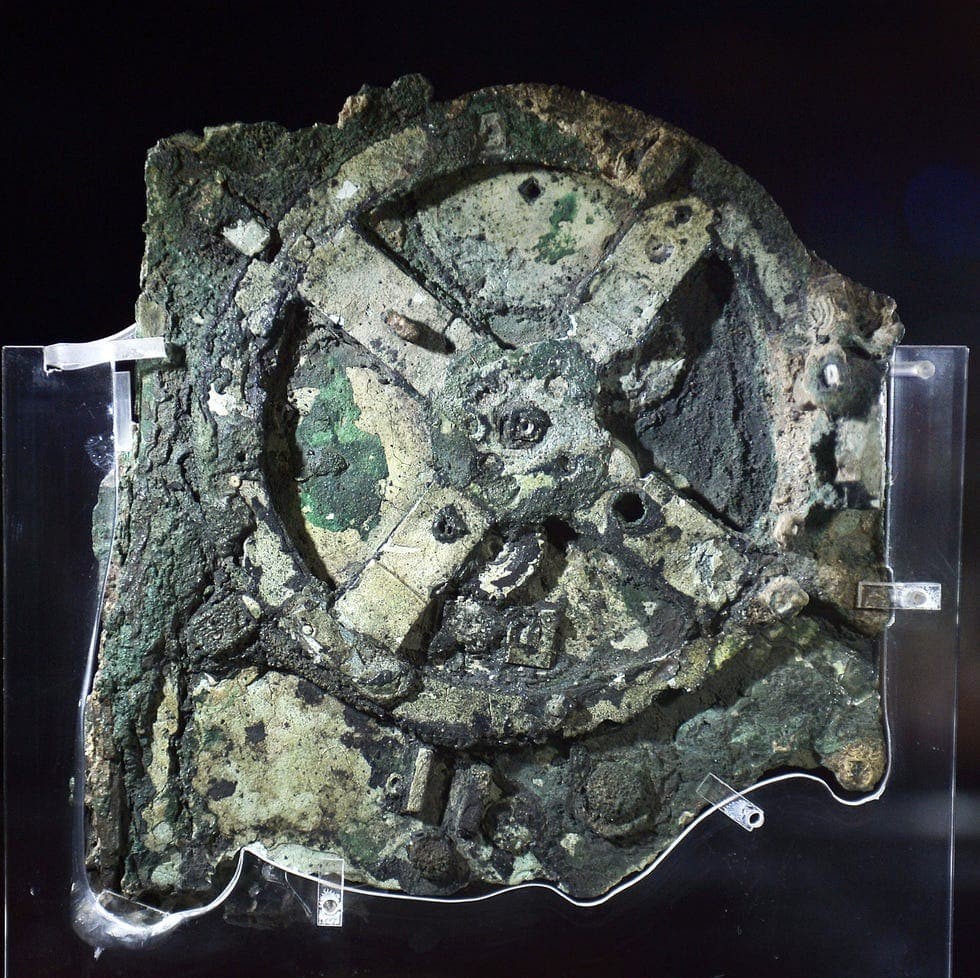
In the early 20th century, sponge divers near the Greek island of Antikythera stumbled upon a remarkable find. Amidst the remnants of a Roman-era shipwreck, they discovered a heavily corroded cluster of bronze gears unlike anything they had seen before. Decades of analysis later revealed it as an ancient mechanical device so intricate that it still challenges experts in archaeology, physics, and engineering today.
Dubbed the Antikythera mechanism, this artifact stands as a testament to lost technological prowess. Crafted over 2,000 years ago, its complex system of interlocking bronze gears demonstrates an advanced level of astronomical and mechanical knowledge unmatched by any other surviving artifact from the ancient period. Remarkably, no other devices of comparable complexity have ever been found.
Because of its uniqueness, the mechanism has spurred intense scholarly debate. New research continues to question older assumptions about its function and significance, reopening inquiries into the astronomical expertise of Hellenistic Greece and the reasons why such technology seemingly disappeared for centuries.

Modeling Celestial Movements Through Bronze Mechanisms
Recovered from a shipwreck dated around 65 BC, the Antikythera mechanism is thought to have been constructed sometime between the third and first centuries BC. Comparable in size to a shoebox, it was powered by a hand crank turning over 30 intermeshed bronze gears. This gearing allowed users to predict the positions of the Sun, Moon, and five planets visible to the naked eye—Mercury, Venus, Mars, Jupiter, and Saturn.
On the back, dual spiral dials recorded extended astronomical cycles: the Metonic cycle, syncing lunar and solar calendars every 19 years, and the Saros cycle, which forecasts solar and lunar eclipses within an 18-year span. Another dial tracked the timing of Panhellenic festivals, including the renowned Olympic Games.
The device also featured a sophisticated pin-and-slot gear mechanism reproducing the Moon’s irregular orbital speed caused by its elliptical path. This type of epicyclic gearing—where gears revolve on other gears fixed to off-center axes—would not be seen again in European technology until the 14th century.
Advanced Imaging Sheds Light on Ancient Engineering
Interest in the mechanism surged in the 1970s when physicist Derek de Solla Price employed X-ray technology to peer inside its corroded structure. He revealed a level of mechanical complexity confirming the device's function as a genuine astronomical computer and famously likened its discovery to finding an atomic bomb inside a pyramid.
The early 2000s brought further breakthroughs with enhanced technologies like high-resolution X-ray tomography and reflectance transformation imaging. Researchers identified over 2,000 Greek inscriptions carved into the device, many containing astronomical data and operational guidance.
These scans validated the presence of multiple gear systems aligned with lunar phases and planetary movements, offering detailed eclipse predictions. They also reinforced earlier theories about the 19-year Metonic dial and provided insights into the device’s original wooden case and front display setup.
Despite these revelations, only about a third of the mechanism remains intact, fragmented into 82 known pieces. The rest is either buried beneath sediment or lost forever.
Reevaluating the Calendar System Through Statistical Analysis
A 2024 investigation by astrophysicist Graham Woan and statistician Joseph Bayley reignited debate over which calendar the device used. By applying Bayesian statistical methods to a partially preserved gear ring with roughly 80 visible holes, they inferred the ring originally featured 354 holes, indicative of a lunar calendar. Their findings appeared in The Horological Journal.
This conclusion opposed previous claims that the device was based on a 365-day Egyptian solar calendar. The proposal received criticism from experts, including Tony Freeth, a prominent Antikythera researcher. In an interview with The New York Times, Freeth argued against the lunar calendar hypothesis, citing evidence for a more complex multi-calendar mechanism evident in the gearing and inscriptions.
Debates about the calendar system are more than minor details; they shed light on ancient Greek perceptions of time, astronomy, and mechanical depiction. Central to this discussion is the question: was the Antikythera mechanism primarily an instrument for scientific research, an educational artifact, or a symbolic item designed for elite display?
A Unique Artifact Without Parallels or Known Origins
The Antikythera mechanism remains unparalleled in antiquity. No other artifacts or even prototypes of similar design have been discovered. Yet, the precision engineering visible in the device suggests it was unlikely to be the very first of its type.
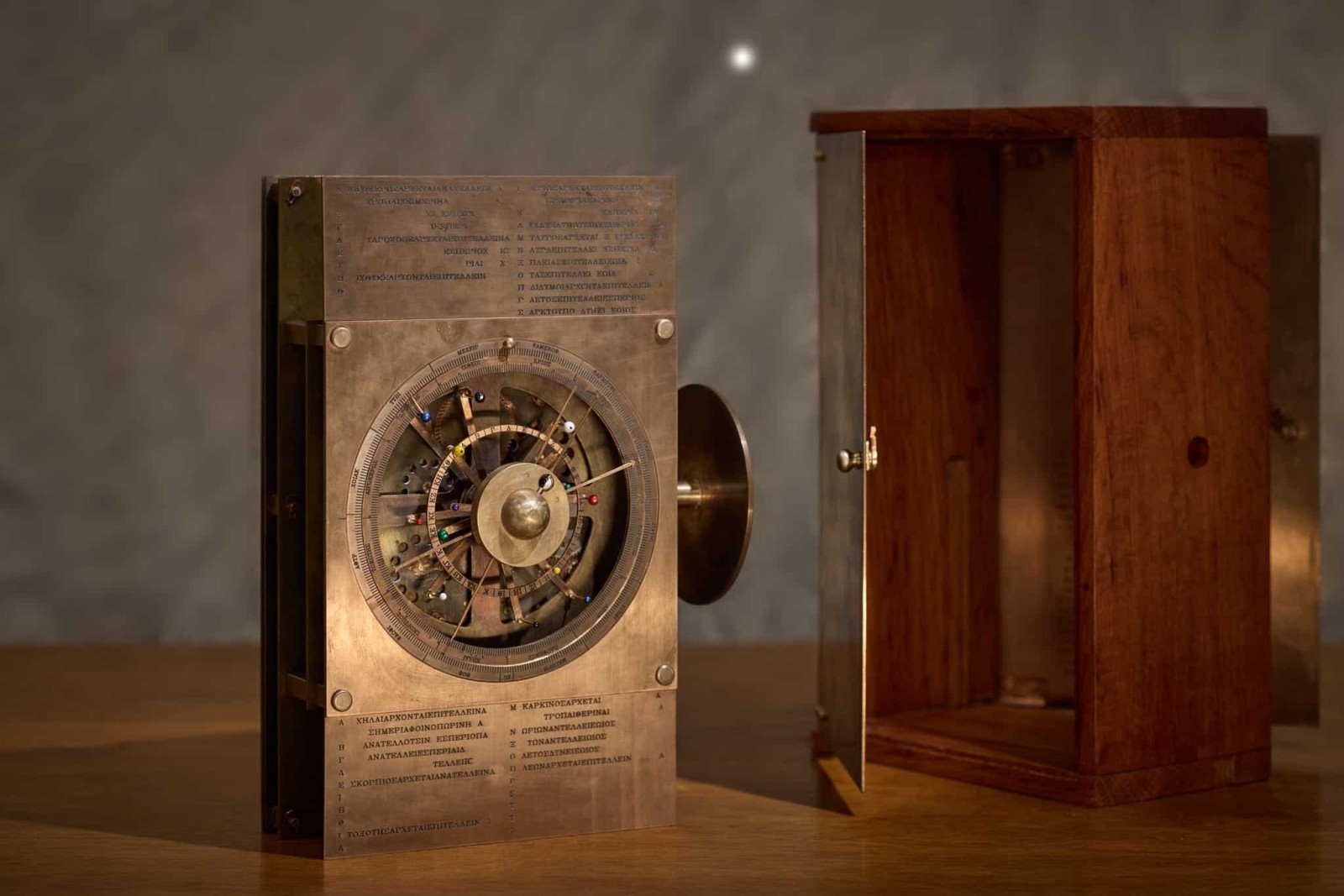
Some historians associate the device with ancient scientific centers such as Rhodes or Alexandria, where notable scholars like Hipparchus and Posidonius advanced astronomy and engineering. Others point to Archimedes, referencing Roman records describing a mechanical sphere seized in Syracuse circa 212 BC. However, no conclusive evidence links Archimedes to the Antikythera discovery.
Expeditions to the wreck site—most notably by Jacques Cousteau in the 1970s and research teams from the Woods Hole Oceanographic Institution in recent years—have recovered statues, coins, and amphorae but no further mechanisms. Ongoing underwater surveys employing advanced sonar and remote-operated vehicles continue in hope of unearthing additional fragments or related devices.
- Categories:
- News











0 comments
Sign in to Comment