
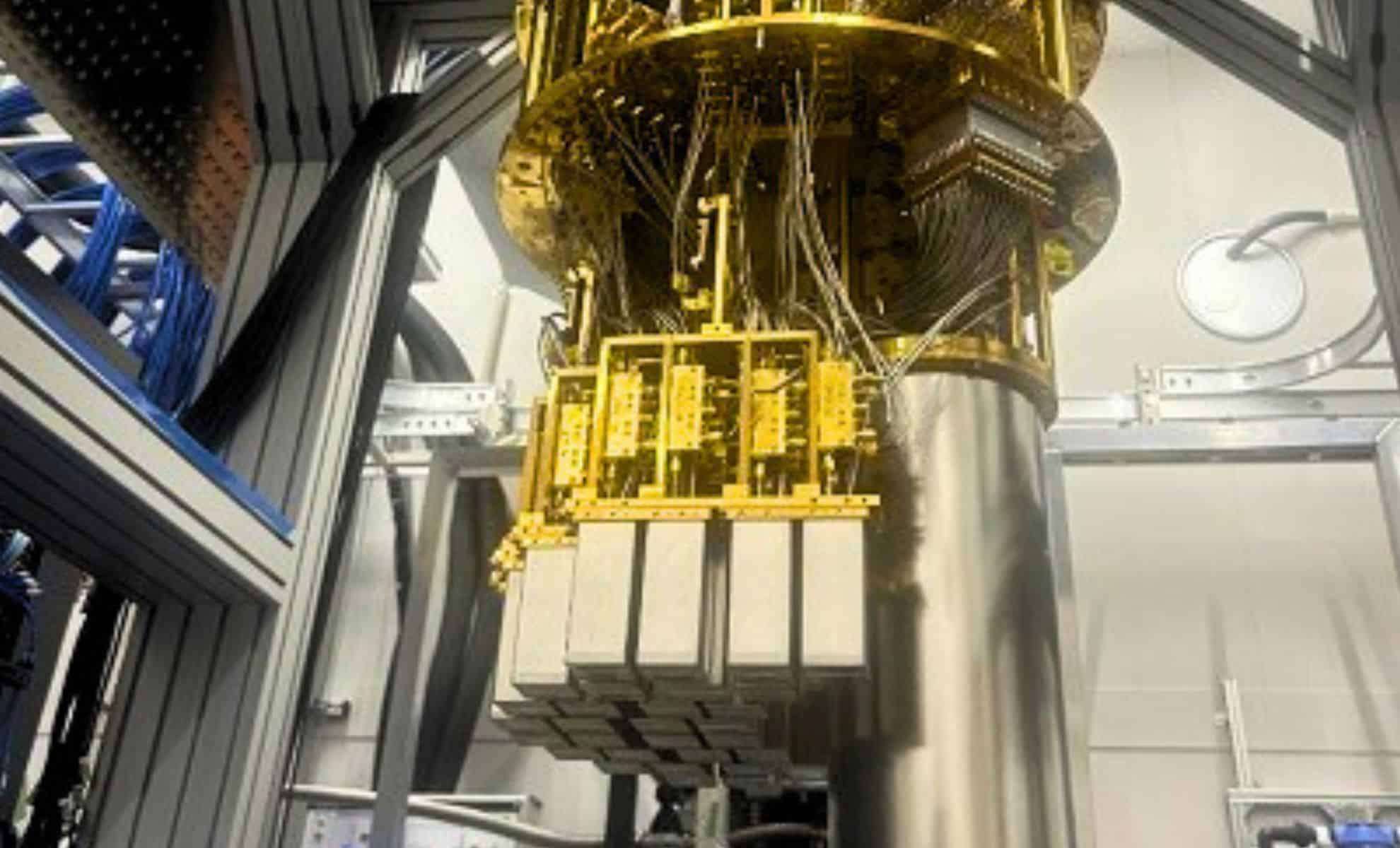
Fujitsu and RIKEN have achieved a significant advancement in quantum computing by introducing a 256-qubit superconducting quantum processor.
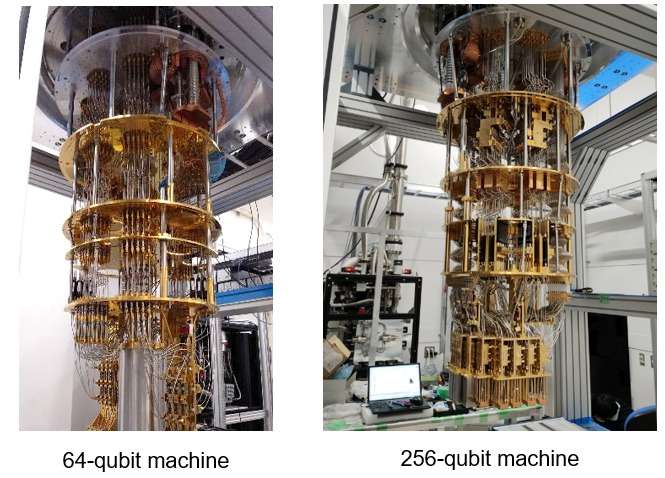
Developed at the RIKEN RQC-FUJITSU Collaboration Center in Wako, Japan, this new model quadruples the processing capacity compared to their 2023 64-qubit version.
As stated in the announcement on Fujitsu’s site, the device utilizes “novel high-density integration methods” alongside advanced thermal engineering, enabling it to address significantly more demanding computational tasks.

Advancing Quantum Computing Limits
The initial 64-qubit quantum device, developed collaboratively by Fujitsu, RIKEN, and their partners, was launched in October 2023 with backing from Japan's Ministry of Education, Culture, Sports, Science and Technology (MEXT).
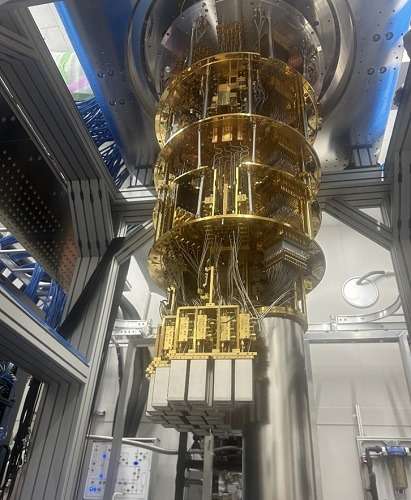
Building on this, the latest system features an impressive 256 qubits, positioning it among the world's largest superconducting quantum machines. It employs a scalable 3D wiring architecture that efficiently organizes 4-qubit units, illustrating a pathway for future quantum computers to scale effectively without redesigning the entire structure.
One major challenge—ensuring sufficient cooling within the dilution refrigerator—was overcome by quadrupling qubit density while maintaining thermal management.
This balance is achieved by optimizing the heat output from control circuitry relative to the refrigerator’s cooling power, while preserving the ultra-high vacuum and extremely low temperatures necessary for superconducting operations.
Preparing for Worldwide Access
The 256-qubit superconducting quantum computer will soon be integrated into the hybrid quantum computing platform co-developed by Fujitsu and RIKEN. From the first quarter of fiscal 2025, this system will be accessible to global enterprises and research organizations.
This upgrade aims to empower users to address more complex problems, such as simulating larger molecular structures and implementing advanced error correction protocols critical for practical quantum computing applications.
Simultaneously, efforts are underway to improve platform usability by fostering seamless interaction between quantum and classical computing elements.
This hybrid approach is intended to facilitate efficient execution of increasingly sophisticated algorithms, a crucial step toward expanding quantum technology's practical deployment.
Vision for a 1,000-Qubit Future
Fujitsu and RIKEN are already moving forward with plans to develop a 1,000-qubit superconducting quantum computer, targeted for deployment in 2026 at a new site within Fujitsu Technology Park.
This milestone is expected to be a game-changer for building practical quantum machines capable of solving complex problems in sectors like finance, pharmaceuticals, and materials research.
To maintain progress, the Collaboration Center has extended its operational timeline through March 2029, underscoring a sustained commitment to advancing superconducting quantum technologies and scaling to more potent quantum processors.
A Significant Leap in Quantum Tech
Sato Shintaro, head of Fujitsu’s Quantum Laboratory, referred to the 256-qubit machine as “a crucial step toward realizing practical quantum computing.”
While the consensus is that scalable quantum computers will eventually require tens of thousands of qubits, this achievement demonstrates rapid innovation narrowing the gap to that goal.
With ongoing refinement of their hybrid platform and the pursuit of a 1,000-qubit system, RIKEN and Fujitsu are steadily turning quantum computing from a futuristic concept into a tangible technology.
- Categories:
- News












0 comments
Sign in to Comment