

Back in 1899, an unusual event occurred near the Baltic Sea in the quaint village of Bagicz, Poland: a coffin tumbled down a cliff. Inside, archaeologists uncovered the impeccably preserved skeleton of a woman linked to the ancient Wielbark culture. What initially appeared to be a simple archaeological find has evolved into a long-standing enigma lasting over a century.
Once believed to belong to a prominent individual, scientists were perplexed when radiocarbon tests indicated that the woman’s bones were significantly older than the artifacts buried with her. Innovative dating techniques are now shedding light on the mystery surrounding her true age, pointing toward factors such as her coffin’s origin, dietary habits, and potential migration.
The Coffin’s Dramatic Descent
This discovery’s tale begins in 1899, when a coffin carved from hollowed oak suddenly fell from a cliff by the Baltic Sea. Inside rested the body of a woman, remarkably preserved and accompanied by burial belongings like a bronze fibula, glass and amber beads, and bronze bracelets. The coffin’s uniqueness and the richness of its contents suggested that this woman might have held a high social status.

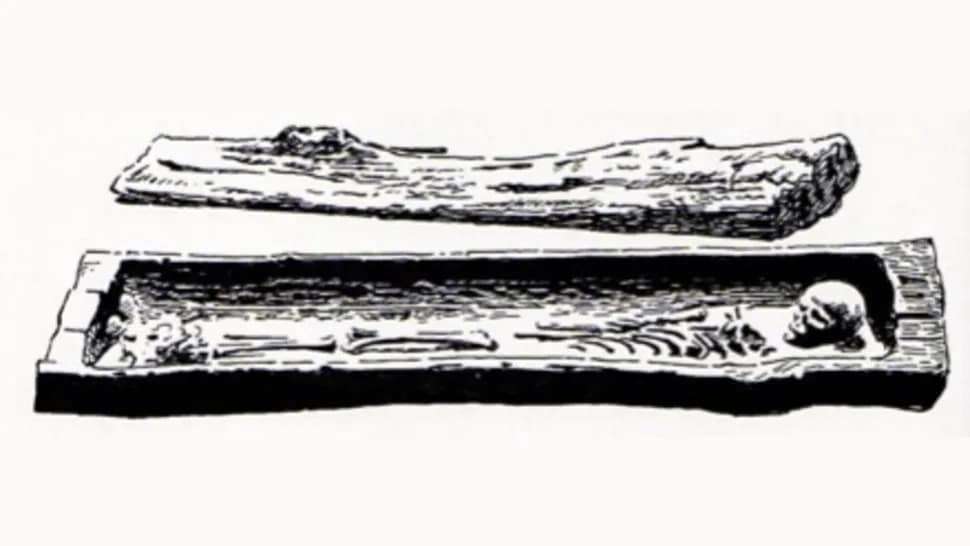
Initially, archaeologists regarded her as an elite figure due to the luxurious objects found alongside her. However, further examination in the 1980s revealed that the burial closely resembled other Roman Iron Age graves nearby. It was later understood that coastal erosion had unearthed the coffin, rather than it being a unique or isolated tomb.
The Enigma of Radiocarbon Dates
The puzzle deepened when radiocarbon dating performed on the skeleton yielded unexpectedly ancient results. The discrepancy between the age of the bones and that of the coffin and grave goods left researchers baffled. How could her remains precede the artifacts by such a margin?
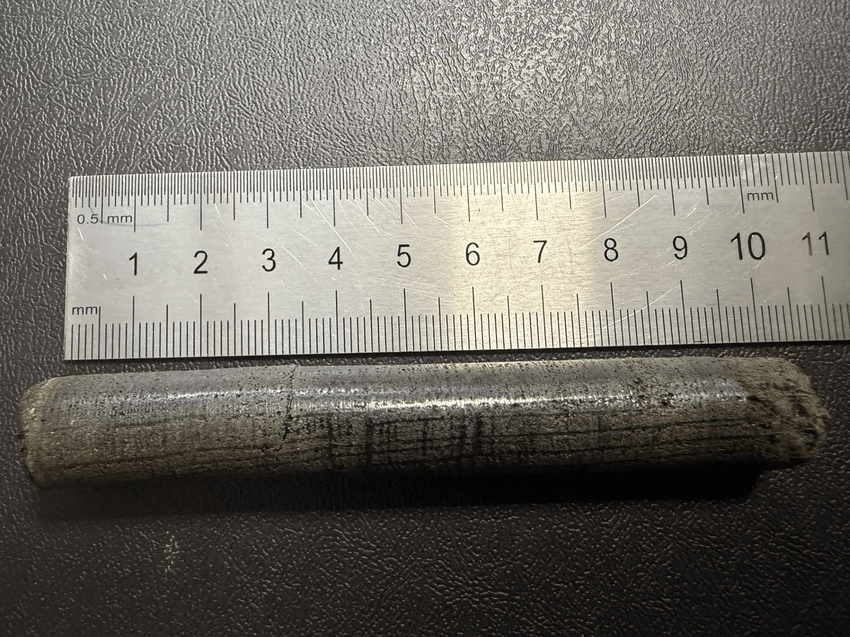
Marta Chmiel-Chrzanowska, an archaeologist who investigated the skeleton, proposed that the coffin itself might hold clues.
“To determine whether this discrepancy is due to a reservoir effect or a misclassification of the finds, it was deemed necessary to conduct dendrochronological studies,” she said. “However, due to the unique nature of this discovery—the only preserved wooden sarcophagus of its kind from the Roman Iron Age—the primary concern was the risk of damage.”
Decoding the Dating Discrepancy: Diet and Possible Origins
A recent publication in the journal Archaeometry revealed isotopic testing of the woman’s teeth, indicating a diet rich in animal protein, likely including fish. According to Chmiel-Chrzanowska, this dietary pattern might explain the irregular dates. Marine-based foods possess reduced carbon-14 levels, which can distort radiocarbon dating results. This "reservoir effect" commonly affects analyses in coastal regions reliant on aquatic food sources and probably led to the bones appearing older than their actual age.
“This finding is crucial for improving future radiocarbon dating interpretations, especially in regions with high water hardness,” she explained. “Strontium and stable isotope analyses suggest that the woman may not have been a local inhabitant, raising questions about mobility and cultural exchanges in the Roman Iron Age.”
Another intriguing possibility is that the woman originated beyond the local area. Chemical signatures in her teeth imply she might have migrated from elsewhere, adding layers of complexity to her background. Such migration could have influenced her diet, further complicating radiocarbon age assessments.
- Categories:
- Science









0 comments
Sign in to Comment