
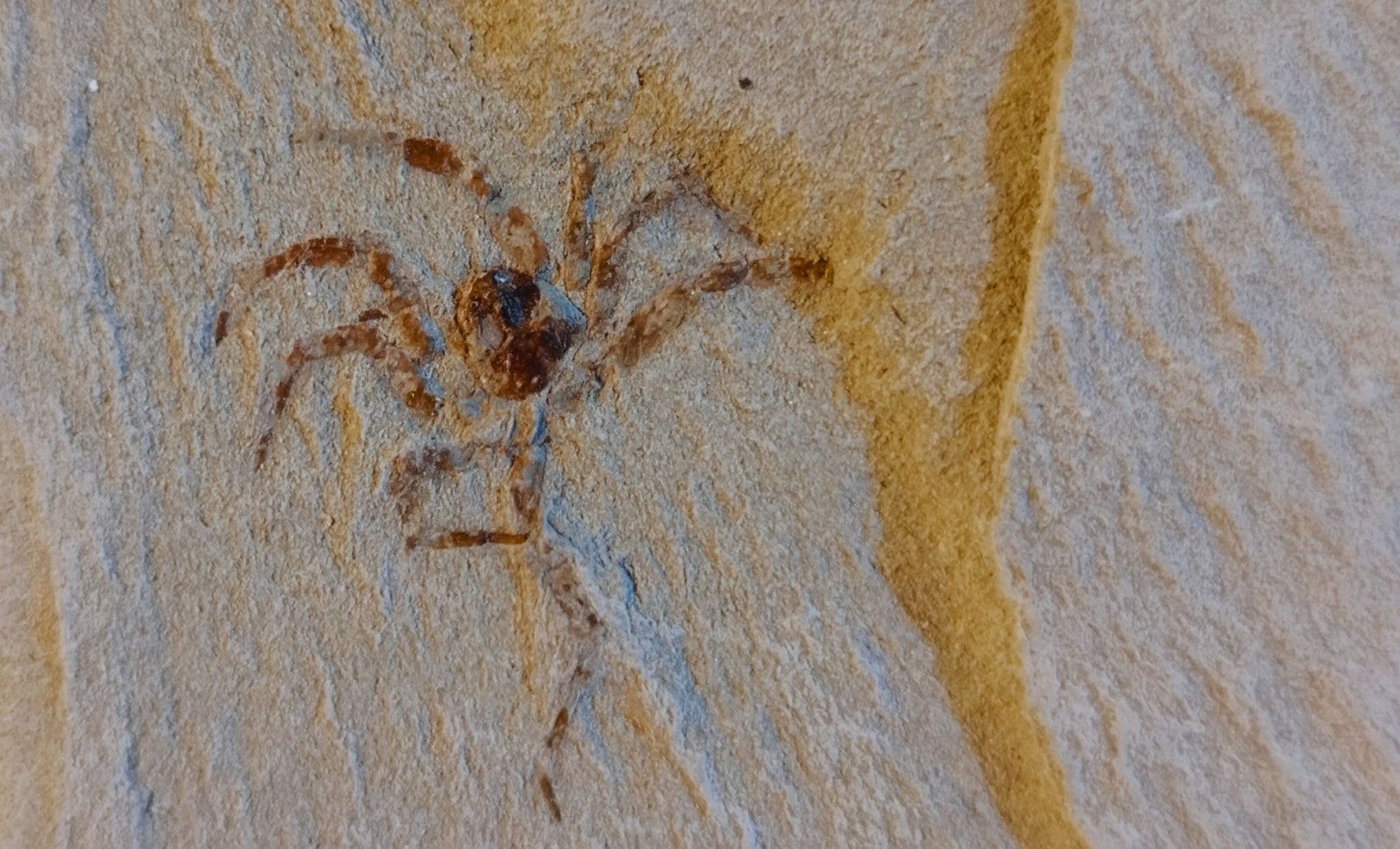
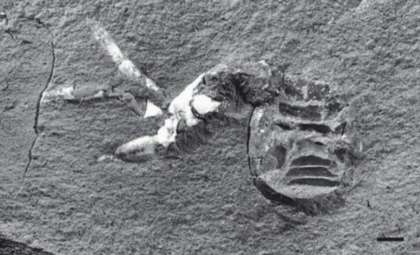
Researchers have unearthed an exceptionally well-preserved spider fossil in northern China, dating back approximately 165 million years to the middle Jurassic era. The fossil belongs to the species Eoplectreurys gertschi, a rare find for scientists. What sets this discovery apart is the extraordinary preservation quality, a rarity for soft-bodied animals like spiders.
Found at the Daohugou locality, renowned for its rich prehistoric biodiversity, the fossil has stirred excitement among paleontologists. Since fossils of spiders from this age are scarce, this specimen represents one of the finest examples ever discovered. Under microscopic examination, the fossil reveals intricate structural details of the spider that were previously thought to be unobtainable.
Exploring Ancient Environments Through Exceptional Fossils
The Eoplectreurys gertschi fossil was extracted from Daohugou, a famous site known for preserving a wide array of prehistoric life forms, ranging from amphibians to early mammals. According to Paul Selden, a paleontologist at the University of Kansas, this location was once a volcanic lake during the Jurassic period. The volcanic ash played a critical role in preserving the organisms, including the spider, possibly trapping it instantly upon death.

The research, published in The Science of Nature, attributes the fossil’s pristine condition to the ultrafine volcanic ash particles that compressed the spider’s body gently, avoiding destruction of its delicate features. Unlike coarser sediments that would have damaged such fragile components, the ash acted like a natural mold, capturing even the intricate surface texture of the spider’s cuticle.
This rare preservation process provides an exceptional glimpse into how specific conditions can protect biological material for millions of years, creating a direct window to prehistoric life.
The Evolutionary Significance of the Plectreuridae Spider Family
Eoplectreurys gertschi belongs to the Plectreuridae family, a lineage of spiders still extant today predominantly across North America. It’s striking how little change this family has undergone over the span of 165 million years. “Jurassic spider fossils are extraordinarily rare,” explains Selden.
When paleontologists analyzed the specimen, they discovered a close resemblance to modern-day Plectreuridae members. Selden remarked:
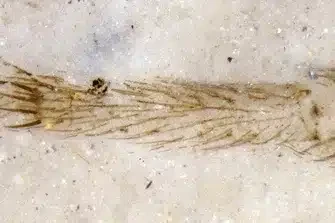
“The scimitar-sjapedstructure you notice out of the male is so distonctive,” he said ” Looking at modern ones, you think, well, it’s just a dead ringer.
This fossil challenges the assumption that species always evolve significantly over millions of years. Instead, it highlights that some lineages, particularly those thriving in stable habitats, can remain virtually unchanged for extended geological periods. Such evolutionary stasis offers valuable insights into the persistent environmental conditions in which these spiders lived.
Insights on Climate Adaptation from Ancient Spiders
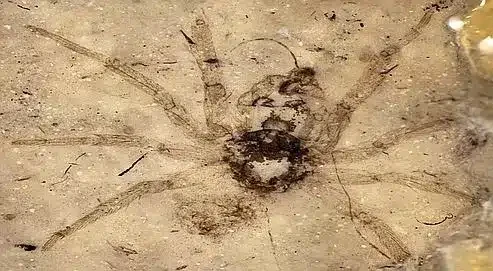
This fossil not only enriches our understanding of the spider itself but also reveals the former geographical range of the Plectreuridae family. Although today this family is limited mainly to parts of North America, the fossil record indicates a formerly broader distribution that included the region known as the North China Block, now within modern China’s borders.
Selden suggests that climatic shifts, possibly including an ice age or other major environmental transformations, may have led to the spiders’ range contraction over millions of years. He explained:
“At some point something caused their range to contract to this part of southern North America… but they were still happy in these arid areas of the Southewest.”
This range reduction serves as a reminder of how environmental upheavals can restrict species from once-expansive territories to smaller refuges.
- Categories:
- Science

0 comments
Sign in to Comment