
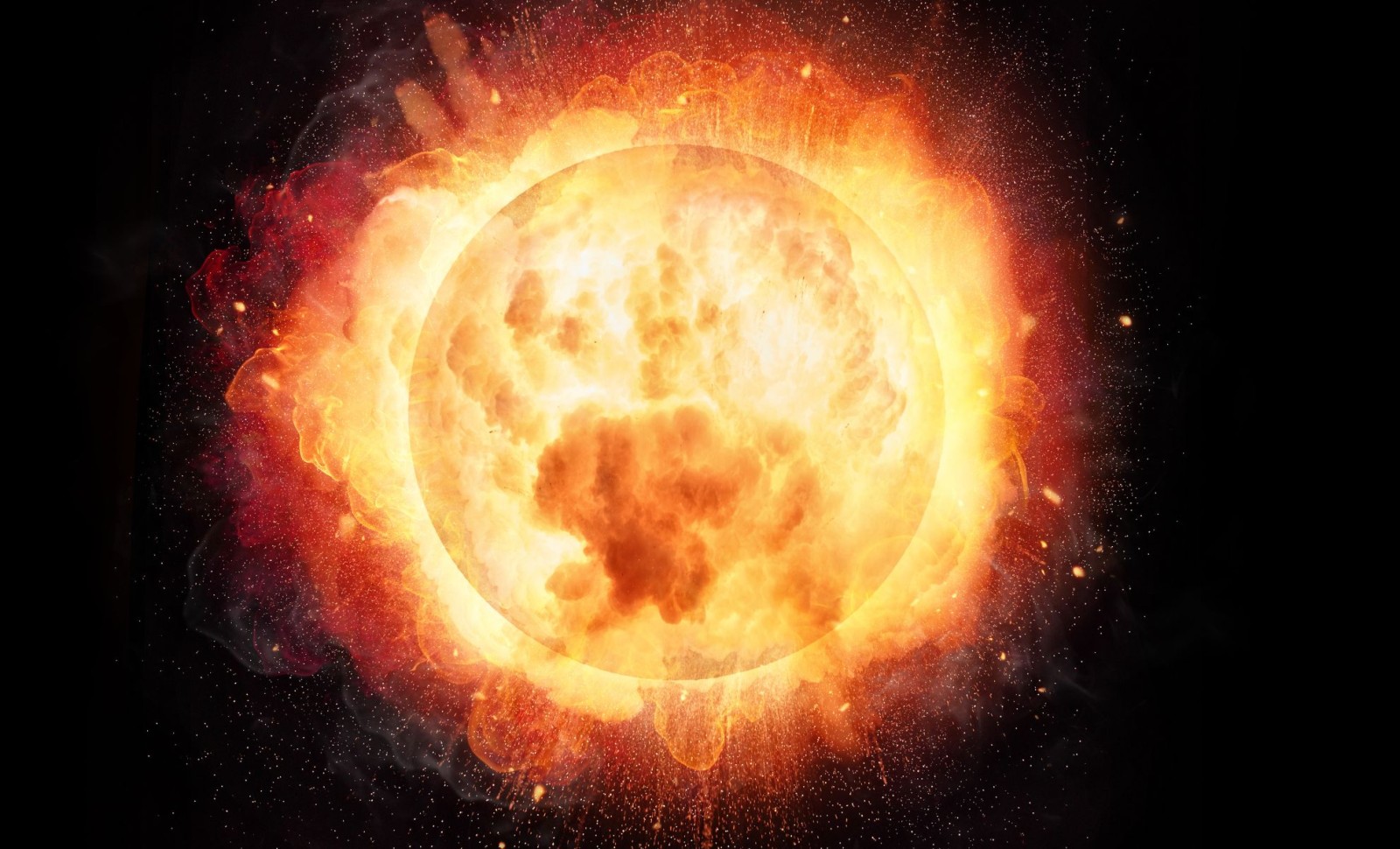
In an astonishing discovery, astronomers have witnessed an unusual event on the Sun’s surface where a fragment has detached and is now swirling around its North Pole, forming a colossal polar vortex. This rare phenomenon was detected through the powerful lenses of the James Webb Space Telescope, leaving solar scientists both amazed and curious.
The Sun exhibits various natural cycles and activities, but this recent observation deviates from established patterns. A solar prominence, which is a glowing loop of ionized gas emanating from the Sun’s surface, separated and began orbiting near the polar region. This phenomenon not only intrigues researchers but also challenges current understanding of solar dynamics.
James Webb Space Telescope: Opening New Frontiers in Solar Observation
Thanks to the advanced capabilities of the James Webb Space Telescope, scientists gained an unprecedented angle on this solar event. The telescope’s extraordinary resolution revealed minute details that might have otherwise gone unnoticed.

According to space weather expert Dr. Tamitha Skov, who shared her findings on social media, the detached solar material is now caught in a rotating polar vortex near the Sun’s North Pole. She emphasized the significance of this discovery, calling it a "game changer":
“Material from a northern prominence just broke away from the main filament & is now circulating in a massive polar vortex around the North Pole of our Star. Implications for understanding the Sun’s atmospheric dynamics above 55° here cannot be overstated!”
Defining Solar Prominences
To grasp why this situation is so extraordinary, it’s important to understand what solar prominences are. These existing as grand arcs or loops of gas—primarily hydrogen and helium—that protrude from the surface of the Sun. They are common features linked to the Sun's regular activity.
Ordinarily, these prominences follow well-known trajectories, and their behaviors align with current solar models. But now, as noted by solar physicist Scott McIntosh, the detached gas is swirling in an unprecedented vortex near the pole, a phenomenon that defies expectations.
“It’s very curious. There is a big ‘why’ question around it. Why does it only move toward the pole one time and then disappears and then comes back, magically, three or four years later in exactly the same region?”
Talk about Polar Vortex! Material from a northern prominence just broke away from the main filament & is now circulating in a massive polar vortex around the north pole of our Star. Implications for understanding the Sun's atmospheric dynamics above 55° here cannot be overstated! pic.twitter.com/1SKhunaXvP
— Dr. Tamitha Skov (@TamithaSkov) February 2, 2023
Insights into the Sun’s 11-Year Magnetic Cycle
The Sun experiences an approximately 11-year cycle characterized by fluctuations in solar activities such as sunspots, solar flares, and prominences. Central to this cycle is the Sun’s magnetic field, which flips polarity every 11 years. Scientists have long observed that solar material tends to migrate toward the poles at roughly 55 degrees latitude, but this new swirling vortex phenomenon appears to extend beyond previous models.
McIntosh highlights the lingering mystery behind this irregularity, especially since the material vanishes only to return years later in the same area, posing one of the most intriguing puzzles in solar physics today.
- Categories:
- Science








0 comments
Sign in to Comment