
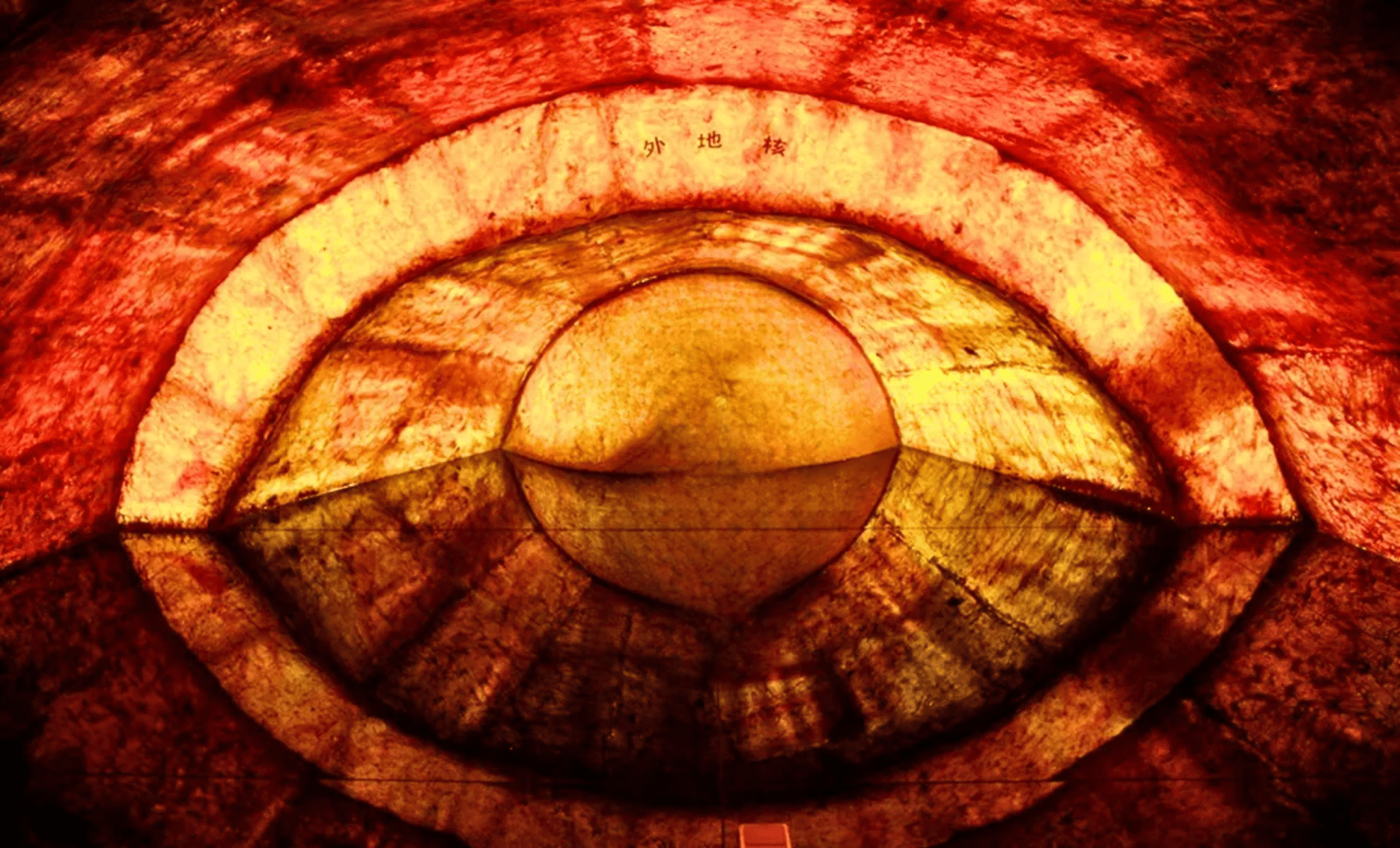
At approximately 1,700 miles below the Earth's crust, in the deep mantle, scientists have observed seismic waves traveling faster than expected. This unusual acceleration occurs at the D” boundary, a region where the fiery lower mantle meets the liquid outer core, puzzling researchers for many years.
Initially, this phenomenon was attributed to the mineral perovskite’s alteration, but emerging studies reveal a more intricate explanation rooted in the behavior of specific crystal structures.
Seismic Wave Behavior at the Core-Mantle Interface
The D” layer raises ongoing questions in geoscience. Seismic waves change speed dramatically upon crossing this threshold, and this has been linked to perovskite transforming into its high-pressure phase, post-perovskite, under the extreme conditions deep inside the Earth.

Nevertheless, a recent study led by Motohiko Murakami, involving teams from Japan and Switzerland, challenges this view. By combining laboratory work with computational modeling, they revealed that aligned post-perovskite crystals, not just their formation, are responsible for accelerating seismic waves near the core-mantle boundary.
Impact of Crystal Alignment on Seismic Velocity
Post-perovskite exhibits anisotropic properties, meaning its physical characteristics depend on the direction of measurement. These crystals emerge in two ways: through phase change (conversion from perovskite to post-perovskite) and through directional deformation, where pressure causes their alignment.
Murakami's research points to this directional alignment—rather than only the mineral phase change—as the key factor behind the surge in seismic speed. “When crystals are plastically deformed, they orient themselves along preferred directions, forming textures that influence seismic wave propagation,” he explained.
Convection’s Influence in the Earth's Mantle
The root cause of the post-perovskite crystals’ alignment is linked to convective flow within the mantle. As hot material ascends and cooler material descends—similar to how storms develop at the surface—this movement causes crystals to line up along certain axes. Previously, this convection-driven deformation was theoretical, but now experimental data confirms its role.
Using MgGeO3 to replicate post-perovskite crystals, the team subjected samples to intense heat and pressure and then examined how sound waves traveled through them. The velocity of these waves increased significantly when flowing through aligned crystals, matching their theoretical predictions.
A Pivotal Confirmation of Earth's Internal Dynamics
This study provides the first direct experimental proof that mantle convection induces deformation in post-perovskite crystals. Murakami stated, “Our high-pressure, in situ velocity measurements offer critical experimental evidence supporting this hypothesis, connecting theoretical predictions with observable data.”
These revelations clarify the puzzling acceleration of seismic waves in the D” zone and deepen our understanding of the complex processes governing Earth's interior.
- Categories:
- News







0 comments
Sign in to Comment