

For more than twenty years, researchers have been intrigued by luminous patches observed via satellites in the Southern Ocean, near Antarctica. These radiant reflections baffled scientists until recent findings unveiled their origin. Published in Global Biogeochemical Cycles, the study reveals that a blend of silica-rich diatoms and calcium carbonate-coated coccolithophores is behind this striking light display. This discovery enhances understanding of polar marine life and carbon cycling within one of Earth’s vital carbon reservoirs.
Tracing the Origins of the Antarctic Luminescence
The intrigue began in the early 2000s when oceanographer Barney Balch and his team observed unusually bright regions surrounding Antarctica in NASA’s satellite imagery. While the Great Calcite Belt— an area dominated by coccolithophores with reflective calcium carbonate shells—accounted for part of this glow, an even brighter area appeared further south. This zone, too cold for coccolithophores by conventional wisdom, remained a mystery. It persisted through years of satellite data, often concealed by seasonal sea ice and cloudy conditions.
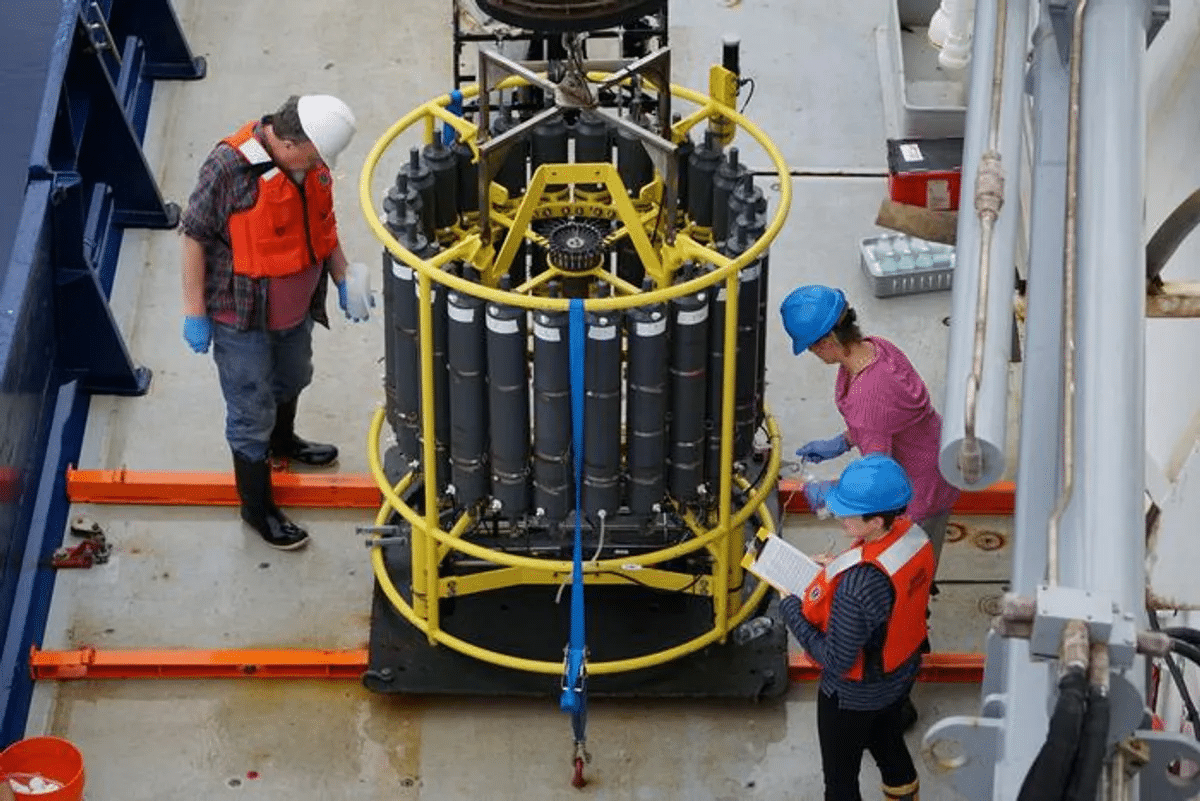
To investigate, Balch’s group embarked on a rigorous expedition aboard the R/V Roger Revelle, navigating the Southern Ocean around 60° latitude. Their goal was to assess the water’s color, reflectivity, mineral content, and biological inhabitants at varying depths. As noted in the Global Biogeochemical Cycles publication, Balch said, “Satellites observe just the top few meters, but our multi-depth measurements provide a comprehensive look through the water column in this remote oceanic area.”

The Microscopic Contributors to Polar Radiance
The research unveiled anticipated yet surprising elements. Coccolithophores dominated the calcite belt, but in colder, silica-rich areas south of the Polar Front, massive diatom blooms thrived. These unicellular algae create detailed silica shells called frustules that reflect light in a manner akin to coccolithophore shells, though a denser presence is required to match the brightness captured by satellites.
These dense diatom populations act like natural reflectors in the Southern Ocean. The team also identified lower but meaningful coccolithophore populations, indicating their tolerance for colder environments than previously recognized. Balch remarked that oceanic eddies function as “seed populations,” distributing coccolithophores that influence how plankton communities vary seasonally and geographically.
Implications for Carbon Dynamics and Climate
This insight extends beyond explaining the glow phenomenon. Both diatoms and coccolithophores contribute critically to the biological carbon pump, moving carbon from the sea surface to ocean depths via sinking mineral structures, thus playing a key role in regulating atmospheric CO2 over extended periods. This makes the Southern Ocean a crucial global carbon sink.
Within this newly explored region, the team measured particulate inorganic carbon and silica concentrations along with rates of calcification and photosynthesis, unveiling a complex relationship between mineral content and optical properties. While diatoms, rich in silica, govern certain carbon sequestration processes, coccolithophores, through calcium carbonate formation, contribute differently. Their co-presence in these polar waters suggests a more intricate and adaptable ecosystem than current climate projections account for.
Advancing Satellite Monitoring of Ocean Life
The findings highlight the necessity for enhanced satellite analytical tools capable of discriminating plankton types more accurately. Although satellites provide crucial surface observations, the similar light reflection from silica and calcite challenges biological interpretation. Researchers advocate for combining multispectral satellite data with targeted fieldwork to better predict plankton distribution and associated carbon fluxes.
This knowledge holds broad significance. Understanding these microscopic reflectors' spatial and temporal dynamics can improve climate forecasting models, inform marine resource management, and help anticipate the Southern Ocean’s response to climate-induced changes like warming, acidification, and shifting circulation patterns.
Solving a Longstanding Oceanic Enigma
Decades of curiosity about the radiant Antarctic waters are now answered: the combined reflective properties of diatom frustules and coccolithophore shells create the satellite-visible glow. As Balch put it, “Our findings extend the known habitat of coccolithophores and enhance comprehension of satellite imagery patterns in this seldom-studied ocean region. Employing diverse measurement techniques enables a fuller understanding of these phenomena.”
This breakthrough not only clarifies a persistent mystery but also paves the way for new research into the intricate relationships among marine biological processes, optical effects, and climate regulation in one of the planet’s most remote yet critical marine systems.
- Categories:
- News









0 comments
Sign in to Comment