
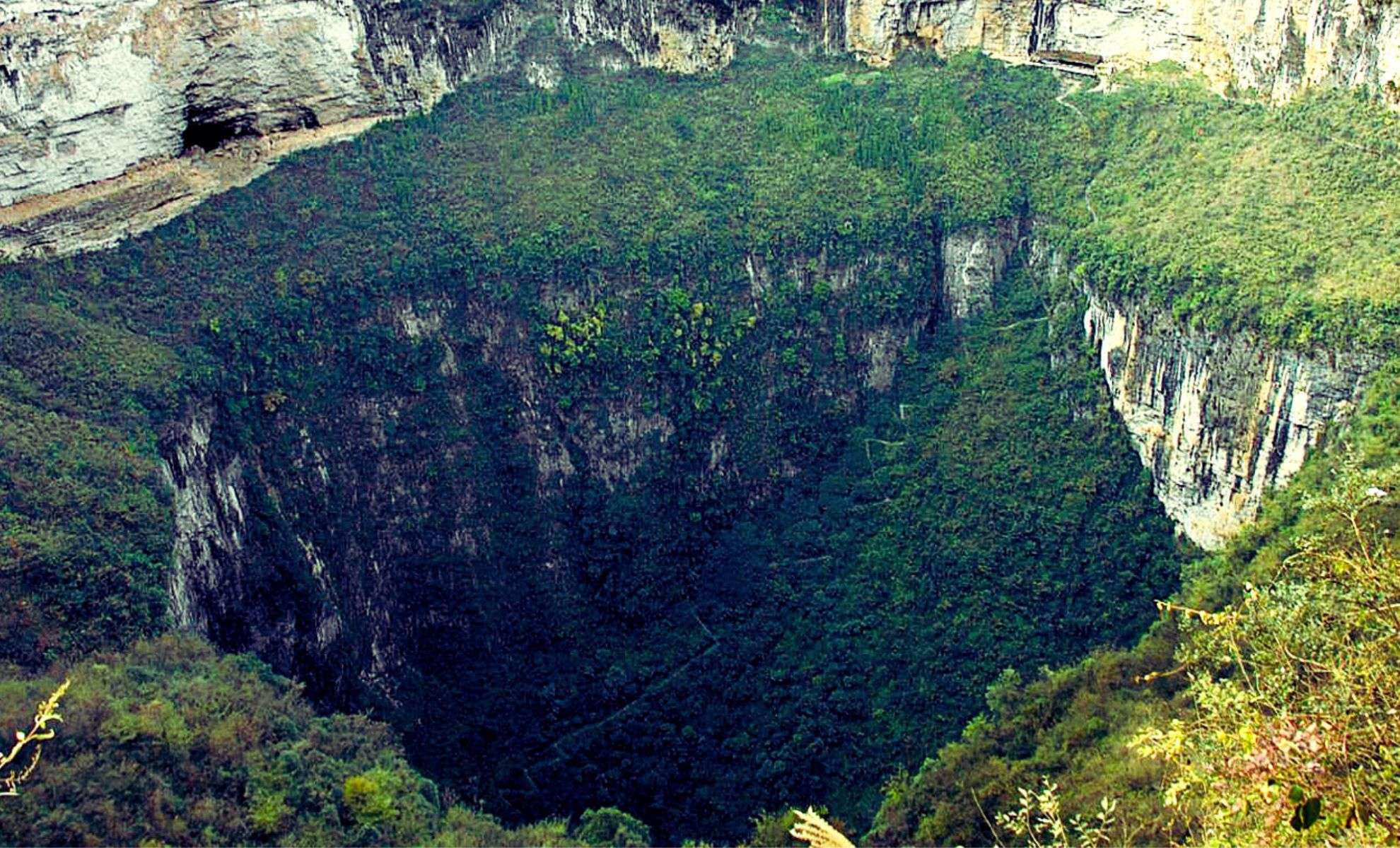
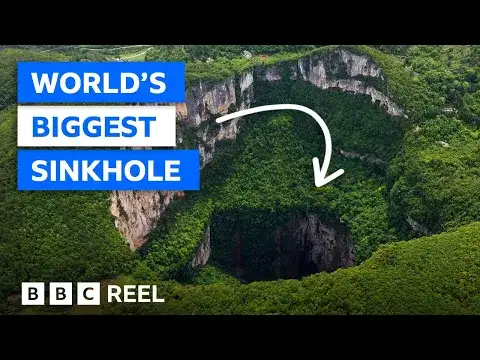
Known as the "Heavenly Pit," Xiaozhai Tiankeng is recognized globally as the deepest and largest sinkhole on Earth. Situated in southwestern China, this remarkable geological marvel has fascinated researchers and explorers since British cavers first encountered it in 1994. Measuring over half a mile across and descending beyond 2,172 feet, Xiaozhai Tiankeng showcases the fascinating interactions among water, rock, and geological time through the lens of karst processes. Recent ecological research, including studies published in Plant Ecology and a feature by the BBC, reveals the distinctive microclimates and abundant biodiversity thriving inside this extraordinary sinkhole.
The Geological Origin of Xiaozhai Tiankeng
Xiaozhai Tiankeng formed through a classical example of karst landscape development, where acidic water slowly dissolves soluble rocks such as limestone. Over roughly 128,000 years, rainwater, combined with carbon dioxide, seeped through cracks in ancient Triassic limestone rocks beneath Fengjie County, gradually hollowing extensive cave systems. Eventually, the collapse of these cavern roofs led to the enormous pit visible today. This required specific geological conditions: elevated, clay-free limestone and consistent monsoon rains to drive continuous erosion.
The limestone cliffs of the sinkhole reveal Earth's geological history in their layers. Two vast, bowl-shaped depths, each plunging more than 984 feet, form a giant natural amphitheater. Seasonal monsoon rains create temporary waterfalls cascading down the steep walls, disappearing into hidden underground streams. This unique formation serves as an active field site for geologists studying karst landscape evolution, underground hydrology, and surface processes.

An Unexpectedly Vibrant Ecosystem within the Deep Pit
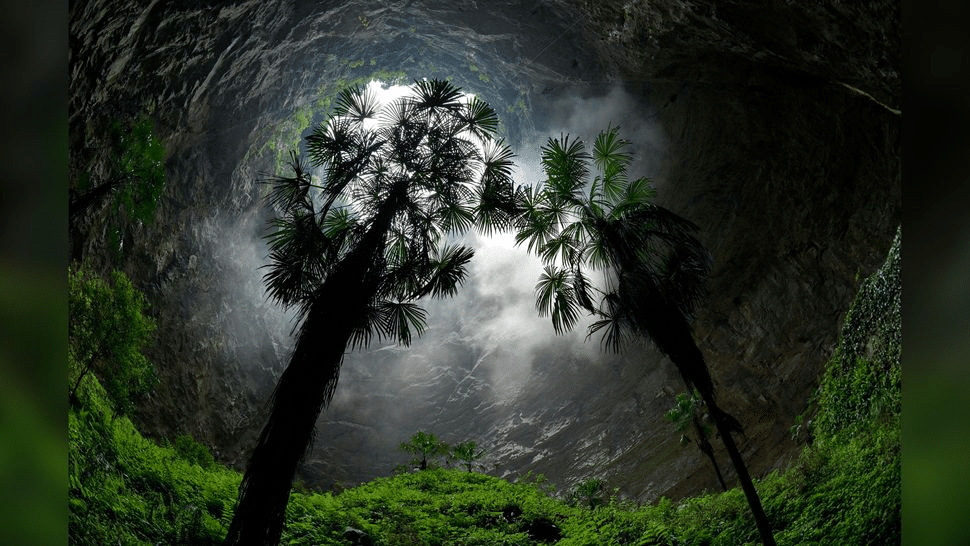
Contrary to its sheer drops and rugged terrain, Xiaozhai Tiankeng supports a rich and diverse biosphere. Moderate sunlight penetrates enough to sustain dense plant growth, including mosses, ferns, and towering ginkgo biloba trees. Researchers have documented over 1,285 species of flora and fauna living inside the sinkhole, including the elusive clouded leopard, a rare wild cat species with a global population estimated below 10,000.
This natural sinkhole creates a greenhouse-like environment with stable temperatures and elevated humidity, fostering a distinct microclimate compared to the surrounding highlands. This isolation encourages species to adapt uniquely along the vertical habitat layers, effectively generating ecological "zones" stacked within the pit. Xiaozhai Tiankeng thus serves as a critical natural laboratory for understanding ecological succession, evolutionary processes, and responses to climatic conditions.
Exploring the Underground River Network
Deep within Xiaozhai Tiankeng lies a mysterious subterranean river system. An underground river flows nearly 5.3 miles before it surfaces at Difeng Cave on the sinkhole’s floor, plunges down a 151-foot waterfall, and continues through complex underground passages. This aquatic labyrinth remains among the least explored in China, with speleologists facing hazardous water surges and challenging conditions during exploration efforts.
The seasonal rains dictate the river’s intensity, linking surface weather patterns to groundwater dynamics below. Scientists are deploying advanced tools such as radar sensing, environmental sensors, and isotopic dating to decipher the formation and hydrology of this vast underground network. Beyond improving our understanding of karst water systems, these studies help manage groundwater resources in vulnerable limestone terrains.
Cultural Significance and Ongoing Scientific Exploration
Besides its remarkable geological and biological attributes, Xiaozhai Tiankeng holds an important place in local folklore and ongoing research. Folktales speak of dragons residing in the depths and celestial doorways hidden behind its waterfalls, weaving myth with science in a fascinating tapestry. This atmosphere has drawn adventurers, visitors, and scientists worldwide.
Continuous international research expeditions aim to refine the chronology of the sinkhole’s formation, study its climate, and catalog its biodiversity. The fusion of scientific findings with local oral history enriches the understanding of this natural treasure. As investigations unfold, Xiaozhai Tiankeng stands as a powerful symbol of the geological forces shaping our planet from below.





0 comments
Sign in to Comment