
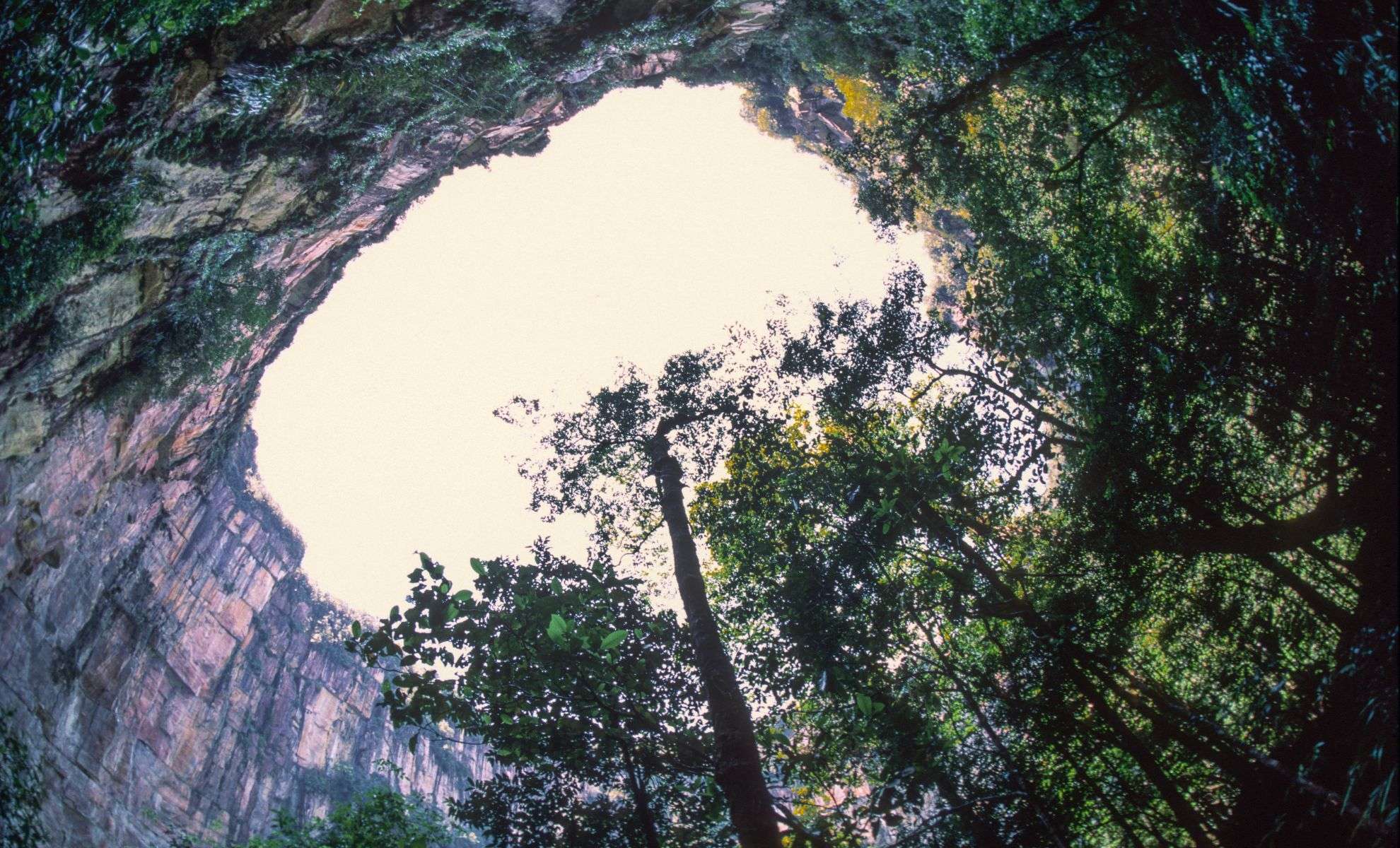
Deep within southern China's limestone regions lie enormous sinkholes called tiankengs, which are revealing pristine ecosystems and previously unknown species. These vast depressions, often called heavenly pits, harbor ecological mysteries.
The Hidden Worlds of Tiankengs
Referred to as tiankengs or “heavenly pits,” these colossal sinkholes have intrigued geologists for years. Recent explorations, however, are reshaping scientific understanding.
In August, explorers ventured into a newly discovered tiankeng measuring about 300 meters in length, 150 meters across, and plunging more than 190 meters deep. This site is among 30 such formations documented in China's Guangxi Zhuang Autonomous Region, part of the UNESCO-designated South China Karst area.
An Ancient Forest Enclosed Underground
Contrary to appearing barren, tiankengs nurture vibrant, untouched forests. Researcher Tang Jianmin notes the remarkable biodiversity inside these vertical caverns.
Reflecting on a 2016 expedition, Jianmin described: “The scene down there was stunning: an underground pristine forest with no trace of human activities, with 40 metre-high ancient trees and a group of endangered wild plants from the times of dinosaurs.”
Despite limited sunlight, these underground sanctuaries sustain diverse life, revealing new insights into their survival mechanisms.

Unique Microclimate Nourishing Life
A study published in July highlights how tiankeng flora adapt. Plants like nettles, ferns, and the Chinese rain bell (Strobilanthes cusia) thrive by absorbing plentiful nitrogen, phosphorus, potassium, calcium, and magnesium.
The research stated: “Plants adjust their nutrient intake to cope with challenging environments.” Paired with high humidity and distinctive microclimates, these factors foster rare plants that reach the canopy within the pits.
Isolated Refuges for Evolution
These karst tiankengs are more than geological wonders; they serve as natural sanctuaries. Their sheer cliffs and rugged locations protect them from human disturbance, preserving ancient habitats and enabling isolated species evolution.
Jianmin highlights their importance: “Karst tiankeng is a relatively closed environment with high humidity, low temperature and a high concentration of negative oxygen ions.”

The Worldwide Importance of China’s Tiankengs
Of around 300 tiankengs discovered globally, about two-thirds are found in China. Others exist in Papua New Guinea, Malaysia, Madagascar, and parts of Europe but don’t rival the size and biodiversity of those in South China Karst.
Being a UNESCO World Heritage site emphasizes the region’s geological and environmental value. Jianmin notes: “There is also a good chance that previously unknown species will be discovered in these environments.”
Ongoing explorations into these deep sinkholes continuously uncover new chapters in Earth’s natural history. Far from mere geological marvels, the tiankengs of China act as living research sites, illuminating life’s resilience and evolutionary journeys shaped by isolation.
- Categories:
- News








0 comments
Sign in to Comment