

A student in Virginia has engineered a novel filtration device capable of extracting over 95% of microplastic contaminants from drinking water. This method leverages a magnetic substance known as ferrofluid to attract and remove minuscule plastic fragments, bypassing the need for conventional membrane filters.
Microplastics have become pervasive worldwide, detected in environments ranging from vast oceans to internal human organs. Although their overall effect on health remains under investigation, their widespread presence has sparked growing concern.
Living in Warrington, Virginia, where local water sources were reported to contain PFAS and microplastic pollution, Mia Heller, a Kettle Run High School student, was motivated to develop a practical filtration alternative to address these contaminants.

Personal Challenge Inspires Functional Prototype
The project began at Mia Heller’s home, where her family’s water filtration unit required frequent filter replacements and upkeep. As reported by Smithsonian Magazine, she sought to create a low-maintenance system with fewer replaceable components.
“It inspired me to design a filter without the use of membranes, to decrease the costs and maintenance needs associated with water filtration,” she explained.
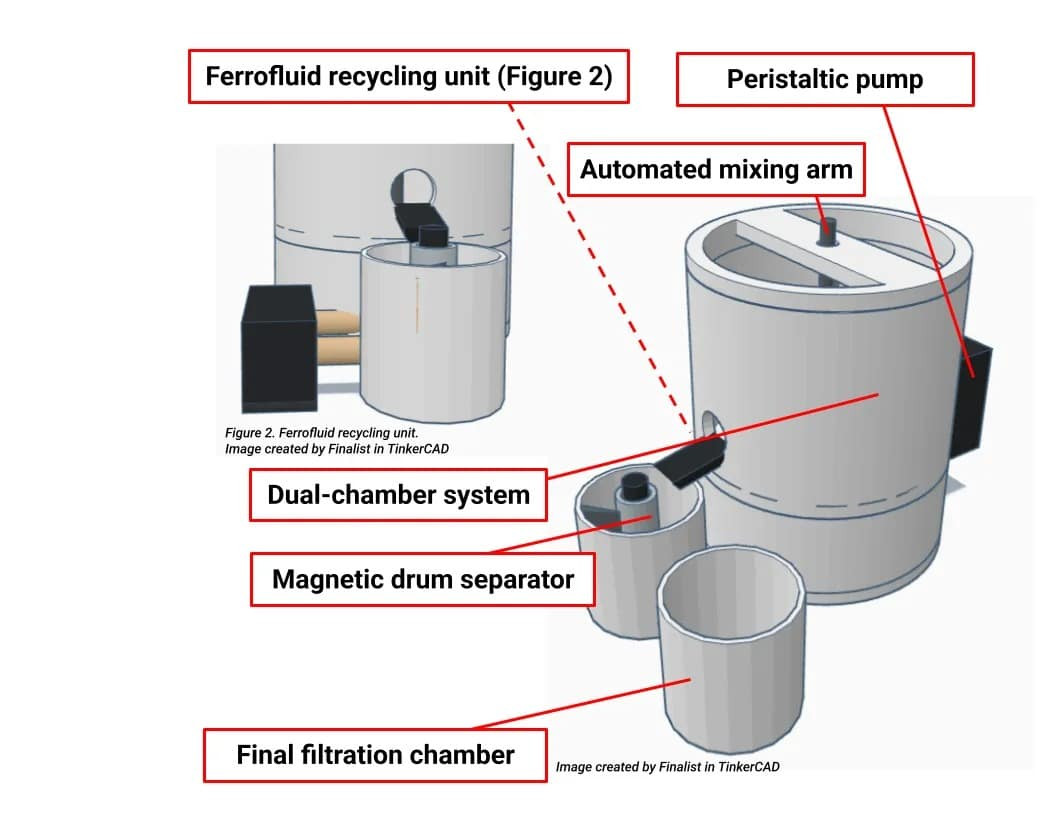
Her final design contains three parts: a chamber for the contaminated water, a compartment holding the ferrofluid, and a smaller section where the magnetic separation of microplastics occurs.
The ferrofluid bonds to the microplastics, and a magnetic force draws the ferrofluid-plastic mix out of the water. This magnetic liquid is then reclaimed and reused, minimizing the need for disposable filter elements.
Microplastics Rapidly Invade Ecosystems and Human Bodies
The Environmental Protection Agency classifies microplastics as particles occurring between 1 nanometer and 5 millimeters. Due to their tiny size, these particles often evade standard filters and accumulate within organisms.
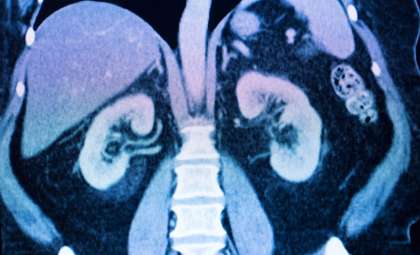
Studies have identified microplastics in over 1,300 animal species. Research by Matthew J. Campen at the University of New Mexico reveals their presence in diverse human tissues, including the brain and bone.
Notably, concentrations of these particles in human brain samples have surged by nearly 50 percent in under ten years, though the precise health implications remain uncertain.
“There are still a lot of questions as to whether these plastics are really impacting our health at this point,” said Campen, “there might be issues for cardiovascular disease and potentially neurological disease.”
Encouraging Early Tests and Future Challenges
To evaluate her invention’s effectiveness, Heller crafted a custom turbidity sensor to monitor particle levels in water samples. Her device demonstrated a 95.52 percent reduction in microplastics and managed to reclaim 87.15 percent of the ferrofluid.
This performance rivals or surpasses many conventional water treatment technologies, which typically remove between 70 and 90 percent of microplastics.
Still, some obstacles remain. Campen highlighted the importance of safely disposing of the collected microplastics to prevent secondary contamination. Additionally, producing ferrofluid economically at a large scale continues to be a barrier.
Heller envisions her filter as a compact unit suitable for installation beneath kitchen sinks rather than for industrial plants. She plans to have her results verified through professional testing before proceeding with further development.
- Categories:
- Science












0 comments
Sign in to Comment