
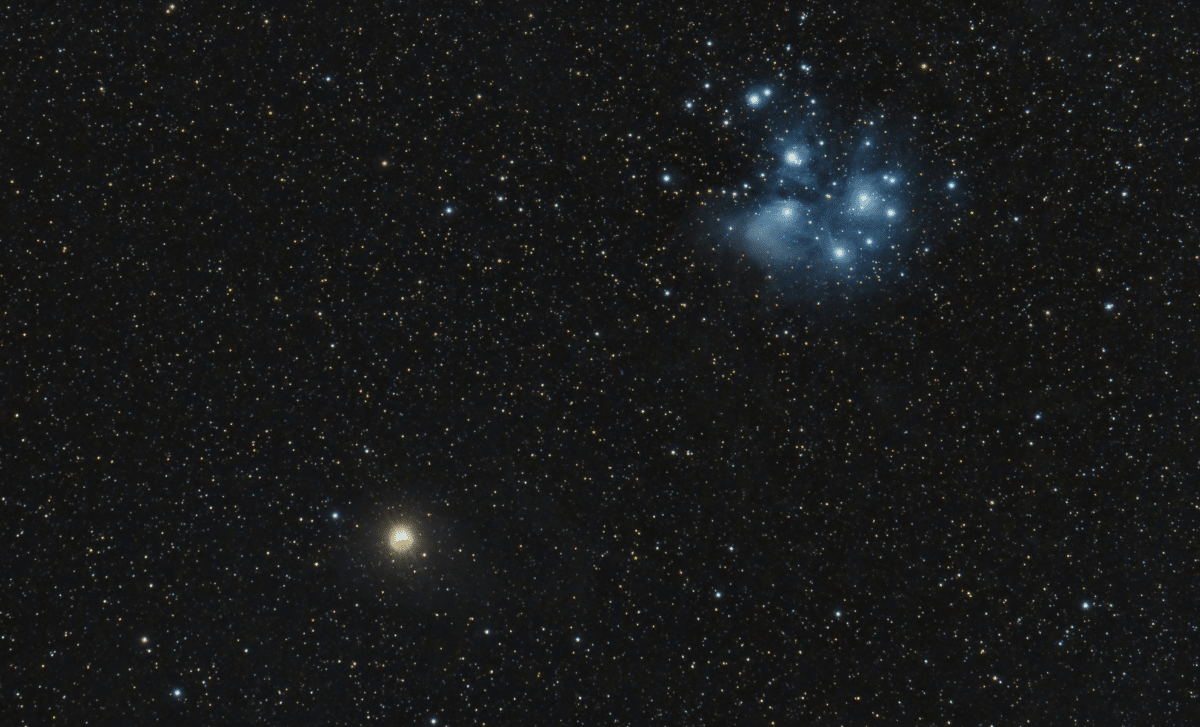
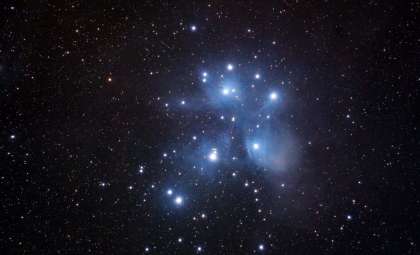
In a captivating astronomical event set to captivate early risers, Mars will traverse near the Pleiades star cluster—commonly called the Seven Sisters—offering a rare visual conjunction, as highlighted on WhenTheCurvesLineUp.com. This phenomenon reaches its peak around June 28, providing a unique opportunity to observe these two distinct cosmic features appearing close together before daylight breaks.
An Uncommon Celestial Event with a Long Wait
This Mars and Pleiades conjunction garners attention due to its infrequent appearance, with similar favorable viewing conditions not anticipated until 2034. Data cited from WhenTheCurvesLineUp.com explains that Mars will seemingly pair up closely with the cluster from Earth's viewpoint, despite their immense physical distances. The planet's slow drift against the stellar backdrop makes this event visible over several days, rather than being a brief, fleeting moment.
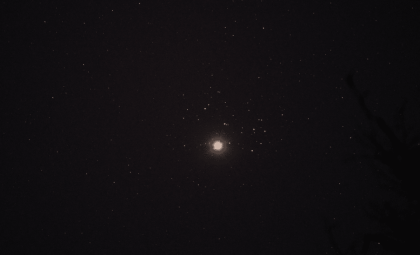
During this timeframe, observers will see Mars as a bright, reddish dot slowly migrating near the compact stellar group of the Pleiades, residing in the Taurus constellation. This cluster is composed of young, hot stars born from a shared molecular cloud, presenting a delicate, shining assembly in the night sky, especially under dark conditions. The juxtaposition of Mars’ steady reddish glow with the Pleiades’ clustered twinkle creates a memorable spectacle, visible with the naked eye or simple binoculars.

Optimal Viewing Times and Locations for the Event
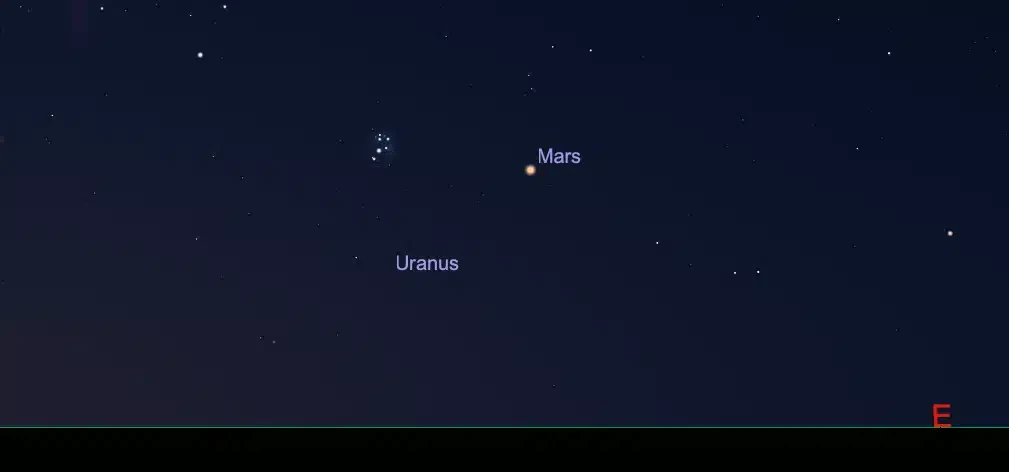
The ideal moment to observe occurs within the hour before sunrise, when the eastern horizon starts to brighten but darkness remains enough to reveal fainter stars. This display will appear low above the eastern horizon worldwide, so an unobstructed view of the horizon is essential. Light pollution in urban areas can significantly diminish visibility, making rural or elevated spots preferable for clear observation.
Initially, Mars will be positioned just beside the Pleiades, gradually moving beneath the cluster during the following mornings. Around June 28, the gap between Mars and the star cluster will be at its narrowest, presenting the most tightly packed visual conjunction. Binoculars can enhance this view, clarifying the fainter stars within the cluster and allowing both Mars and the Pleiades to be seen together through a single lens. Stargazing apps can be helpful to pinpoint the Taurus constellation and ensure correct viewing direction.
The Scientific Importance and Visual Charm of the Event
The Pleiades, known alternatively as the Seven Sisters, is a star cluster comprising hundreds of stars formed roughly100 million years ago from a common gas and dust cloud. Although numerous stars inhabit the cluster, just a few are visible without optical aid. Their shimmering blue-white hues contrast vividly with Mars' rusty red, a result of oxidized iron on Mars' surface and the hotter temperatures of those stars.
Mars’ current orbit aligns it visually near this cluster from Earth's point of view, creating a line-of-sight coincidence rather than indicating any close spatial proximity. Such planetary lineups with star fields recur periodically, but few are as well positioned, bright, and convenient for viewing as this upcoming event. Its timing and visibility make it a highlight for amateur and seasoned stargazers alike.
Viewing Tips and Conditions to Maximize Observation
Clear skies are crucial for a successful sighting, as even thin clouds can hide the faint stars of the Pleiades, leaving only Mars visible. Atmospheric factors near sunrise—such as haze and humidity—may also influence the clarity of the view, especially since the pair will be close to the horizon. Observers should arrive early to allow their eyes to adjust to low-light conditions.
Thanks to the simplicity of required gear, this event is accessible for a broad audience. While binoculars enhance the observation, the conjunction can be appreciated without them under ideal conditions. Mars will look like a bright red point near a faint star cluster, a contrast easily spotted even in moderately light-polluted areas. Watching Mars's gradual movement against the Pleiades over several mornings offers a dynamic and rewarding experience, far beyond a fleeting moment in the sky.
- Categories:
- News





0 comments
Sign in to Comment