
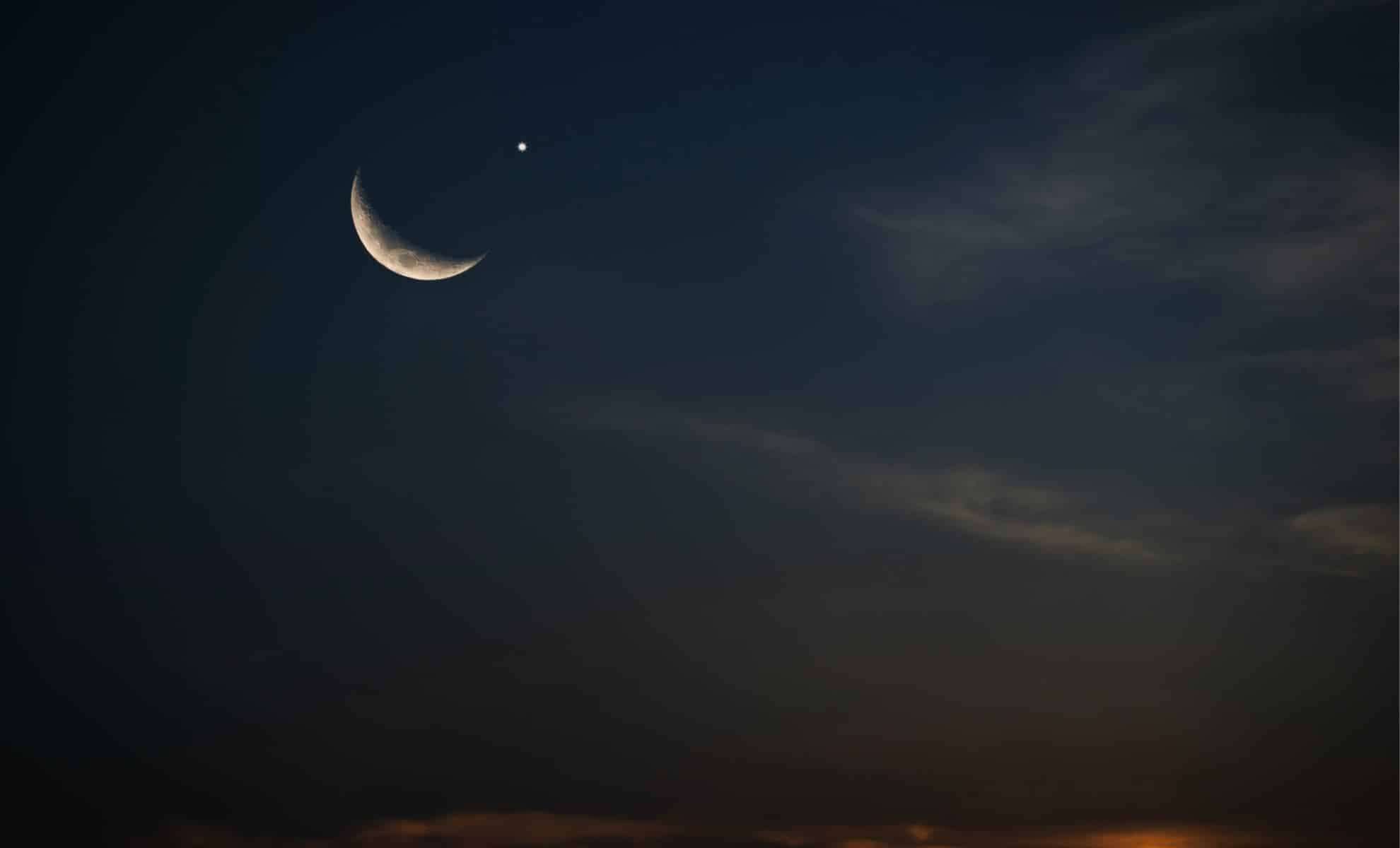
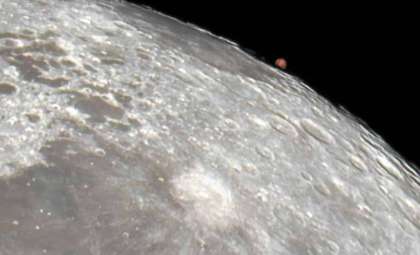
This Sunday evening brings a remarkable astronomical event as the waxing crescent moon aligns closely with Antares, the brightest star in the Scorpius constellation. Visible to the naked eye across much of the globe on August 3, 2025, this celestial pairing offers a spectacular sight for amateur and experienced stargazers alike. As reported by Forbes, the proximity of the moon to Antares, a dazzling red supergiant, creates a uniquely captivating view in the night sky.
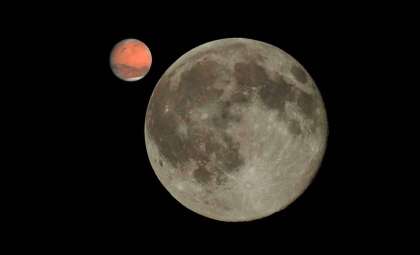
Known as a “Mars rival” due to its glowing reddish-orange appearance, Antares has fascinated stargazers for centuries. Situated roughly 550 light-years from Earth, it highlights the immense scale of the cosmos. Observing Antares near the moon invites reflection on the intricate orbital dynamics that govern Earth, the moon, and distant stars. Whether you’re a seasoned stargazer or a casual sky admirer, this event is a rare chance to witness a beautiful cosmic alignment.
The Waxing Crescent Moon and Antares: A Captivating Cosmic Meeting
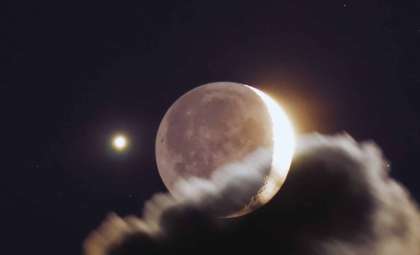
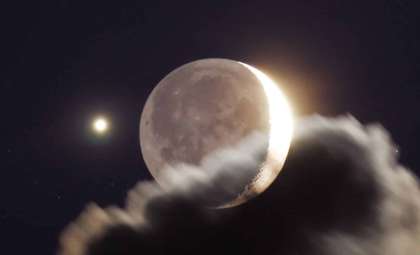
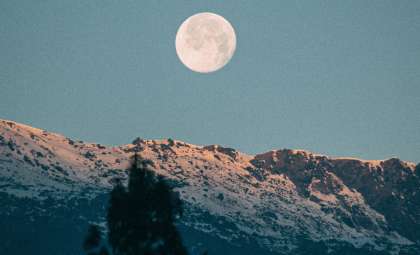
After sunset on August 3, direct your gaze to the southwest horizon to catch an unforgettable sight. The waxing crescent moon will radiate brightly, with the red supergiant Antares positioned just above it. Their close approach will make the two appear nearly connected, an unusual spectacle for the casual observer. With a brightness of magnitude 1.1, Antares’ vivid red-orange glow is impossible to miss. As darkness deepens, the pair will gradually descend toward the horizon, heightening the event’s fleeting magic.

This astronomical phenomenon is part of a regular pattern where the moon drifts near bright stars positioned along the ecliptic, the moon’s path across the celestial sphere. Stars like Aldebaran in Taurus, Regulus in Leo, Spica in Virgo, and now Antares all lie along this celestial track. These close encounters between the moon and bright stars offer spectacular, predictable moments for watchers worldwide. Yet the specific closeness of the moon and Antares on this date makes for an especially notable event.
How to Best View the Moon and Antares
No telescope is needed to enjoy this moon and Antares conjunction, as the display is easily visible without any optical aids. However, viewers wanting an enhanced experience can use binoculars to observe the moon’s surface features in greater detail and to appreciate the rich red tones of the red giant star. Atmospheric effects may cause subtle variations in the star’s color, adding to the visual intrigue.
Selecting a spot with a clear southwest view, free from obstructions and ideally distant from city lights, will maximize viewing quality. While light pollution can handicap star visibility, the brightness of the moon and Antares ensures this duo remains impressive in many environments. As the two descend lower in the sky, their brief togetherness will create a memorable and enchanting scene.
Antares: The Magnificent Red Supergiant
Antares, shining above the moon during this event, is a vast red supergiant star famed for its intense size and striking coloration. Approximately 550 light-years distant, Antares ranks among Earth’s most massive visible stars. Called the “heart” of the Scorpius constellation, its distinctive reddish-orange glow distinguishes it clearly. Though it shares a similar hue with Mars, Antares outshines and dwarfs it in both scale and luminosity.
Despite its relative nearness on a cosmic scale, the star’s light travels centuries before reaching us. Its size, brightness, and advanced evolutionary stage have made it a key subject in understanding stellar lifecycles. Antares is approaching the final phases of its life as a supergiant, eventually destined to explode in a brilliant supernova, marking a spectacular finale to its cosmic journey.
Upcoming Astronomical Highlights to Watch For
The August 3 moon-Antares conjunction is just one of several exciting sky events this month. As the full sturgeon moon peaks on August 9, the bright star Vega of the Summer Triangle will be easily spotted in the southeast after dusk. The famed Perseid meteor shower will reach its zenith between August 12-13, although moonlight may partially dim its display. For optimal meteor viewing, later nights around August 15, when moonlight wanes, offer better conditions.
Additionally, on August 12, a spectacular conjunction between Jupiter and Venus will create a dazzling show rivaling the moon and Antares. The planets will appear closely paired, providing another highlight for sky enthusiasts. Online tools like Stellarium Web and Night Sky Tonight can help track these and other celestial events, ensuring stargazers don’t miss any of the wonders above.
- Categories:
- News


0 comments
Sign in to Comment