
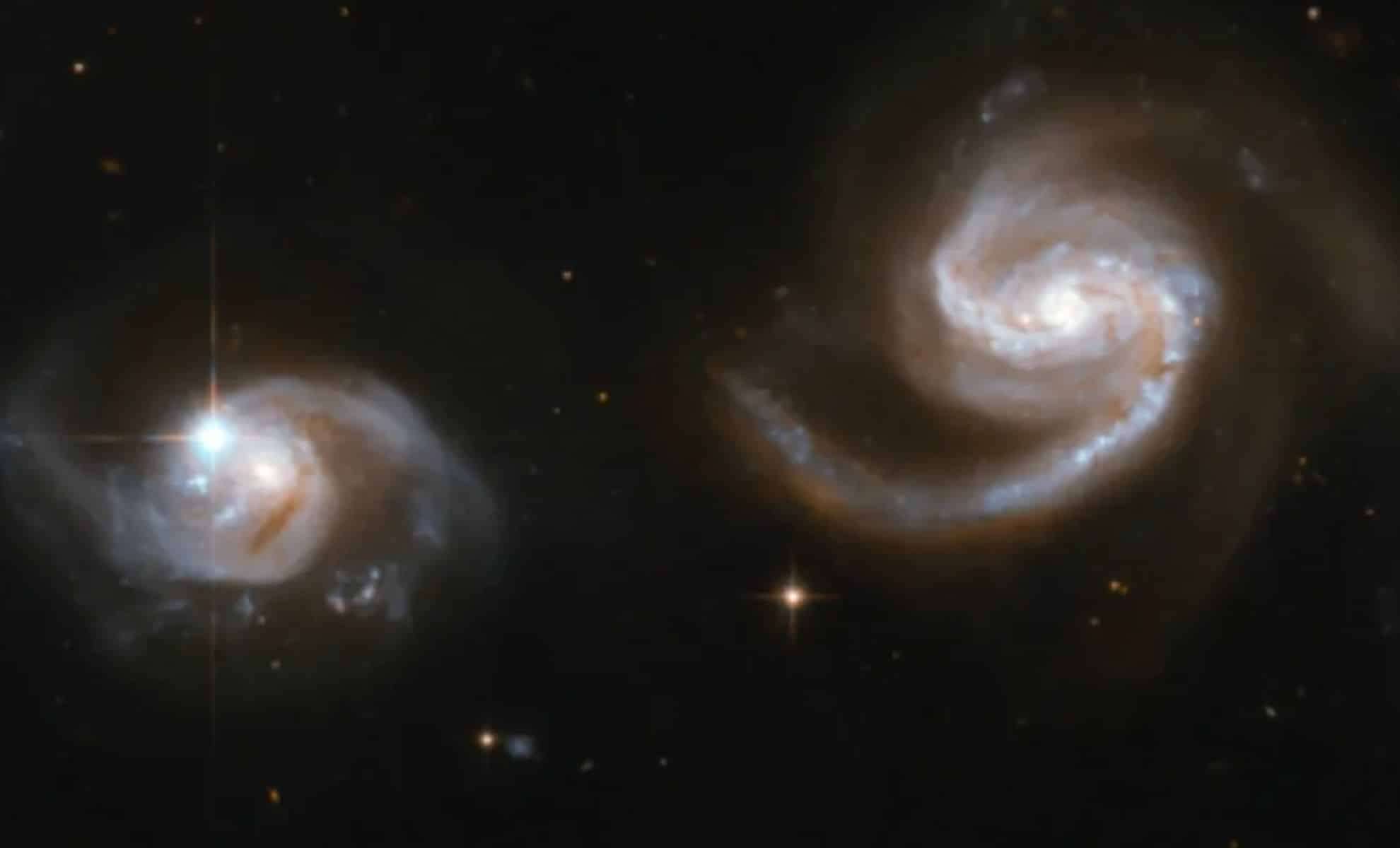
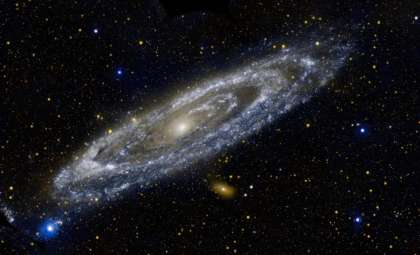
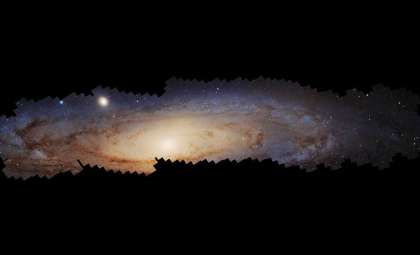
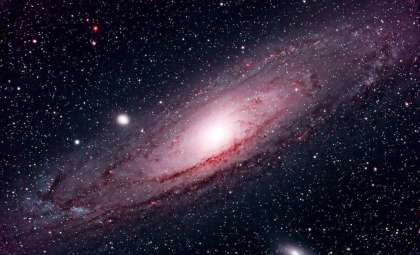
Recent findings published in Nature Astronomy question the long-standing prediction that the Milky Way and the neighboring Andromeda galaxy will collide in the distant future. For many years, scientists anticipated a colossal galactic merger between these two spirals within the next 4 to 5 billion years, potentially forming a combined galaxy often dubbed “Milkomeda.” Yet, advanced simulations using the latest astronomical observations now indicate that this event’s likelihood might be considerably lower. Current estimates suggest only about a 50% probability of merger over the next 10 billion years, prompting a significant revision in our understanding of galactic evolution in our cosmic vicinity. This article delves into the new evidence and its consequences for galactic dynamics.
Reassessing the Probability of a Milky Way-Andromeda Union
Til Sawala, the principal investigator from the University of Helsinki, discusses how updated datasets have transformed previous expectations. “Our key conclusion is that the previously assumed collision between the Milky Way and Andromeda, once expected around 4.5 billion years from now, is far from guaranteed. Our analysis shows only roughly a 50% chance this merger will occur within the next 10 billion years,” Sawala told Space.com. This represents a shift from near certainty to a balanced possibility regarding their future encounter. Sawala admitted the outcome was unexpected: “Although I anticipated some adjustments, discovering only an approximately equal chance of collision was quite surprising.”
This reevaluation arises from integrating up-to-date measurements from the European Space Agency’s Gaia satellite and the Hubble Space Telescope. These improved data enabled more precise calculations of the galaxies’ masses, velocities, and gravitational interactions, including those of smaller companion galaxies orbiting each major system.

Influence of the Large Magellanic Cloud and Enhanced Models
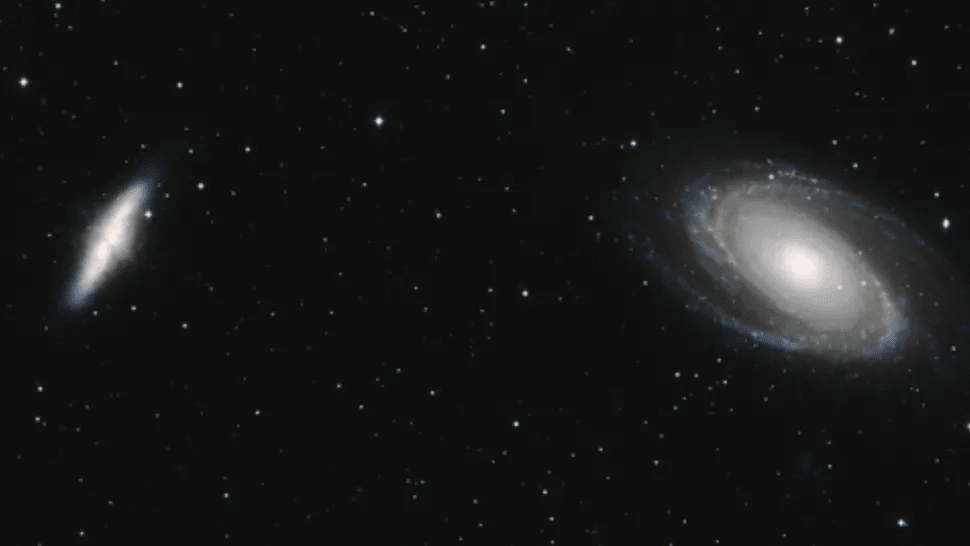
A significant advancement in this study compared to earlier work is accounting for the Large Magellanic Cloud (LMC), the Milky Way’s most massive satellite galaxy. Sawala notes, “Our research differs from prior models by incorporating more accurate data and considering additional factors like the Large Magellanic Cloud’s effect.” The LMC’s gravitational forces slightly modify the Milky Way’s path, influencing their potential future encounter with Andromeda.
Interestingly, while the LMC reduces the odds of a Milky Way-Andromeda merger, it simultaneously raises the chance that our galaxy will eventually assimilate the LMC itself within around 2 billion years. The updated simulations provide a nuanced view of possible outcomes, with a head-on collision now deemed extremely unlikely (less than 2% probability). Instead, initial close flybys where the galaxies pass near each other and lose some orbital energy could set the stage for a merger much later. “Most merger scenarios involve the galaxies initially swinging past each other, losing orbital momentum, which then leads to eventual coalescence,” explained Sawala.
Near Misses and Extended Galactic Independence
The precise closeness at which the galaxies pass remains highly uncertain. Sawala emphasizes, “If during their initial approach, they remain separated by more than roughly 500,000 light-years, they may never merge.” This possibility introduces a future where the galaxies continue on distinct paths, avoiding the anticipated cosmic collision.
“It is nearly as probable that they will stay distant enough to live largely independent lives, evolving without major interference from each other,” Sawala added. This concept of a wide miss fundamentally changes the cosmic storyline previously assumed, where a collision seemed inevitable. Instead, the Milky Way and Andromeda may remain neighboring giants for billions of years without significant disruption to their stellar arrangements.
- Categories:
- News



0 comments
Sign in to Comment