
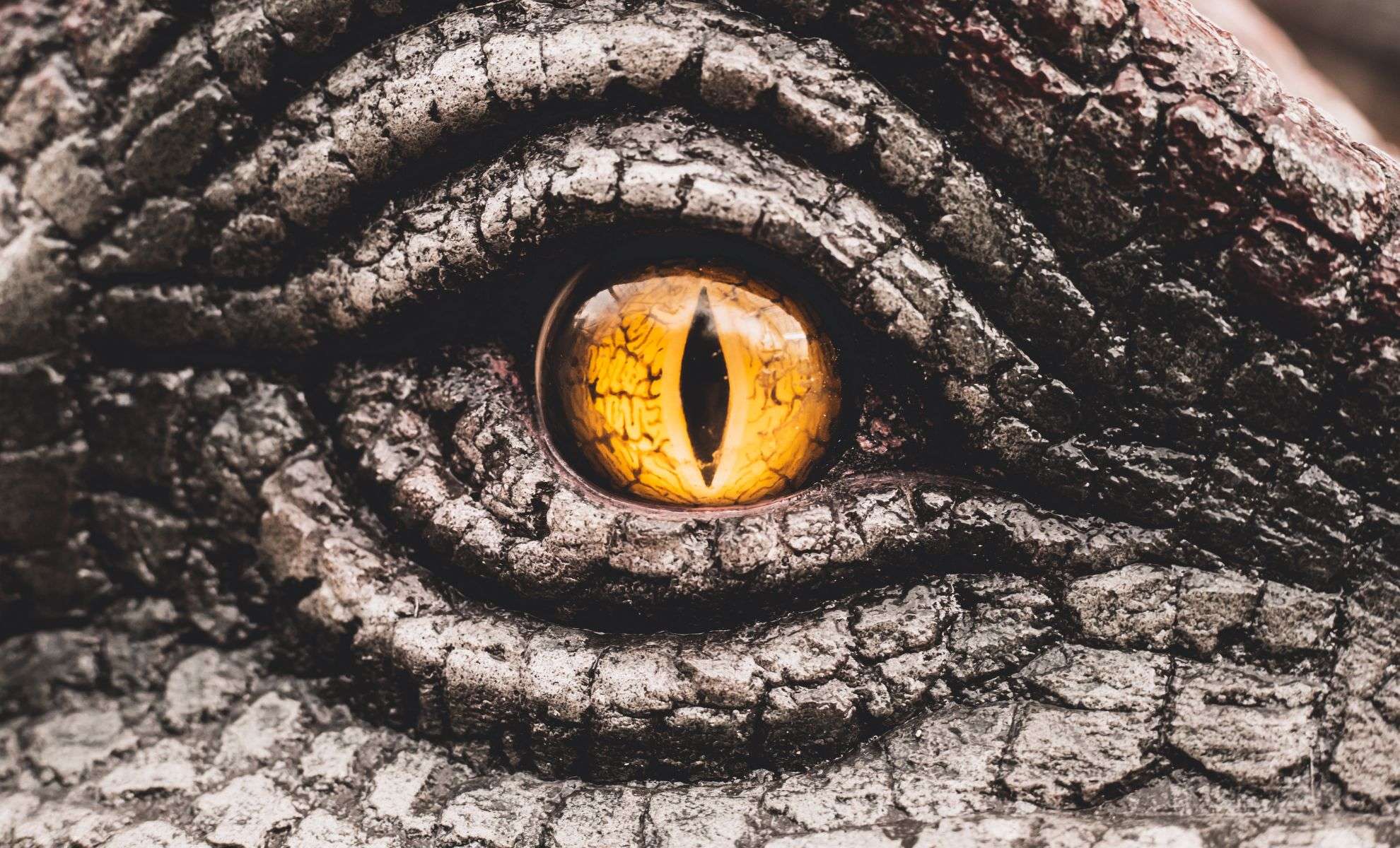
A woman residing in the Netherlands was diagnosed with an unusual neurological condition that caused her to perceive human faces as reptilian, resembling dragons. This remarkable case is detailed in The Lancet Neurology and sheds light on prosopometamorphopsia (PMO), a rare disorder affecting facial recognition and causing extraordinary visual alterations.
Faces Morphing Into Dreaded Creatures
The patient, aged 52 and living in The Hague, sought psychiatric assistance after enduring prolonged visual disturbances. She described people's faces as darkening, stretching, developing pointed ears, and acquiring scaly, reptile-like skin. The eyes often appeared abnormally large and illuminated in vivid hues such as yellow, green, red, or blue.
Interestingly, these altered facial images sometimes appeared even when no one was around, leading to increasing social withdrawal. The woman reported that these illusions had been a persistent feature of her perception since childhood, deeply affecting her daily life.

Investigating the Brain’s Facial Recognition Regions
Neurologists performed extensive testing, including blood work, EEG, and cognitive assessments, all of which returned normal results. However, MRI scans identified subtle lesions within the brain's white matter near the lentiform nucleus, a key area involved in memory, attention, and emotional regulation.
These lesions, possibly caused by early life oxygen deprivation or minor vascular damage, may have interfered with neural circuits connected to the ventral occipitotemporal cortex. Researchers hypothesize that this disruption led to abnormal electrical activity responsible for the woman’s persistent visual distortions.
Understanding the Perceptual Anomaly of Prosopometamorphopsia
Prosopometamorphopsia is an exceptionally rare neurological syndrome that distorts facial images. While mild cases involve slight warping of facial features, severe manifestations transform faces into grotesque or mythical figures.
Variants like hemi-PMO affect only one side of a face; however, this Dutch woman experienced full-face PMO, where the entire visage appeared altered. Despite symptomatic overlap with psychiatric disorders, PMO stems from dysfunction in the brain’s visual processing regions.
Neuroscientist Dr. Austin Lim, author of Horror On The Brain, explains that PMO likely results from a breakdown in the brain’s repository of facial templates. Much like facial recognition algorithms, the brain reconstructs faces using prior memories, and disruption here can produce bizarre, frightening images.
A poignant example recounts a woman whose perception transformed human faces into dragons, featuring scaled skin, unnatural hues, and sharp ears, demonstrating that PMO involves distinct perceptual distortions rather than mere hallucinations.
Uncommon Diagnosis and Treatment Challenges
When the Dutch woman was treated, medical literature documented fewer than 100 PMO cases. A 2020 case study detailed a patient referred to as "AD" who experienced one half of every face melting, while others described faces resembling witches, zombies, or patchwork masks.
The initial intervention involved administering valproic acid, which reduced the visual anomalies but led to new symptoms, including loud banging noises during sleep.
Subsequently, her treatment shifted to rivastigmine, a medication commonly prescribed for cognitive impairments associated with Alzheimer’s and Parkinson’s diseases. This adjustment alleviated both her auditory and visual hallucinations substantially. After three years under this regimen, she reported a notable enhancement in her overall well-being.
- Categories:
- Science









0 comments
Sign in to Comment