
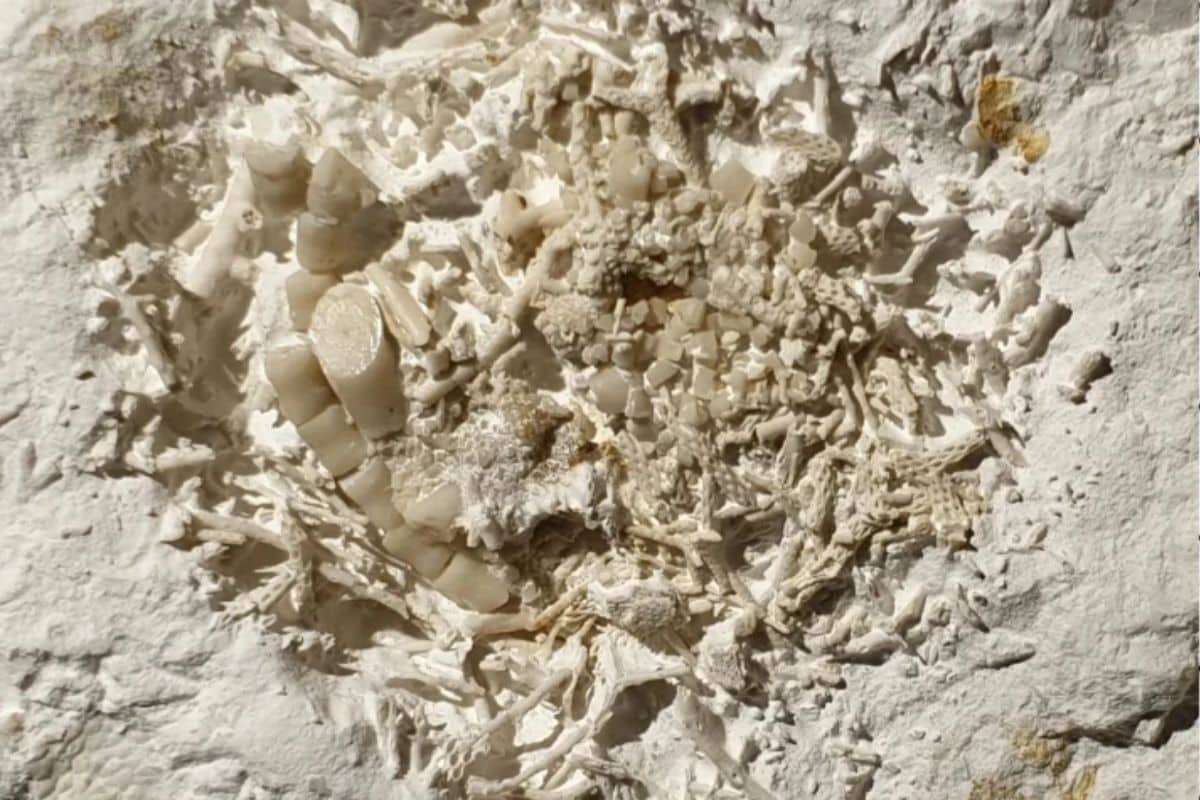
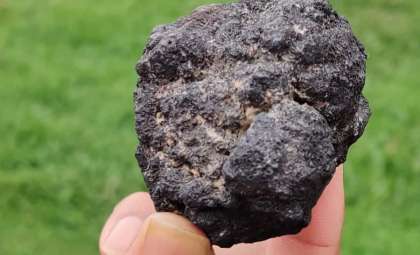
An extraordinary and scarce find has provided new understanding of ancient predator diets: a 66-million-year-old fossilized vomit, uncovered at Stevns Klint along Denmark’s eastern coast. This discovery was made by Peter Bennicke, a dedicated local fossil hunter.
Intrigued by a cluster of embedded fragments in chalk, Bennicke took the specimen to the Geomuseum Faxe for expert analysis. There, curator Jesper Milàn and sea lily specialist John Jagt from the Netherlands confirmed that the fossil is actually the remains of an ancient predator’s discarded meal.
Exceptional "Regurgitalite" Fuels Scientific Investigation
This unique fossil, termed a “regurgitalite”, contains parts of two species of sea lilies—marine animals that resemble plants and thrived in the ocean during the Cretaceous period.
Made mostly of hard calcareous plates with little soft tissue, these creatures were eaten by a prehistoric predator, likely a fish. The predator’s inability to digest the tough fragments led to their expulsion, preserving a snapshot of its feeding behavior.

“Sea lilies don’t provide much nutritional value, as they are mostly composed of hard plates with minimal soft tissue,” Milàn explained in a statement.
Fossilized vomit is an extraordinarily rare find, yet it holds tremendous value. Studying such specimens allows scientists to reconstruct ancient food webs, reveal predator-prey relationships, and gain a better understanding of extinct ecosystems.
Importance of the Stevns Klint Location
The site of the discovery, Stevns Klint, is a coastal area on Denmark’s Baltic Sea that has been designated a UNESCO World Heritage Site. It is renowned for its fossil-rich layers spanning the crucial Cretaceous-Paleogene boundary. This site has provided paleontologists with valuable information about the mass extinction event responsible for the demise of the dinosaurs 66 million years ago.
This latest find adds to Stevns Klint’s scientific importance, offering a rare glimpse into the marine life and predator behaviors just before the planet-wide extinction.
Museum Display Educates Public on Ancient Life
Known as Danekræ DK-1295, the fossil has been awarded the prestigious “Danekræ” status, a distinction for rare and valuable fossil finds in Denmark. This recognition is granted following review by a special committee at the Natural History Museum of Denmark.
Now exhibited at the Geomuseum Faxe, the fossil is featured prominently in a display on prehistoric life. The exhibit includes informative materials that explain how regurgitalites form and why they are important to paleontology.
Milàn hopes the fossil will spark public fascination with paleontology, especially concerning lesser-known aspects like predator feeding evidence.
Insights Into Long-Lost Marine Ecosystems
This discovery highlights the importance of researching fossils beyond towering dinosaurs. Regurgitalites provide valuable direct evidence of feeding habits, diet, and ecological relationships in ancient ecosystems.
The remains of sea lilies reveal information about the available prey in ancient oceans and how predators adapted to consuming such unconventional food sources. It also prompts new questions about the environment at Stevns Klint during a period of major ecological transition.
By assembling these findings, researchers can better understand ancient food chains and their response to the dramatic changes 66 million years ago.
More Than Just an Odd Fossil Tidbit
Though the idea of a fossilized regurgitation may strike some as strange or even off-putting, its scientific value is substantial. Finds like Danekræ DK-1295 reveal the complex interactions within ancient food webs and predator-prey dynamics.
So, when imagining prehistoric life, remember that even unusual finds — like a fossilized predator’s vomit — can unlock remarkable stories about Earth’s distant past.
- Categories:
- Science






0 comments
Sign in to Comment