
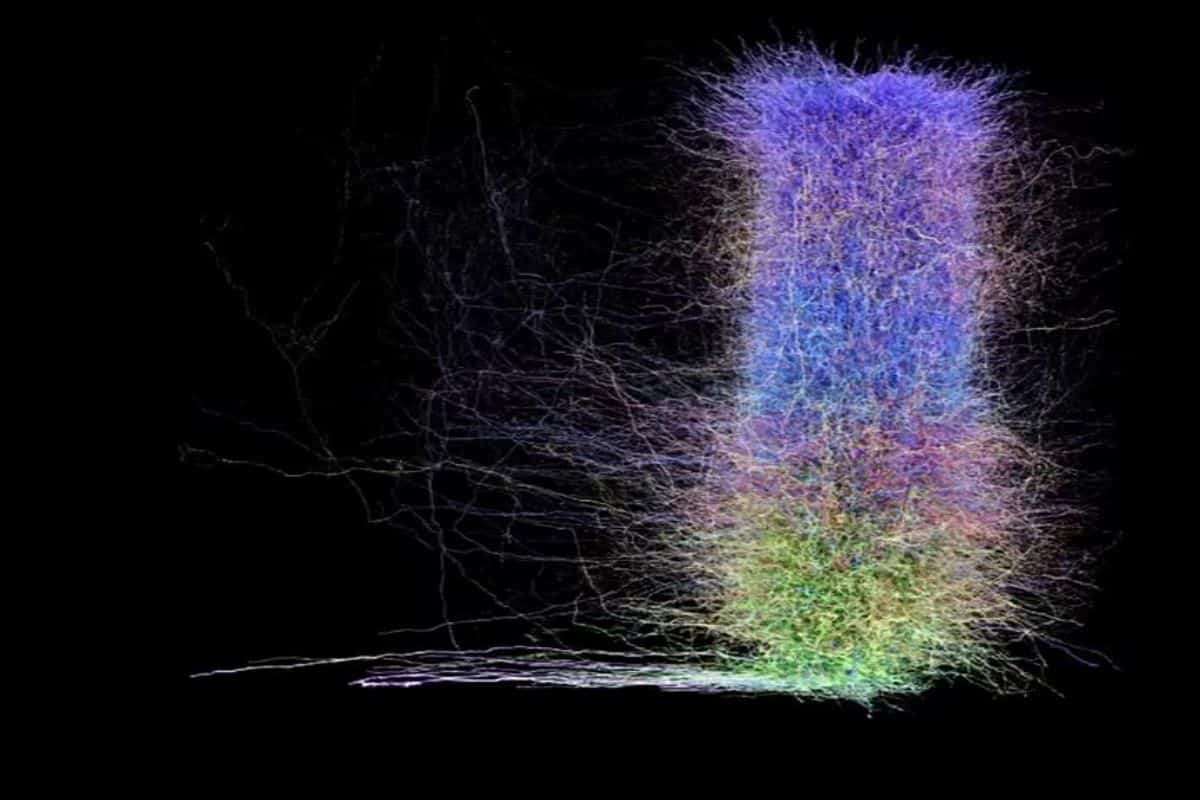
Researchers have created the most detailed functional map of a mouse brain ever produced, uncovering neural networks so elaborate they draw comparisons to the vast intricacy of a galaxy. Published in Nature on April 8, 2025, this breakthrough offers profound insights into brain connectivity and its influence on behavior and cognition.
Exploring the Mouse Brain’s Dense Neural Architecture
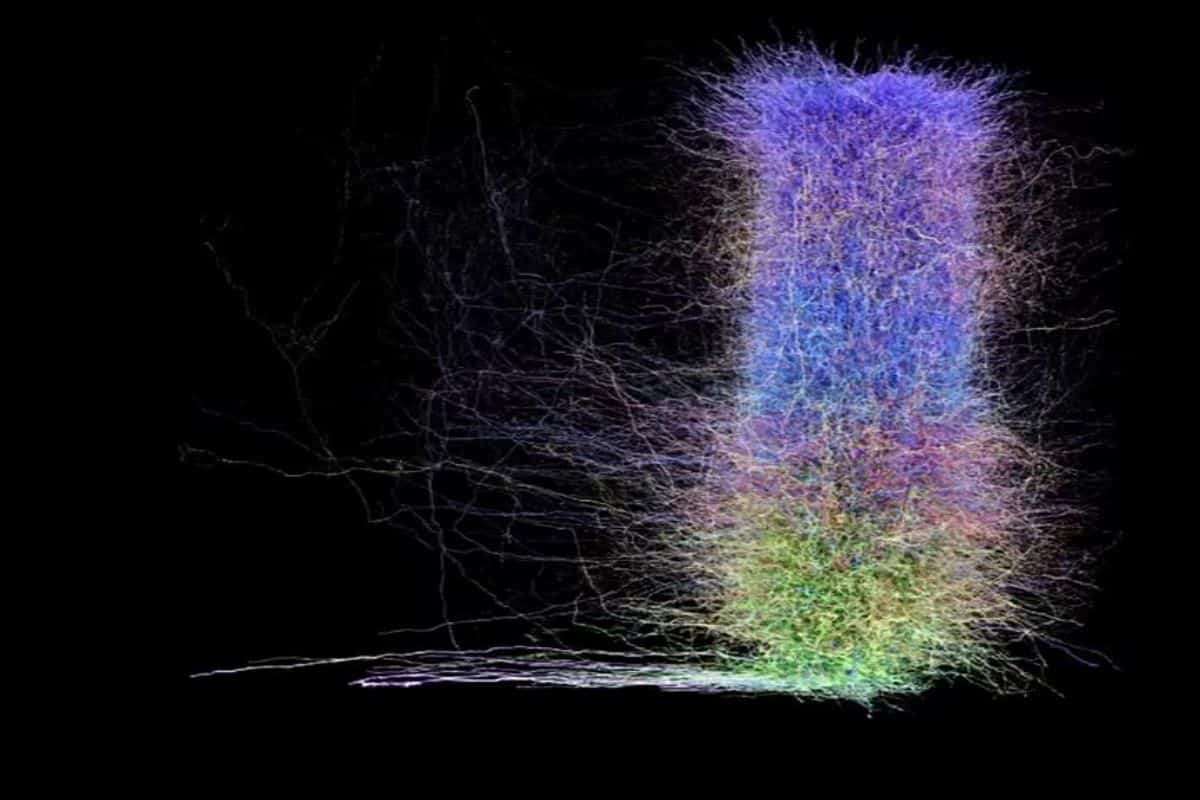
The study, spearheaded by the Allen Institute for Brain Science, examined a minute portion of a mouse brain—comparable in size to a poppy seed. Employing advanced imaging and mapping technologies, the team charted more than 84,000 neurons and tracked their interactions via approximately 500 million synapses.
This discovery underscores the incredible complexity within even tiny brain segments. Forrest Collman, one of the scientists involved, commented, “It evokes the same wonder as gazing at galactic imagery. Observing such intricate networks in a minute portion of a mouse brain highlights the stunning architecture of individual neurons and their vast web of connections.”
Innovative Methods to Track Neural Responses
The mouse was genetically modified so that its neurons emitted light when activated, enabling researchers to monitor neuronal firing in reaction to visual cues. This method allowed precise tracking of neuronal dynamics in the visual cortex while processing stimuli.

Following the functional mapping, the team at the Allen Institute meticulously sliced the brain tissue into over 25,000 ultra-thin sections. Using advanced laser microscopy combined with electron microscopy, they captured nearly 100 million ultra-detailed images.
“We’re looking at a tiny fraction of a brain, and you can see the beauty and complexity of these neurons,” Collman explained.
AI Enhances Mapping of Neural Circuits
Experts from Princeton University leveraged artificial intelligence to map the dense, intertwined neural pathways, assigning unique colors to discrete neural tracts for clear visualization.
This tech-driven approach allowed unprecedented reconstruction of the brain’s wiring. The team calculated that if these neural threads were stretched out linearly, their combined length would exceed 3 miles (5 kilometers).
Beyond pure scientific interest, this comprehensive neural map serves as a critical tool for ongoing and future neurological investigations.
Implications for Brain Disorder Research
Scientists anticipate that detailed knowledge of brain circuitry could reveal connection patterns relevant to neurological conditions.
“You can make a thousand hypotheses about how brain cells might do their job, but you can’t test those hypotheses unless you know perhaps the most fundamental thing—how are those cells wired together,” said Clay Reid, a scientist at the Allen Institute.
The researchers envision this project paralleling the Human Genome Project, enabling precision identification of abnormal connectivity patterns that underlie diseases like Alzheimer’s, autism, and schizophrenia.
Future Directions in Brain Connectomics
The next ambitious goal is to create a comprehensive map of the entire mouse brain, promising deeper understanding of inter-regional brain communication.
Achieving this level of detail could unlock new insights into how brain circuits enable complex functions such as memory formation, decision-making processes, and consciousness.
- Categories:
- Science













0 comments
Sign in to Comment