
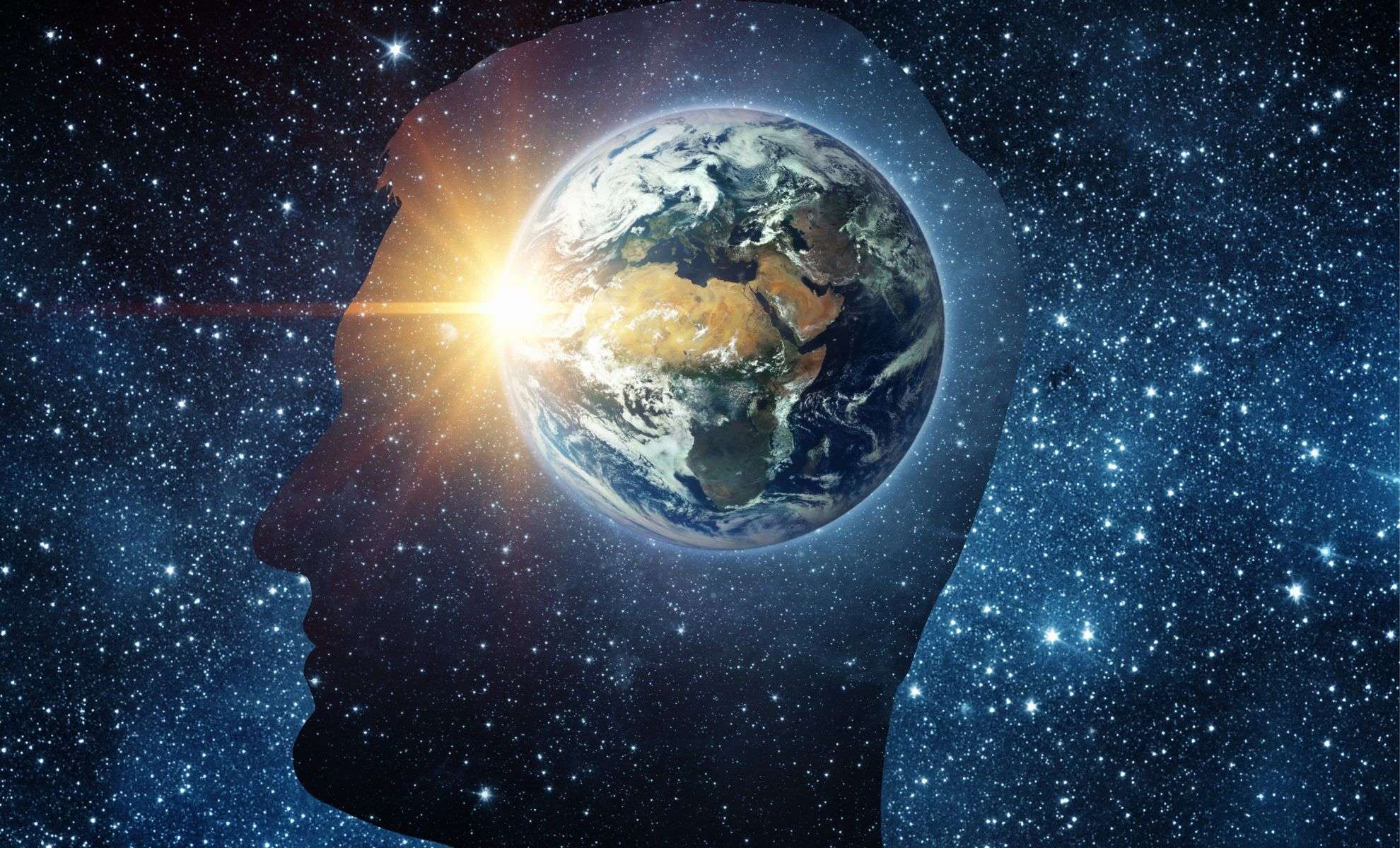
Imagine a scenario where Earth itself gains consciousness, not in some far-off era but in the near term, driven by an artificial intelligence that acts as a planetary brain. This captivating concept is explored by Topher McDougal in his book Gaia Wakes: Earth’s Emergent Consciousness in an Age of Environmental Devastation.
McDougal envisions a future in which the planet, through an expansive AI network, could autonomously regulate its destiny and potentially steer humanity toward ecological balance. While this idea borders on science fiction, it invites us to reconsider Earth’s future and humanity’s role within it.
Is a Brain-Like Intelligence Emerging on Earth?
The Gaiacephalos hypothesis put forward by McDougal challenges conventional perspectives on Earth’s capabilities. He proposes that Earth might develop a global consciousness by harnessing artificial intelligence integrated within human institutions.

Systems such as governments, corporations, and technology networks are increasingly interconnected. As their complexity escalates, these systems could collectively mimic the brain’s intricate information processing.
In such a framework, AI could transcend enhancing individual systems to create an overarching planetary intelligence that influences decisions worldwide. McDougal’s depiction of Earth as a "planetary brain" suggests a tangible possibility rather than mere metaphor.
Technosphere: The Framework for Earth’s Emerging Mind
According to McDougal, the foundation for Earth’s potential brain lies in the “technosphere,” a term coined by geoscientist Peter Haff. This technosphere consists of the interconnected human-made technologies covering the globe—from digital processors to fiber optic networks and cutting-edge quantum computers.
These technologies are already weaving a complex web that could serve as the neural infrastructure for a planetary mind.
Acting as Earth’s neural network, the technosphere powered by AI could evolve to handle vast data flows, supporting the rise of a planetary-scale intelligence. This process would depend on ongoing advancements, accelerating the growth of a global cognitive system.
Artificial Intelligence as the Catalyst for Planetary Awareness
Central to this concept is AI’s capacity to analyze enormous datasets with a speed and efficiency unmatched by human institutions. This capability could enable the global system to oversee environmental and societal functions with unprecedented accuracy.
AI might synthesize information from everywhere on Earth, helping to tackle environmental emergencies, optimize resource allocation, and implement sustainable policies. For instance, a planetary brain powered by AI could rapidly develop strategies against climate change and address population growth far faster than current global initiatives.
McDougal emphasizes that AI’s ability to swiftly process massive amounts of data could enable Earth’s emerging intellect to respond effectively to worldwide challenges.
Implications for Human Society
While the concept of Earth evolving into an advanced superintelligent entity is intriguing, McDougal acknowledges the ethical dilemmas such an evolution would bring. The emergence of planetary consciousness prompts profound questions about human authority and participation in this new system.
Would humanity maintain control, or would it become subordinate to this superior intelligence? According to McDougal, humans might continue to play supportive roles in managing the planet, while the ultimate governance could lie with the planetary brain.
- Categories:
- Science











0 comments
Sign in to Comment