
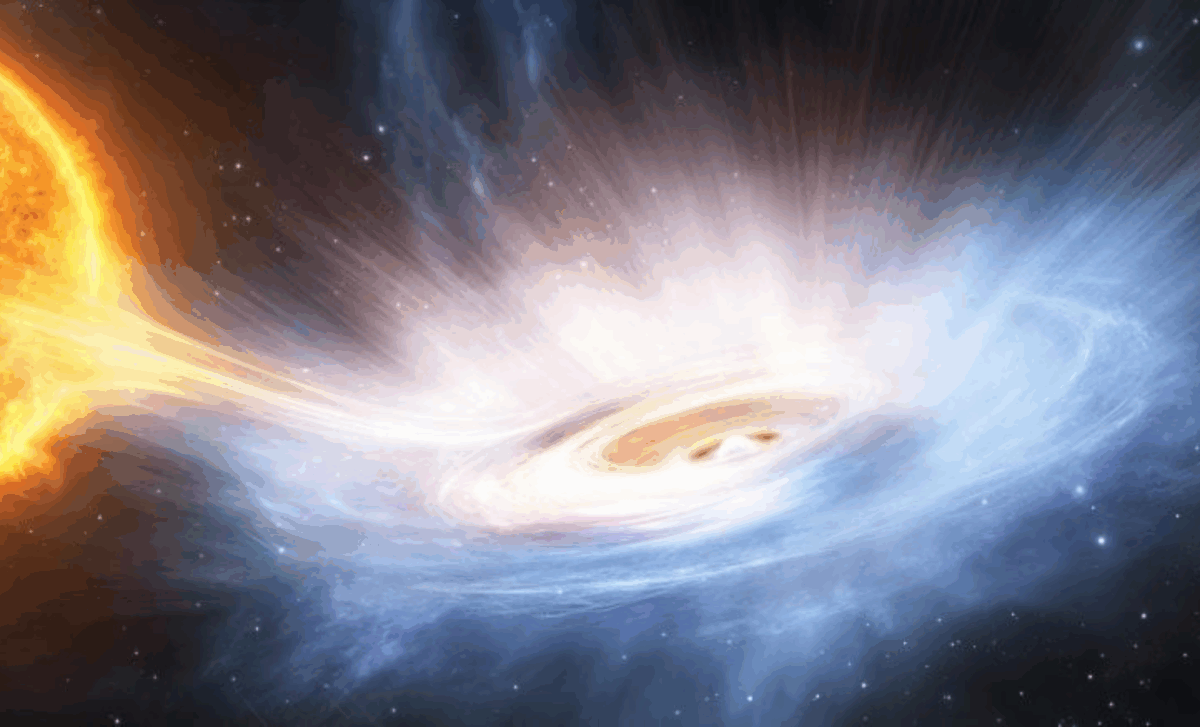
The XRISM mission has made a remarkable discovery: a surprisingly slow and dense stellar wind flowing from the neutron star GX13+1. Published in a recent Nature paper, this finding contradicts prevailing theories of cosmic wind phenomena, shedding new light on the extreme environments near neutron stars. These observations promise to refine our grasp of stellar wind dynamics and the interactions governing matter and energy in some of the universe’s most hostile locations.
Exploring Space with the XRISM Mission
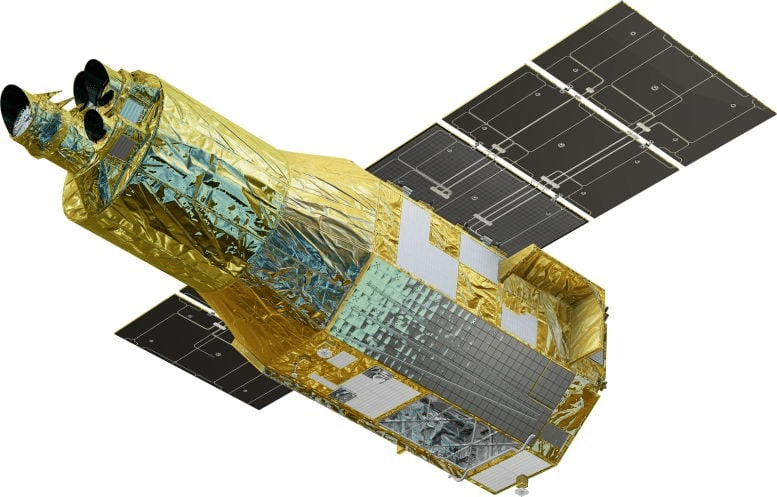
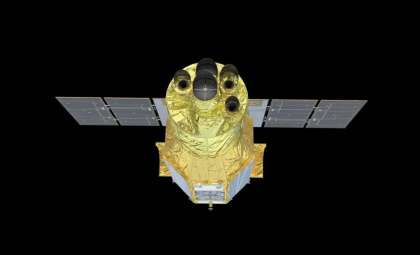
The XRISM (X-Ray Imaging and Spectroscopy Mission) represents an international collaborative venture aimed at studying cosmic X-ray sources with unprecedented spectral precision. Led by Japan’s Aerospace Exploration Agency (JAXA) alongside NASA and ESA, XRISM is equipped with two primary instruments: the Resolve microcalorimeter and the Xtend X-ray imager. These sophisticated devices enable detailed examination of hot plasma flows that influence galaxy structures and star formation processes.
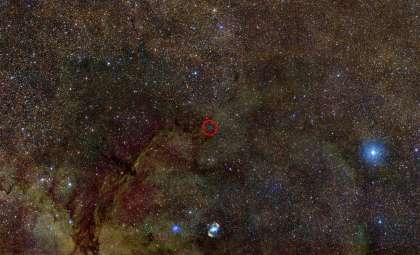
The recent investigation targeted GX13+1, a neutron star within the Milky Way known for its intense X-ray emissions produced by accreting material. Neutron stars are ultra-dense remnants of supernova explosions, exhibiting extraordinary gravity and energetic outputs, yet the properties of the winds they emit remain largely enigmatic, especially in systems like GX13+1.

A Wind Unlike Any Other: Denser and More Gradual
Scientists expected the outflows around GX13+1 to resemble those observed near supermassive black holes. Instead, their data revealed a wind that defied these predictions by being substantially denser and slower. Lead author Chris Done remarked, “Our observations coincided with a sudden surge in the system’s radiation output, resulting in a wind thicker than any we’ve previously detected.”
Unlike the ultra-fast winds accelerated to speeds approaching 200 million kilometers per hour near supermassive black holes, the GX13+1 wind moves at about 1 million kilometers per hour. Although rapid on human scales, this velocity is comparatively subdued in cosmic terms.
Unraveling the Enigma of the Slow Winds
The density and reduced speed of GX13+1’s wind left the research team intrigued. Chris Done explained, “The wind’s slowness and thickness caught me off guard. It’s akin to peering at the Sun through a thick fog, where visibility dims considerably.” This vivid analogy captures how the dense outflow alters the surrounding radiation, spotlighting the wind’s exceptional nature.
Typically, radiation pressure drives winds around compact objects like black holes and neutron stars. However, the discrepancies in wind behavior between these systems, despite having similar Eddington ratios, pose a challenging question. As Chris highlights, “If radiation pressure alone powers these winds, why do they manifest so differently?” This remains a key puzzle for astrophysicists.
The Eddington Limit’s Role in Wind Formation
The Eddington limit marks the point where radiation’s outward force balances gravitational pull, causing infalling matter to be expelled as stellar wind. Both neutron stars and supermassive black holes can approach this critical threshold, yet GX13+1’s case reveals that the resulting winds differ markedly in character based on the source.
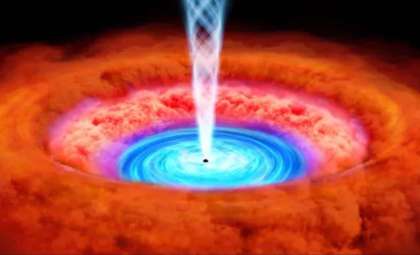
One possible explanation involves the temperature of the accretion discs encircling these bodies. Neutron stars and stellar-scale black holes harbor hotter discs that emit primarily X-rays, whereas supermassive black holes have cooler discs producing ultraviolet light. This difference in disc temperature and emitted radiation type could influence the momentum and structure of the winds observed.
Implications for Cosmic Evolution and Galactic Dynamics
Delving further into these findings, researchers are considering how such winds impact their cosmic surroundings. Stellar winds significantly shape galactic evolution: they can compress gas clouds to trigger star birth or disperse them, hindering star formation. Decoding their mechanisms is critical to understanding the universe’s life cycle.
Reflecting on future prospects, ESA Research fellow Camille Diez comments, “XRISM’s advanced resolution empowers us to explore these compact systems in immense detail, setting the stage for forthcoming high-resolution X-ray observatories like NewAthena.” These tools will undoubtedly deepen our comprehension of cosmic phenomena in the years to come.
- Categories:
- News




0 comments
Sign in to Comment