
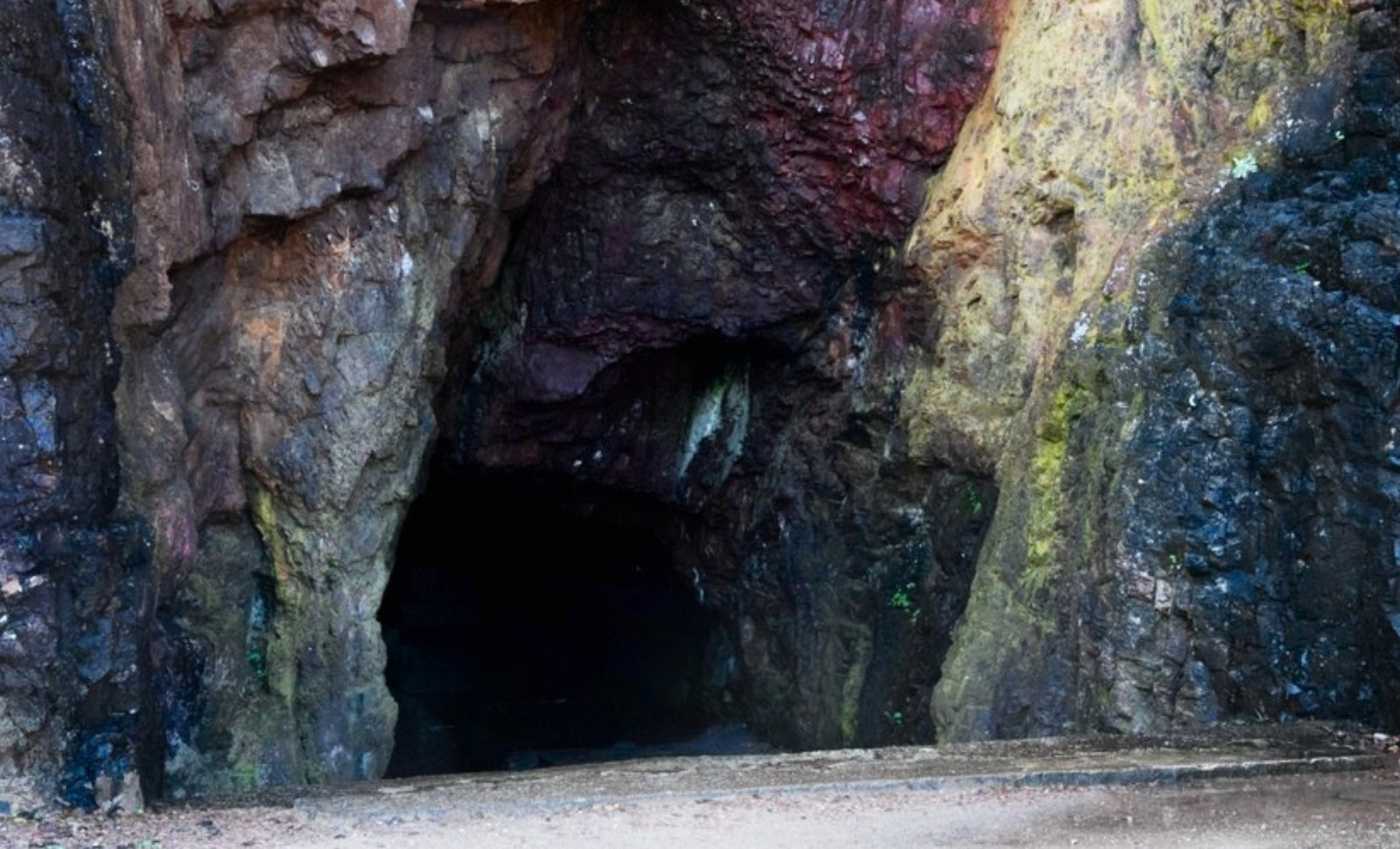
During the summer of 1940, an 18-year-old mechanic apprentice named Marcel Ravidat ventured into the forests near Montignac, France, with his dog. When the dog gave chase to a rabbit and disappeared down a tree hollow, Marcel followed, inadvertently uncovering an extensive cave complex adorned with prehistoric paintings that would become a cornerstone in archaeological history.
Marcel did not explore the cave alone on his initial visit on September 12. Joined by friends Jacques Marsal, Georges Agnel, and Simon Coencas, they enlarged the entrance. By candlelight from a makeshift lamp, the group descended a narrow shaft onto a pile of rubble, advancing roughly 30 meters into a passage they named the Axial Gallery. The next day, they lowered themselves down approximately eight meters using a rope, where Marcel encountered one of the cave’s most intriguing designs: a human figure standing before a bison.
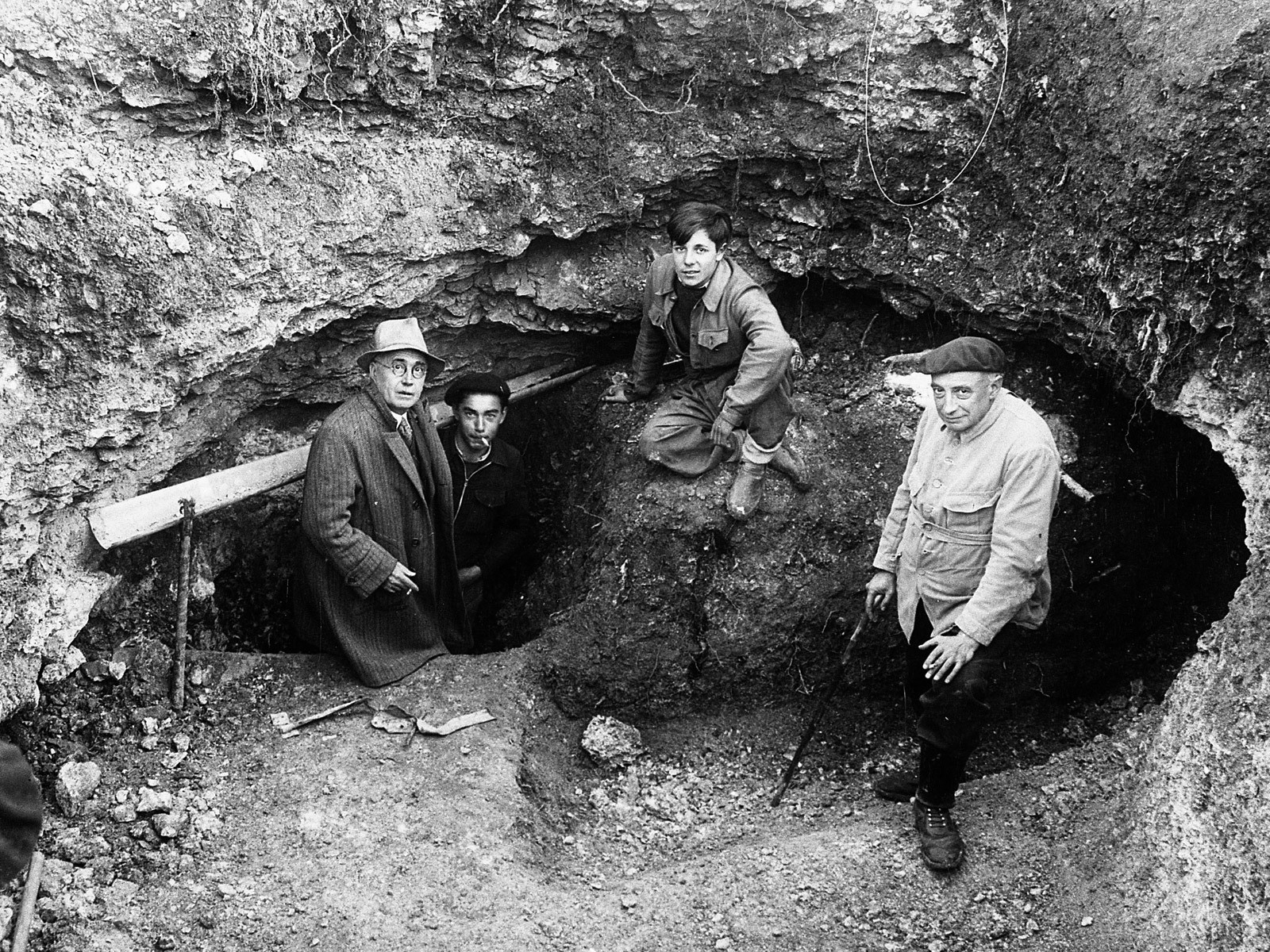
They later informed their teacher, Léon Laval, who visited the cave on September 18. Recognizing the prehistoric origin of the artwork, Laval contacted Henri Breuil, a prominent French prehistorian residing nearby. Breuil’s inspection two days later confirmed the site’s exceptional archaeological significance, according to France’s Ministry of Culture.

Thousands of Paintings and Engravings Spread Across Numerous Galleries
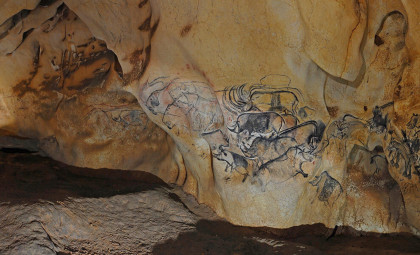
The Lascaux cave network comprises multiple chambers spanning about 235 meters in length, each richly adorned. Official records from the French Ministry of Culture document close to 680 paintings and approximately 1,500 engravings distributed among nine galleries, including the renowned Hall of the Bulls, the Nave, and the Shaft.
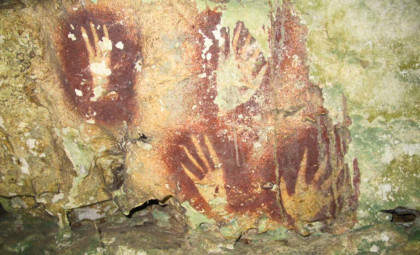
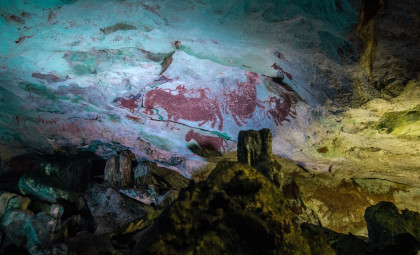
The artwork portrays a variety of animals — aurochs, deer, horses, ibex, and big cats — alongside abstract symbols. Some figures reach lengths of over six feet, capturing animals in striking motion. The artists applied natural pigments such as red ochre, hematite, charcoal, and manganese oxide to create vivid reds, blacks, and yellows on limestone surfaces. Detailed research, discussed by Mainly Museums, links these works to the Magdalenian culture, with radiocarbon dating situating them between roughly 17,000 and 19,000 years ago.
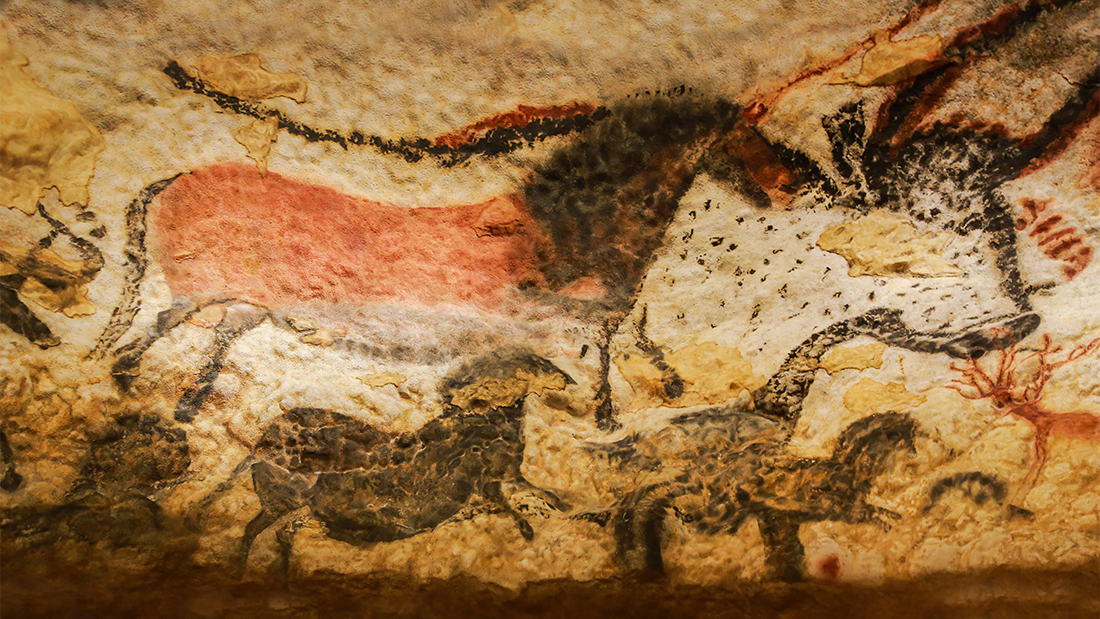
Archaeological evidence indicates that the ancient painters fashioned primitive scaffolding to reach high walls and ceilings, working by the flickering flames of fire or oil lamps. Many artworks are situated deep within the cave, in areas accessible only via constructed pathways and artificial lighting, suggesting deliberate hiding or ceremonial functions.
Art historian Frances Fowle, writing for The Conversation, highlights that layered imagery and secluded placements might imply symbolic significance to the act of painting itself. Certain scenes, including the “birdman” alongside a wounded bison, have been interpreted through shamanistic or mythical lenses, though scholars advise caution in projecting modern interpretations onto prehistoric art.
Excessive Tourism Led to Environmental Damage in the Cave
After opening in 1948, the Lascaux caves rapidly grew popular, at times hosting up to 1,200 visitors daily, according to the Mainly Museums report. The confined space accumulated heat, moisture, and exhaled CO2, creating a delicate ecosystem. Two original discoverers, later working as guides, first noticed green algae growing on the walls during 1958 and 1959.
The cave was closed to tourists in 1963, but biological threats persisted. During a 2001 air-conditioning update, the fungus Fusarium solani was accidentally introduced, colonizing surfaces rapidly. A 2003 ABC Science article reported that while the artwork remained safe, the fungus spread relentlessly across floors, ceilings, and walls.
Conservation teams treated affected areas with fungicides and later administered an antibiotic called Polymexin to combat associated bacteria. Today, the French Ministry of Culture prioritizes understanding cave microbiota dynamics over seeking immediate sterilization.
Authentic Replicas and Virtual Experiences Preserve Public Access
Since the original cave’s closure to the public, authorities have created faithful replicas. Lascaux II, inaugurated in 1983 just a short distance from the authentic site, faithfully reproduces the Hall of the Bulls and the Painted Gallery, using traditional materials and methods from the Paleolithic era. It now attracts around 250,000 visitors yearly. To preserve the environment, vehicle access to the site was banned in 2014.
Lascaux III is a traveling exhibition launched in 2012 that tours museums internationally, showcasing reproductions of the Nave and Shaft galleries. The most comprehensive replica, Lascaux IV, opened in December 2016 as the International Centre for Parietal Art. Built into a hillside overlooking Montignac, it incorporates cutting-edge 3D imaging, immersive sound, and digital technology to simulate the cave’s atmosphere.
The French Ministry of Culture has also released a virtual tour presenting all nine galleries, a platform that proved invaluable during COVID-19 lockdowns by expanding access without risking the fragile site. Lead designer Dinah Casson summarized the project’s ethos for Mainly Museums: “You see this, or you see nothing.”
Ongoing Conservation Focuses on Environmental Factors and Microbial Life
Preservation efforts now extend beyond the cave’s interior. The Ministry of Culture monitors water flow and carbon dioxide movement through the epikarst, a porous rock layer above the cave. Following data collected, a scientific advisory panel decided in January 2015 to stop CO2 extraction from the cave’s lower galleries, reflecting the necessity of adapting interventions over time.
The Ministry’s mission is to safeguard the site “as effectively as possible, for as long as possible.” Access remains limited to restoration teams, designated researchers, and monitoring personnel. The original cave, located beneath a forested hill near Montignac, functions as a carefully managed environment where conditions such as CO2 concentration, moisture, and microbial populations dictate human entry.
- Categories:
- News






0 comments
Sign in to Comment