
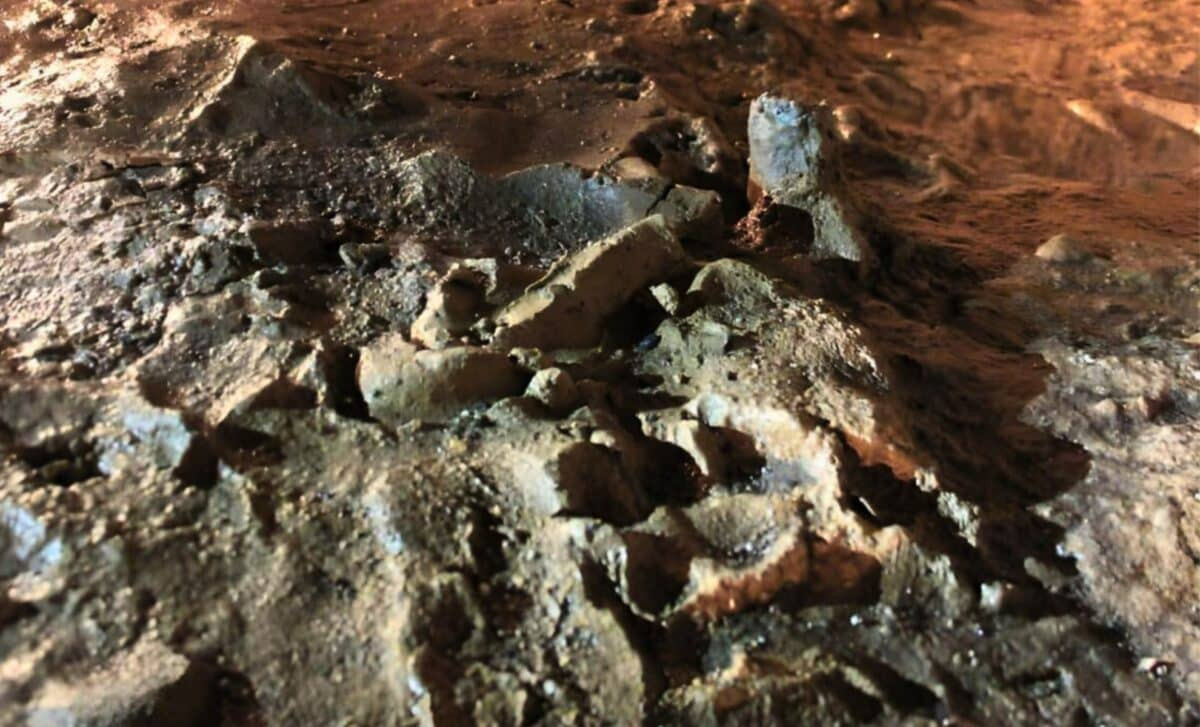
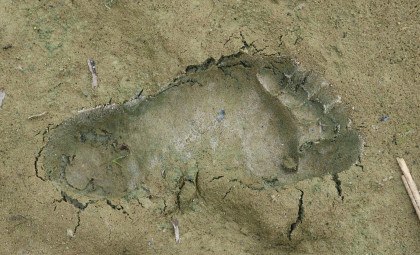
Impressions of small hands, knees, and bare feet embedded in cave clay reveal a trek made roughly 14,000 years ago inside northern Italy's Grotta della Bàsura. This route extends over 400 meters from the cave’s entrance, tracing the passage of five Paleolithic explorers who navigated the darkness with torches, leaving their trail marked in the floor.
Researchers, in a study published in eLife, determined the group included two adults, one teenager, and two children. One child was approximately three years old, while the other was around six. Their footprints alongside those of the adults offer a rare glimpse of a family group moving together through a challenging underground environment.
The path was narrow, damp, and uneven. In some sections, the ceiling dropped below 80 centimeters, too low to walk upright. In these tight spots, the explorers moved on hands and knees, leaving a pattern of crawling impressions in the clay illuminated by torchlight.

Preserved Footprints Document Movement in Ancient Times
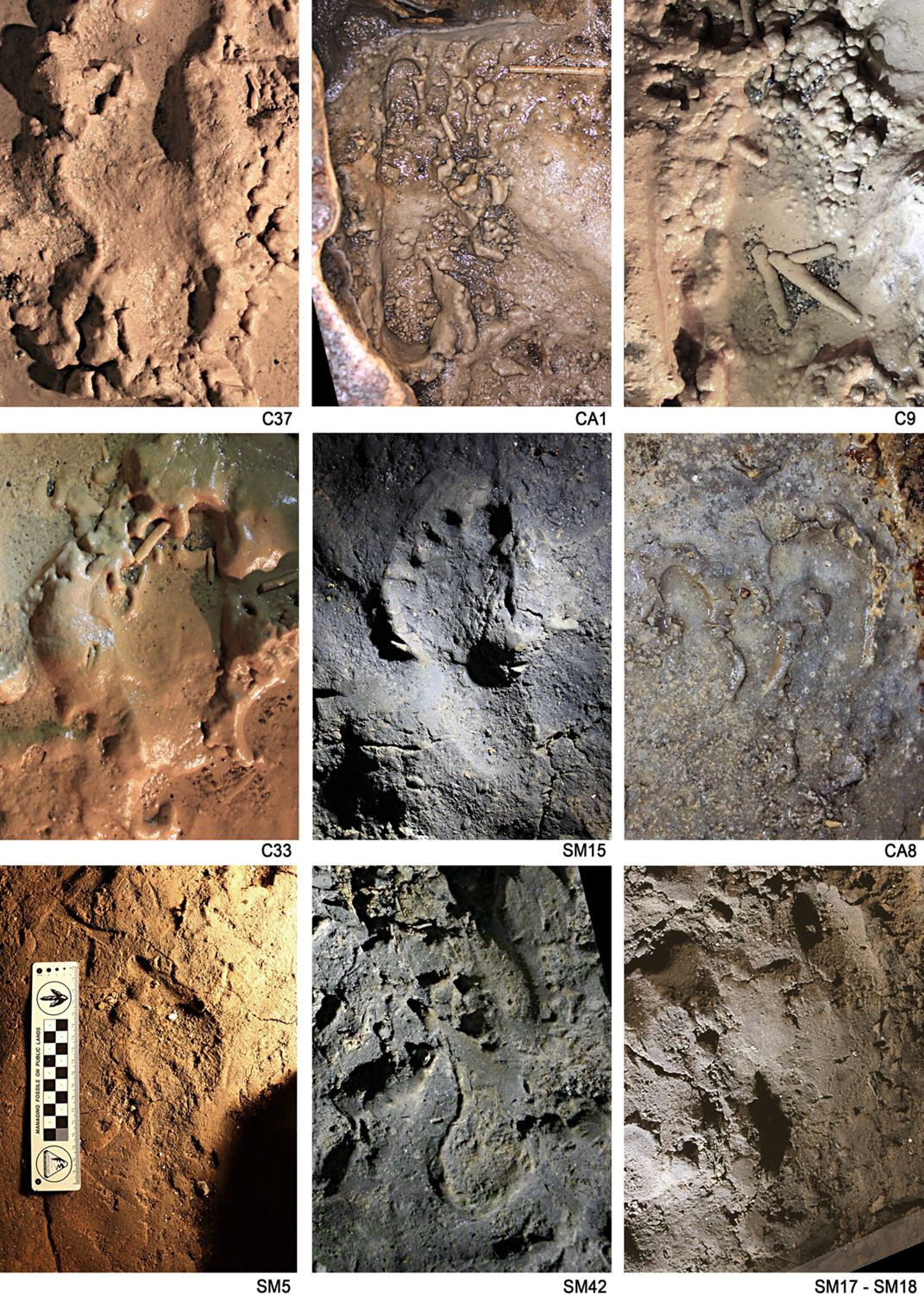
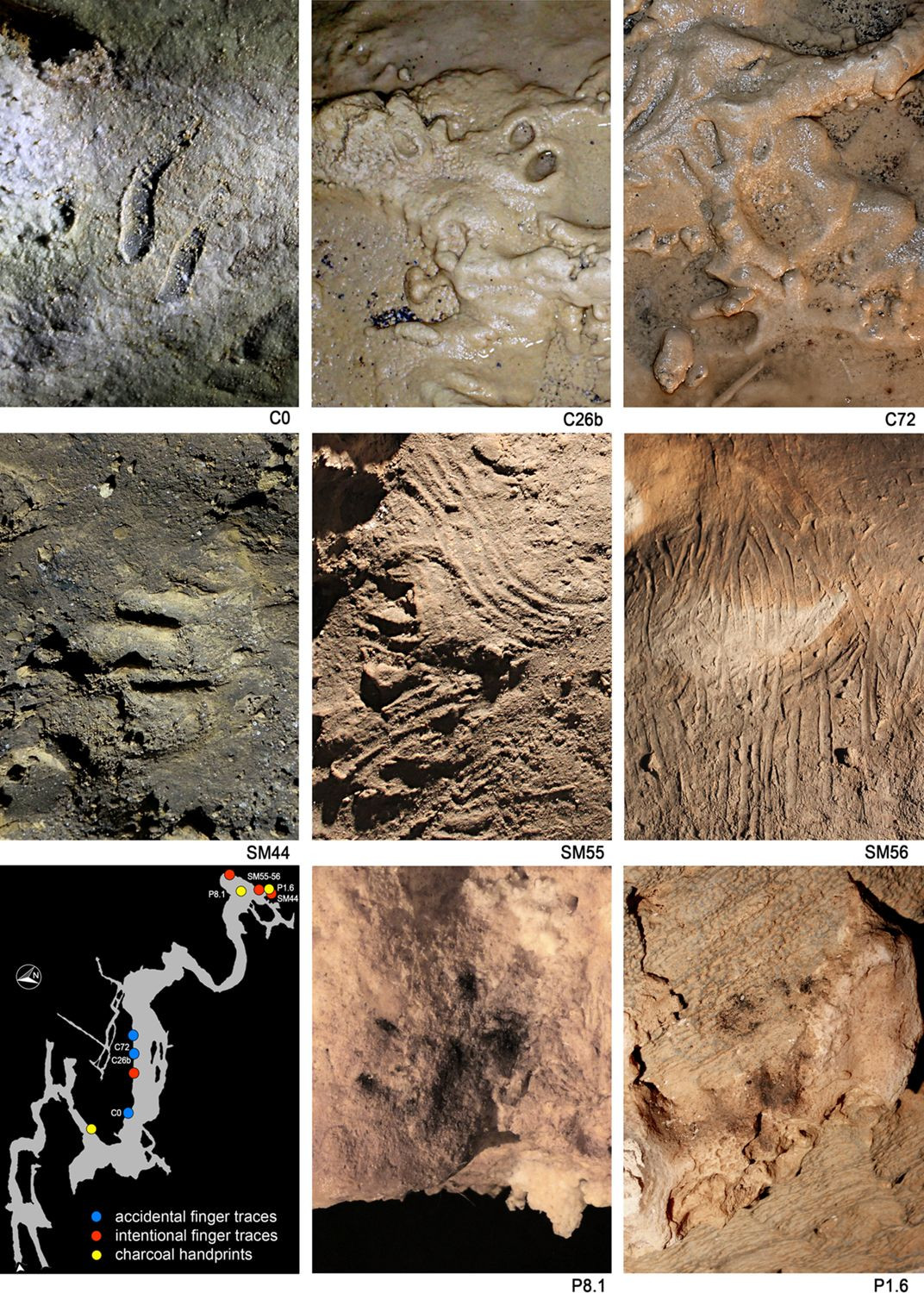
Scientists analyzed 180 footprints and various marks inside the cave, including handprints, knee depressions, finger marks, footprints, and charcoal fragments. These marks were found in meaningful sequences that enabled the team to reconstruct the group’s path and interpret how their body movements adjusted in response to narrowing passages, slopes, and moist conditions.
The floor's consistency influenced the clarity of the prints: harder surfaces preserved fewer details, while softer clay captured distinct impressions of feet, palms, knees, and fingers. Some spots show evidence of walking, while others reveal climbing or crawling. Collectively, these traces offer a continuous record of human movement rather than isolated artifacts.
Charcoal remnants found along the path helped date the visit to the Upper Paleolithic period, between approximately 14,700 and 14,000 calibrated years ago. These fragments also reveal that the explorers used Paleolithic torches made from Pinus t. sylvestris/mugo wood to light their way deep inside the cave.
A Narrow Tunnel Required Crawling Along the Clay Floor
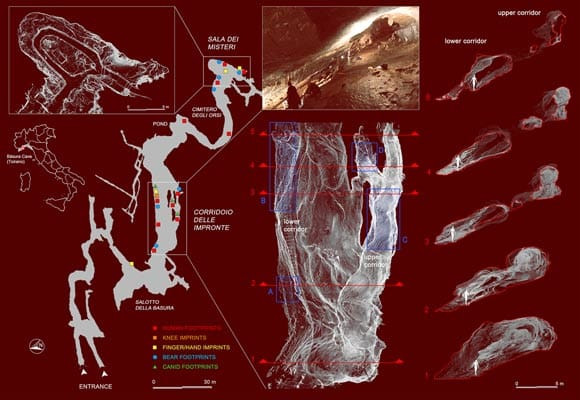
The clearest evidence of crawling comes from the Footprints Corridor, a segment where the ceiling height was too low for normal walking. Here, impressions left by hands, knees, and feet document the specific motions of crawling through a confined passage.
The eLife publication identifies this as the earliest known instance of crawling behavior captured in the human fossil track record. Ichnology, the study of tracks and traces left by living beings, gains new insight here as the marks do more than confirm human presence—they reveal how these ancient travelers physically adapted to the cave's confines.
What makes the Bàsura trail particularly striking is its directness: the cave’s shape compelled a change in posture, and the soft clay retained that moment. The low ceiling, pliable floor, and sequence of impressions together document a unique episode of crawling through pitch-black conditions.
Child Footprints Add a Heartfelt Dimension
The presence of children’s footprints lends a compelling human element to the discovery. A toddler roughly three years old journeyed hundreds of meters with the group inside the cave, while the marks of a six-year-old appear alongside those of an adolescent and adults. The research doesn’t hinge on an adventurous narrative; the traces’ location speaks volumes.
This was no route used solely by adults and inferred through artifacts or wall paintings. Instead, small feet, hands, and knees traveled the same demanding path, underscoring the involvement of very young group members in a subterranean expedition requiring torchlight, balance, crawling, and collective effort through confined spaces.
This detail underscores the significance of the find: it's less about ancient footprints alone and more about a small Paleolithic group moving as one through a deep cave, including its youngest members.
Additional Traces Found in the Inner Chamber
Eventually, the explorers reached the Sala dei Misteri or Hall of Mysteries, a deeper chamber where scientists documented more footprints, handprints, finger marks, clay imprints, and charcoal. These traces extend the known route past the low crawlspace and indicate activities farther inside the cave.
To analyze the path, researchers applied tools such as laser scanning, photogrammetry, sediment and geochemical assessments, archaeobotany, and measurements of footprints. Simply put, they charted the cave, evaluated the marks, examined the floor composition, and linked the traces to body size, movements, torch lighting, and the shape of the passages.
The eLife team, featuring researchers like Marco Romano, concludes that the most compelling evidence lies in the trail itself—adults and children crawling, climbing, and walking through Grotta della Bàsura, their presence etched permanently in clay.
- Categories:
- Science




0 comments
Sign in to Comment