
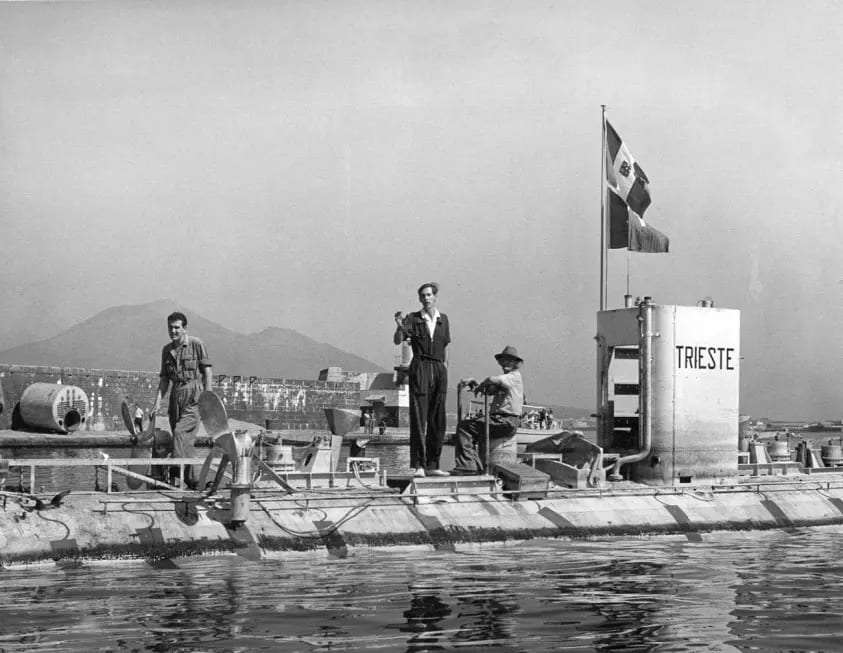
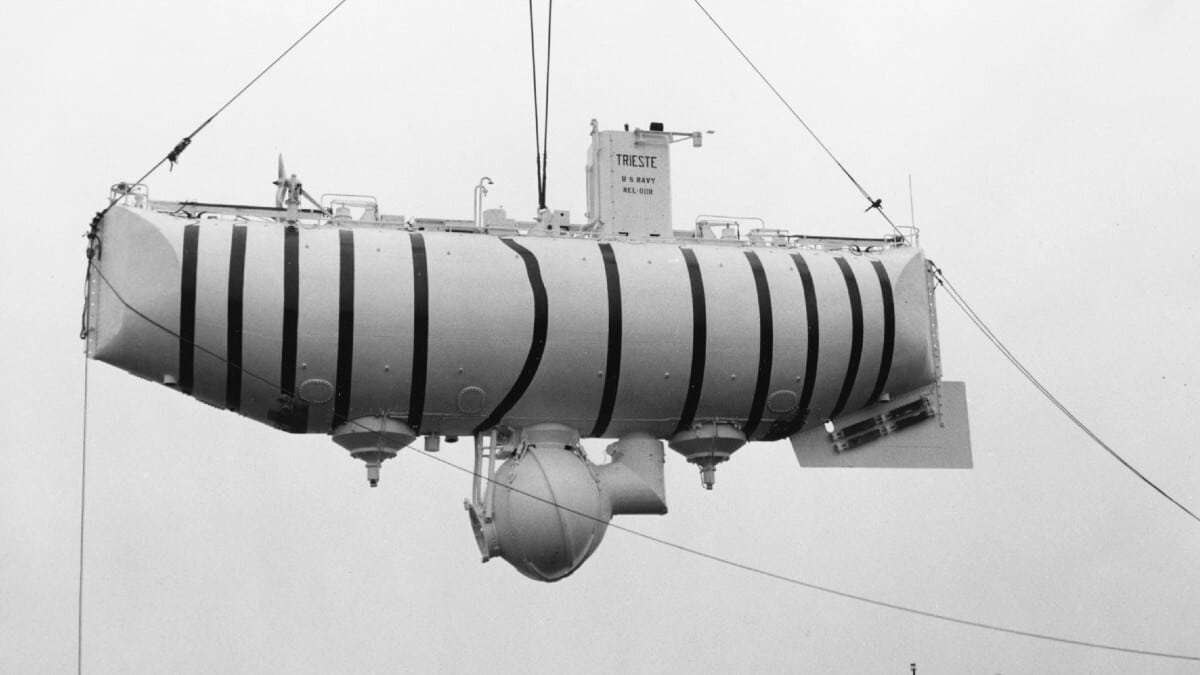
Central to this groundbreaking expedition was the Trieste, an extraordinary bathyscaphe engineered to endure the immense pressures found in the ocean's deepest regions. This vessel was created by Auguste Piccard, father of Jacques Piccard, who applied knowledge from his high-altitude balloon flights to build a submersible capable of reaching tremendous depths.
The Trieste showcased remarkable engineering features including:
- Steel walls measuring 13 centimeters thick
- The strength to resist pressures tenfold greater than those standard submarines face
- A custom Plexiglas viewport designed specifically for deep-sea observation
With Cold War motivations driving the exploration of the ocean floor, the U.S. Navy purchased the Trieste and funded the mission. This partnership enabled Piccard and Walsh to venture into unexplored depths and gather unprecedented data on deep-sea conditions.

A descent into the unknown: navigating the abyss
As Piccard and Walsh began their historic plunge, they confronted numerous obstacles. The Trieste’s tiny cabin, roughly two square meters in size, offered minimal comfort for the extended voyage. Their descent occurred gradually, descending at around 0.9 meters per second in a tense, deliberate manner.
As they sank deeper, the explorers witnessed a gradual shift into complete darkness:
DepthExperience0-200 metersFading natural lightBeyond 200 metersTotal darkness, reliant on the Trieste’s own lights
The overwhelming pressure of the deep ocean became increasingly palpable during the descent. The vessel creaked and groaned under the strain, a stark reminder of the tremendous forces acting upon it. Any breach could have caused catastrophic failure, with pressures exceeding 1,000 times those found at the surface.
Discoveries at the ocean’s greatest depth
After a demanding five-hour journey downward, the Trieste finally landed on the floor of the Challenger Deep. Initial measurements recorded a depth of 11,520 meters, though subsequent corrections adjusted this to approximately 10,900 meters. This marked a record-setting descent, outpacing all previous efforts to reach the planet’s deepest ocean point.
What the travelers observed through the viewport amazed scientists. Instead of a lifeless plain, they encountered evidence of living creatures adapted to this extreme habitat. A fish was spotted swimming by, proving that even under severe conditions, life endures. This finding led to the dismissal of proposals to deposit nuclear waste in the deep sea.
The presence of shrimp further highlighted a rich ecosystem thriving in the deep ocean, defying prior beliefs about life’s boundaries. Piccard and Walsh remained on the seabed for roughly 20 minutes in near-freezing temperatures around 7°C before ascending by releasing ballast weight.
The enduring significance of the Challenger Deep expedition
Piccard and Walsh’s safe return marked the completion of an iconic exploration. Their feat attracted global attention and symbolized a major leap forward in underwater exploration technology. The Trieste’s resilient construction provided critical insights into deep ocean environments and inspired the development of sophisticated tools like Remote Operated Vehicles (ROVs) for future exploration.
This dive’s legacy extended well beyond marine science:
- Motivated an emerging generation of ocean explorers
- Emphasized the importance of continued deep-sea research
- Showcased human creativity confronting extreme natural environments
Today, the Trieste remains a tribute to human curiosity and engineering prowess, displayed in a museum for public admiration. Although modern vessels have since revisited the Challenger Deep, the 1960 mission stands as a landmark achievement in oceanographic history, reminding us of the vast mysteries that still await discovery beneath the ocean’s surface.
- Categories:
- Science










0 comments
Sign in to Comment