
A remarkable scientific breakthrough reported in the PLOS One journal details how researchers have pinpointed both the author and title of an ancient manuscript sealed within a burnt scroll that remained closed for nearly two millennia. Leveraging advanced machine learning algorithms combined with high-definition imaging, experts managed to digitally "unwrap" the fragile scroll without physically opening it.
Rediscovering Herculaneum’s Lost Manuscripts
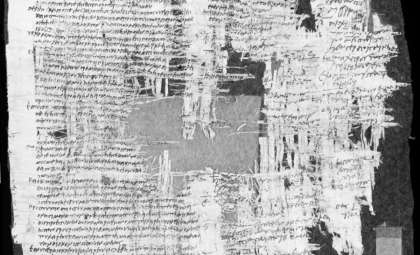
After the catastrophic eruption of Mount Vesuvius, the ancient town of Herculaneum was entombed beneath layers of volcanic debris. Within the Villa of the Papyri, archaeologists uncovered a unique and invaluable collection of texts, many representing the sole remnants of Roman classical literature. These papyri, unfortunately, were carbonized and exceedingly delicate, rendering traditional opening techniques too risky and damaging. Scholars have sought for centuries to decipher these relics, but their condition has long thwarted progress.
Artificial Intelligence Transforms Ancient Text Decoding
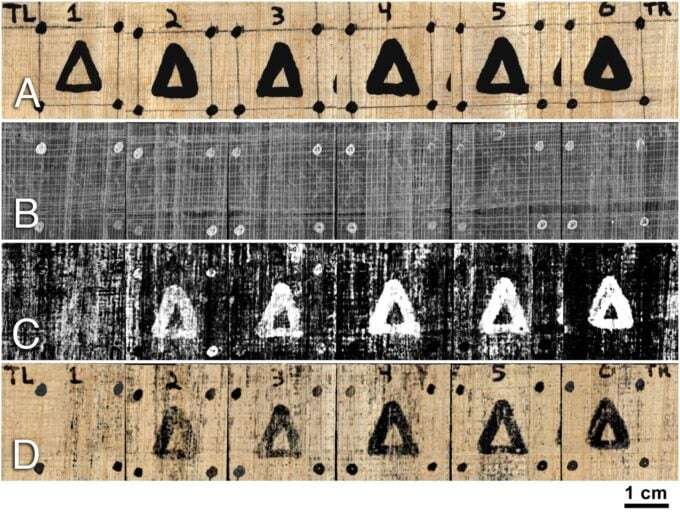
Cutting-edge developments in AI and imaging methods have enabled reading these texts without physically manipulating them. The initial milestone occurred in 2015 when scientists employed X-ray tomography to generate a 3D digital reconstruction of a scroll from the En-Gedi archaeological site. Expanding upon this, researchers at the University of Kentucky developed the Volume Cartographer software that harnesses micro-CT scans to detect ink traces etched on the charred papyrus surfaces.

By training neural networks to pick up on faint ink patterns, the team has digitally "unfolded" these ancient texts, bringing to light previously unreadable inscriptions. Their first successful application of the technique in 2019 marked a turning point, opening the door to numerous further breakthroughs.
Philodemus: Revealed Author of "On Vices" Scroll
The recently analyzed PHerc. 172 manuscript has been attributed to Philodemus, a first-century BCE philosopher aligned with Epicurean thought. The text, titled On Vices and Their Opposite Virtues and In Whom They Are and About What, delves into ethical reflections on achieving virtue by steering clear of vice.
This philosophical treatise serves as an ancient guide to self-improvement and moral conduct that remains relevant to today’s readers. Philodemus played a key role within the Epicurean tradition, which encouraged happiness through moderation and ethical living.
Engaging the Public: The Vesuvius Challenge
The unearthing of On Vices is part of a broader project called the Vesuvius Challenge, launched in 2023, which encourages global participation to decode unopened ancient scrolls. By leveraging AI methods like convolutional neural networks and transformer architectures, volunteers help identify and reconstruct the text hidden within the carbonized remains.
This initiative aims not only to revive lost philosophical works, many possibly penned by Epicurus or his contemporaries, but also to build scalable frameworks for digitizing and deciphering ancient manuscripts. A landmark event occurred in October 2023, when the first word, “purple,” was successfully extracted from an unopened scroll. The project continues to offer incentives as it pursues the revival of more of Herculaneum’s treasured literary heritage.
- Categories:
- News












0 comments
Sign in to Comment