
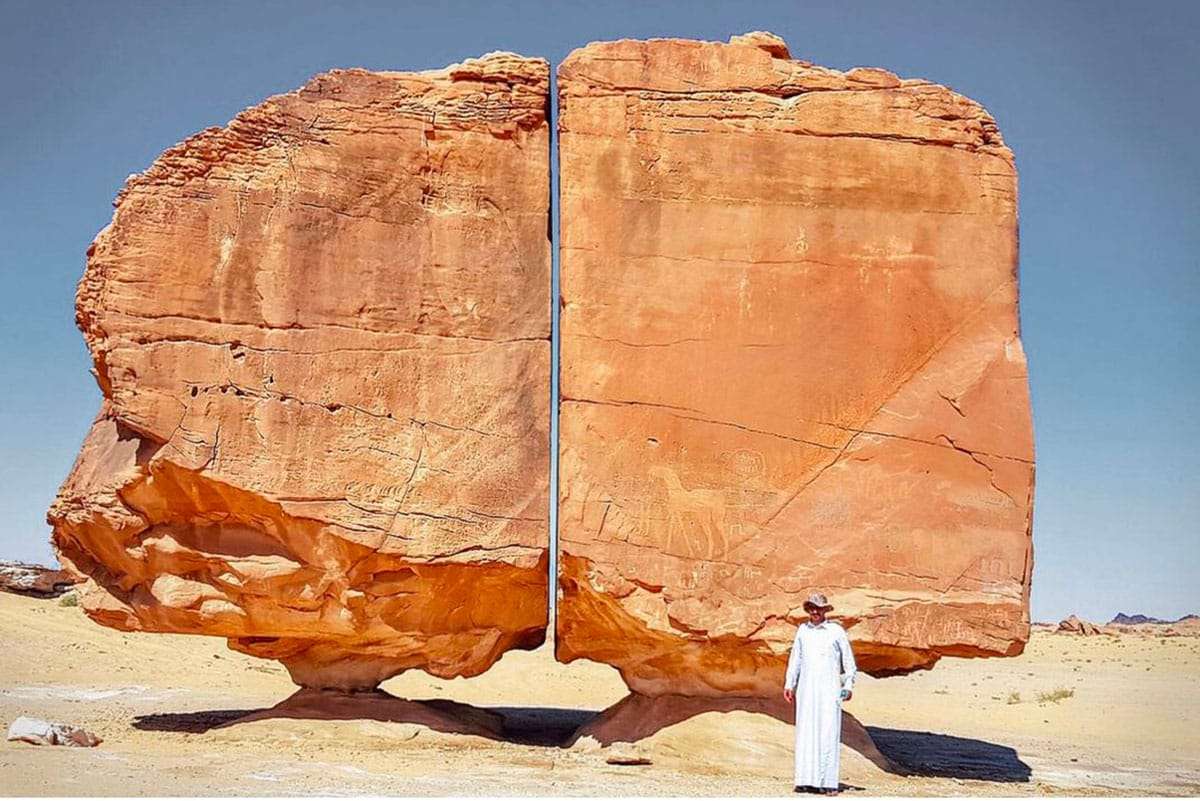
Al Naslaa is famous for its striking formation of two nearly identical sandstone blocks perched on natural bases. What sets this rock apart is an exceptionally straight and slender crack that cleanly splits it into two halves. The accuracy of this division is so precise that it seems more like the work of a skilled artisan than a product of nature.
Scientists have suggested multiple explanations for this distinctive fracture:
- Tectonic shifts: Movements in the Earth’s crust in this area might have created a sudden break in the rock.
- Wind erosion: Over time, abrasive sand particles carried by winds could have widened and smoothed an initial fissure.
- Temperature stress: Although rare in desert settings, cycles of heating and cooling might have caused small cracks to expand gradually.
Even with these theories, the Al Naslaa rock remains a geological puzzle. Its impeccably smooth break and flawless split keep experts intrigued and drive ongoing investigation into its origins.

Geological background of the Al Naslaa site
This formation is primarily sandstone, a sedimentary rock easily affected by weathering and cracking. The harsh desert environment, marked by drastic temperature swings and sand-filled winds, is a critical factor in its shape and condition. These natural forces help explain some of Al Naslaa’s unusual traits.
The vicinity shows signs of significant fault lines and fractures, lending weight to tectonic explanations. Yet, the exceptional linearity of the rock’s split is unusual compared to common natural breaks. This distinctiveness has led some experts to liken it to other natural mysteries, such as the unexplained skyquakes reported globally, illustrating the many enigmatic phenomena still challenging scientific explanations.
Below is a table summarizing key features of the Al Naslaa formation:
Feature Description Rock Type Sandstone Height Approximately 6 meters Width Around 9 meters Fissure Width Exceptionally narrow Fissure Surface Polished and smooth
Scientific significance and continuing investigations
The Al Naslaa sandstone formation offers more than a geological curiosity—it is a valuable site for advancing scientific knowledge. Continued research into this unique rock could shed light on desert erosion patterns and the natural forces sculpting Earth's surface. The remarkable split challenges accepted concepts and spurs the development of new research methods and theories.
Additionally, Al Naslaa is becoming an increasingly popular destination for travelers worldwide. This boosts awareness of geology and supports the local community economically. The fascination it inspires underscores society’s enduring interest in natural wonders and the drive to uncover their origins.
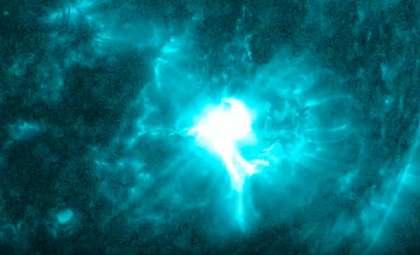
Researchers are also examining possible links between geological occurrences and other environmental forces. For example, investigations into intense solar storms that threaten modern technology highlight complex interactions between cosmic events and Earth’s geology. Although not directly connected to Al Naslaa’s formation, such studies emphasize the need to consider diverse influences in understanding Earth’s geological features.
Ultimately, Al Naslaa's mystery reminds us of the intricacies of nature and the boundaries of our current knowledge. As the investigation continues, this extraordinary sandstone feature remains a symbol of the natural world's hidden marvels awaiting discovery.
- Categories:
- Science










0 comments
Sign in to Comment