
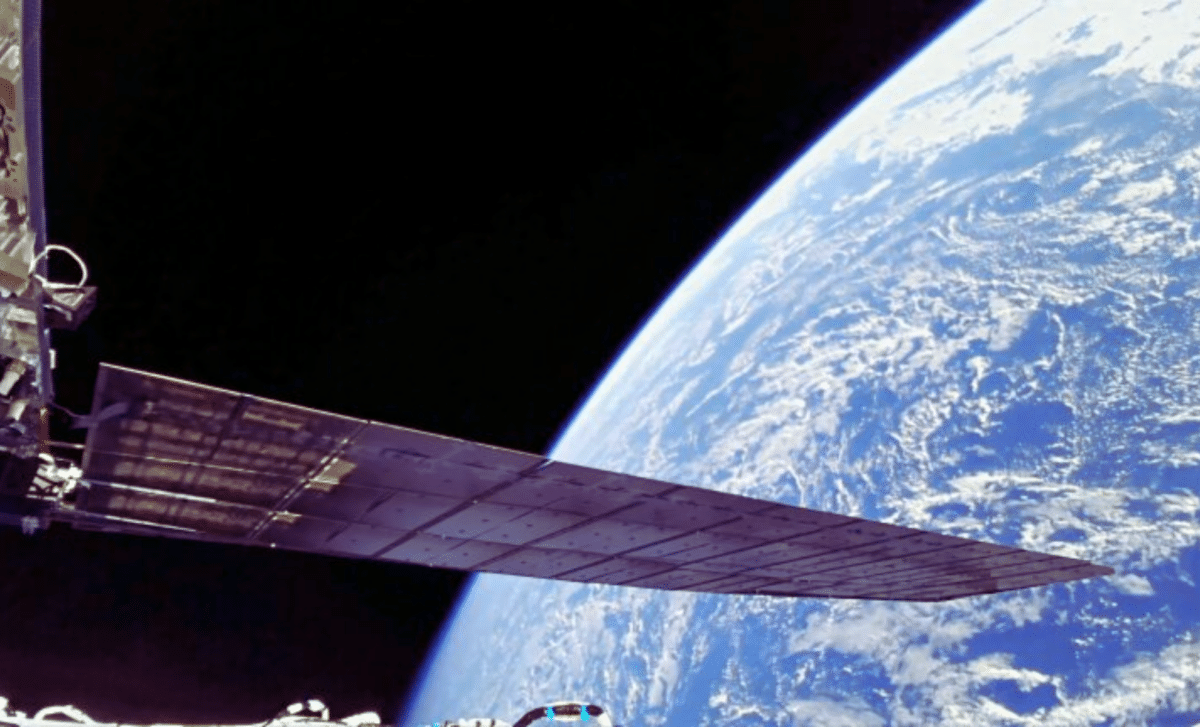
A newly released study on ArXiv reveals that Amazon’s internet satellites may jeopardize astronomical observations due to their brightness surpassing limits set by the International Astronomical Union (IAU). Drawing on close to 2,000 recorded observations of Amazon’s low Earth orbit (LEO) satellites, the analysis underscores mounting concerns about the clash between expanding satellite constellations and the need to protect unpolluted night skies vital to astronomy.
Potential Disruptions to Astronomy From Amazon's Satellite Fleet
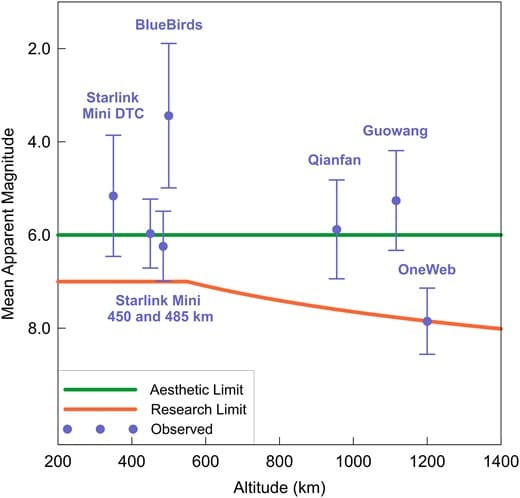
The research, published on January 12 on ArXiv, points out that Amazon’s Project Kuiper satellites regularly exceed the brightness thresholds recommended by the IAU, intended to shield scientific sky observations. These recommendations arose in response to a surge in orbital satellites, which can interfere with telescopic sky surveys and deep astronomical imaging.
Lead investigator Anthony Mallama, from the IAU Dark and Quiet Sky Center, described the issue in an email to Space.com. “Bright satellites pose significant challenges for comprehensive astronomical surveys from ground stations like the Vera C. Rubin Observatory,” he said. “They may also impact space-based observatories such as the Hubble Space Telescope.”

While Amazon's satellites are not as luminous as the large BlueBird satellites operated by AST SpaceMobile, their relatively low orbit raises visibility concerns. Plans to position new satellites at approximately 366 miles (590 km) altitude could increase their brightness, making them more noticeable during dusk and dawn and more intrusive for astronomy equipment.
Brightness Challenges Across Satellite Providers
This problem extends beyond Amazon. The paper compares findings to SpaceX’s Starlink constellation, which, despite nearly 9,500 satellites, has aimed to minimize visibility through cooperative efforts with astronomers. Amazon seems to be pursuing a similar strategy, demonstrating readiness to work constructively with the scientific field.
“Companies like Amazon and SpaceX are collaborating with astronomers to dim satellite reflections,” Mallama stated. “This includes using mirrors on the satellite undersides to reflect sunlight away from Earth and orienting satellite components to reduce sunlit surface visibility from the ground.”
The study also notes that most current LEO broadband satellite fleets, such as those from China (Qianfan and Guowang), still exceed the IAU’s brightness recommendations. In contrast, OneWeb satellites, operating higher at about 745 miles (1,200 km), partially avoid such issues.
Positive Industry Moves Toward Less Disruption
Despite these challenges, experts view Amazon’s engagement as a constructive initiative striving to balance corporate objectives with protecting scientific research. John Barentine, an astronomer and advocate for dark skies based in Arizona’s Silverado Hills Observatory, praised Amazon’s early collaboration with astronomers during satellite design.
“Amazon Leo is an example of an operator consulting astronomers early in the constellation planning process,” Barentine said. “It’s promising to see some measurable improvements come from that collaboration.”
Since deploying initial prototype satellites in 2023, Amazon engineers have revised designs to limit reflected light, rendering satellites less disruptive to night sky observations. This approach parallels SpaceX’s post-2019 design enhancements triggered by astronomers’ concerns over visible satellite trails.
As the era of megaconstellations continues, partnerships between industry and science will be crucial to lessening impacts on space research. With Amazon planning a network of over 3,200 satellites, developing sustainable brightness mitigation techniques is increasingly urgent.
- Categories:
- Space












0 comments
Sign in to Comment