
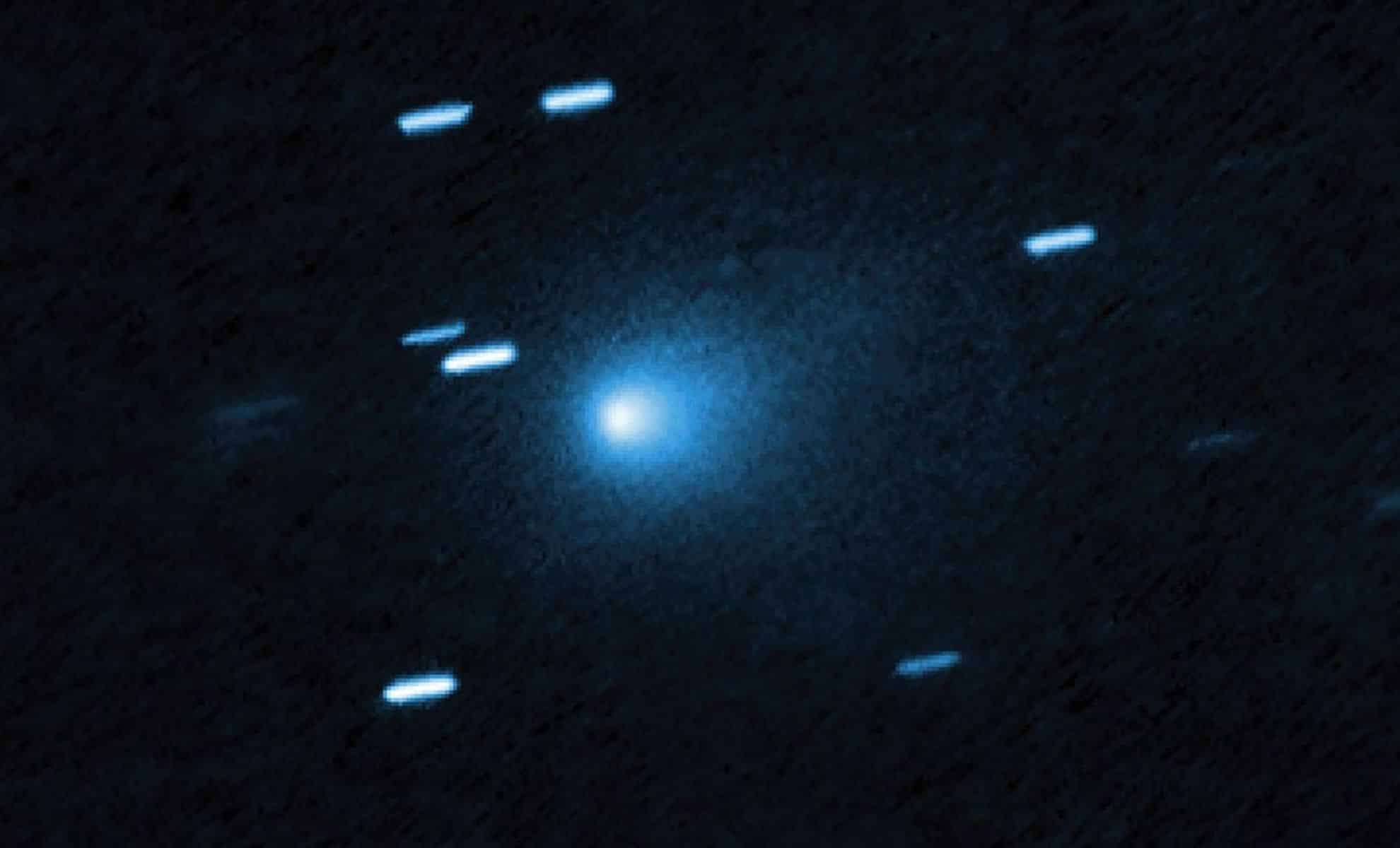
A recently discovered interstellar comet is hurtling through our solar system at an astonishing velocity of approximately 130,000 miles per hour, sparking curiosity and speculation about its origins and what other mysteries may lie beyond. Identified as 3I/ATLAS, this is the third confirmed visitor from outside our solar system, following ʻOumuamua in 2017 and Comet Borisov in 2019.
Uncertain Dimensions: Could 3I/ATLAS Be Enormous or Modest?
New data from the NASA Hubble Space Telescope, released ahead of formal peer-reviewed publication in the Astrophysical Journal Letters, refines the estimates of 3I/ATLAS’s core size to between 320 meters (about 1,000 feet) and 5.6 kilometers (3.5 miles) across. This is significantly smaller than earlier assumptions that suggested it could be as large as 20 kilometers (12 miles), yet possibly hundreds of times the length of ʻOumuamua, which was roughly 100 meters long.
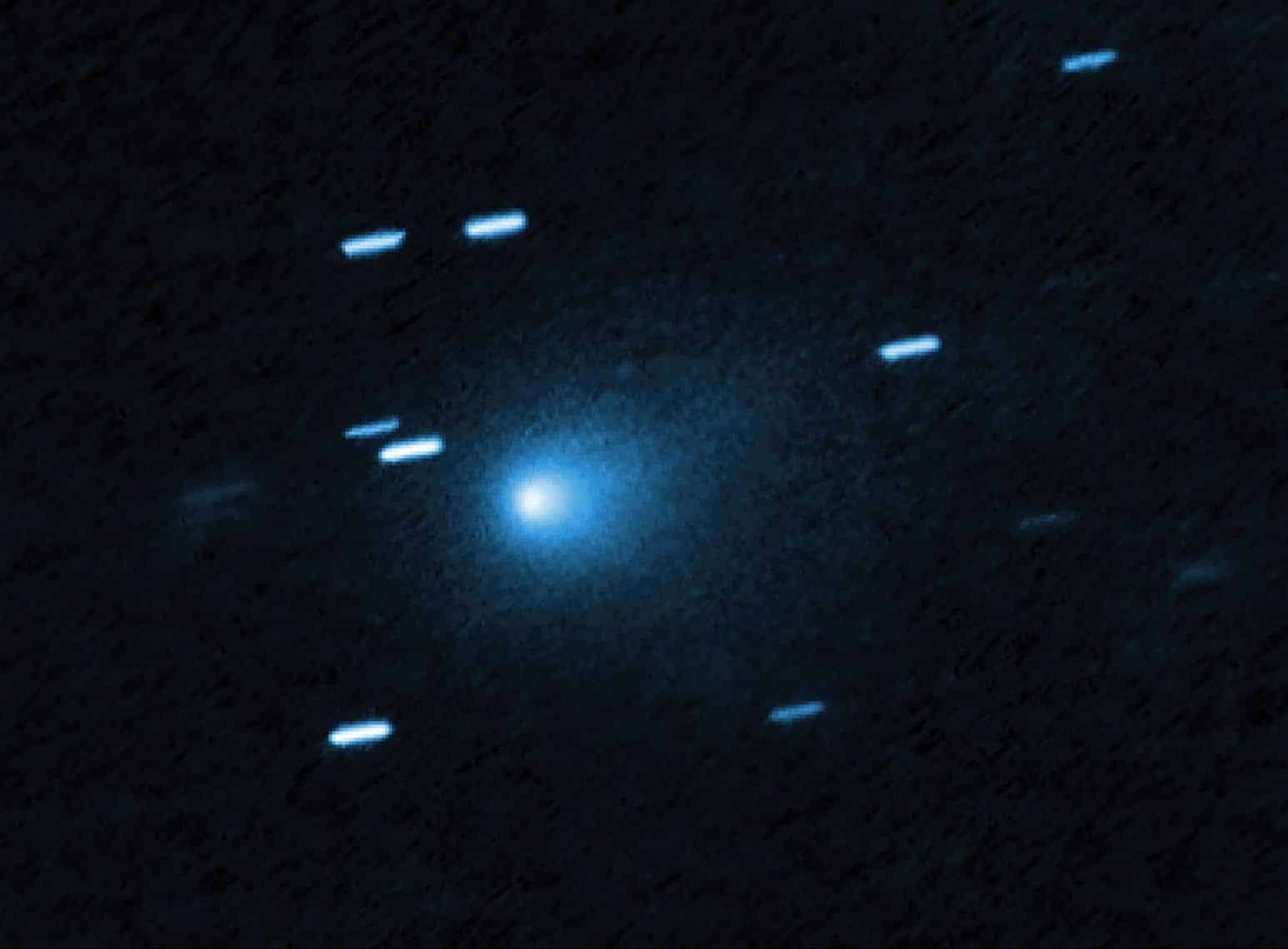
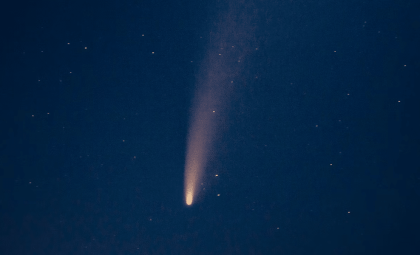
Captured by Hubble on July 21, 2025, while stationed over 277 million miles from Earth, 3I/ATLAS exhibits a teardrop-shaped envelope of gas and dust called a coma, along with a trailing dust tail—features typical of comets warmed by solar radiation. David Jewitt, the lead researcher from UCLA, emphasized that Hubble provides the best available data so far. Nevertheless, the core remains obscured behind this dusty veil, preventing a precise measurement of its true size and makeup at this stage.

Origins Remain a Mystery to Scientists
Despite its observable characteristics and rapid speed, astronomers have not yet pinpointed where 3I/ATLAS originated. Jewitt compares this to catching sight of a gunshot bullet for an instant—too brief a glimpse to trace its starting point with accuracy.
Traveling at 130,000 mph, the comet’s speed exceeds what the Sun’s gravity can capture, ruling out origins within the solar system such as the Oort Cloud. It most plausibly emerged from a distant planetary system, ejected into interstellar space, and has likely been propelled by gravitational interactions with stars and cosmic clouds over billions of years.
NASA researchers suggest this could mark the start of detecting a broader and previously unknown group of interstellar visitors. Jewitt remarks, “This newest interstellar object points to a previously hidden population, coming into view as our detection capabilities improve.” Tools like the ATLAS survey and the Vera Rubin Observatory enable astronomers to spot smaller and more distant objects than ever before.
Harvard’s Avi Loeb Rekindles Debate Over Potential Alien Origin
Astrophysicist Avi Loeb from Harvard, who has sparked debate with his ideas about ʻOumuamua, now includes 3I/ATLAS among objects warranting close examination. Speaking with MailOnline, Loeb likened it to the scenario in Arthur C. Clarke’s science fiction novel Rendezvous with Rama, where a large alien craft silently passes through the solar system.
Loeb highlights a puzzling statistical inconsistency: if 3I/ATLAS is indeed as vast as current estimates suggest, many smaller similar objects should have been detected by now—which they have not. “That’s quite unusual,” he notes. While not outright labeling it extraterrestrial, Loeb stresses that anything unusual from another star system deserves serious attention. “The reaction should be based on what the object is and what it might intend. It’s like having a visitor dropping by unannounced,” he explains.
Looking Ahead: Tracking 3I/ATLAS’s Journey
3I/ATLAS will make its closest approach to the Sun on October 30, coming within roughly 130 million miles—between the orbits of Earth and Mars. It will be observable with terrestrial telescopes through September before it moves behind the Sun, temporarily disappearing, and reappearing again by early December.
Although this interstellar visitor poses no danger to Earth, astronomers and some speculative scientists are keenly examining its extraordinary velocity, size, and enigmatic source to glean more insights into our cosmic neighborhood.
- Categories:
- Space







0 comments
Sign in to Comment