

A recent hiking trip in Norway’s rugged hills led to the uncovering of an extraordinary artifact: a 1,500-year-old gold sword scabbard. Hidden beneath the roots of a toppled tree, this exquisite piece likely belonged to a significant chieftain or ruler from the 6th century, providing valuable insights into the Migration Period of northern Europe.
Unearthed in Austrått, a historic area along Norway’s southwest coastline, the ornate golden scabbard’s modest dimensions mask its archaeological importance. Experts note that the wear marks on the item indicate it was actively used in combat, rather than merely serving a ceremonial role.
Exceptional Discovery in Norwegian Terrain
The finding of this gold sword sheath has generated excitement among historians and archaeologists, revealing new details about early medieval Norway. Researchers from the University of Stavanger emphasize the rarity of such objects, noting that only 17 comparable artifacts are known throughout northern Europe.

“I saw a mound in the ground under a tree and poked at it with a stick,” The hiker said in a translated university statement. “Suddenly, I saw something that glittered. I didn’t quite understand what I had found.”
The artifact measures just 2.4 inches across and weighs 1.15 ounces. Crafted with gold, it features detailed animal imagery and hybrid human-animal designs, typical of the artistic traditions during the Migration Period, an era defined by the fall of the Western Roman Empire and shifts in European power structures.
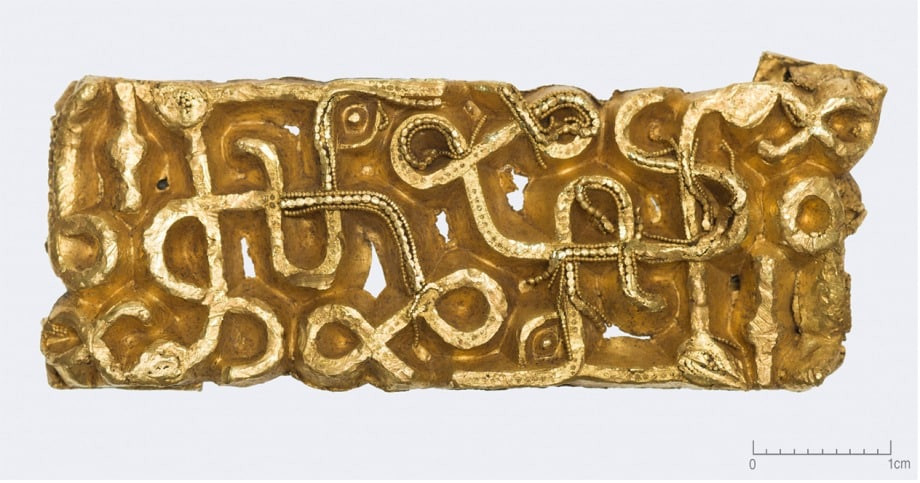
The decorative motifs correspond to the styles prevalent during the Migration Period, reflecting both cultural influences and turbulent times.
Gold Embellishment Signifies Authority
According to Håkon Reiersen, an archaeologist affiliated with the University of Stavanger, the craftsmanship and imagery of the scabbard point to its owner being a prominent regional leader.
“Whoever wore the sword it was on was probably the leader in this area in the first half of the 6th century and had a warrior retinue of loyal men attached to him,” he explained.
Unlike many Migration Period artifacts designed only for display, this scabbard shows signs of practical use, likely carried during warfare or public appearances to symbolize the wearer’s power and status.
Possible Ritual Significance Behind Placement
The location of the discovery adds a layer of mystery. Experts believe the sword sheath was intentionally placed within a fissure in the bedrock, possibly serving as a sacred offering to deities during unstable times.
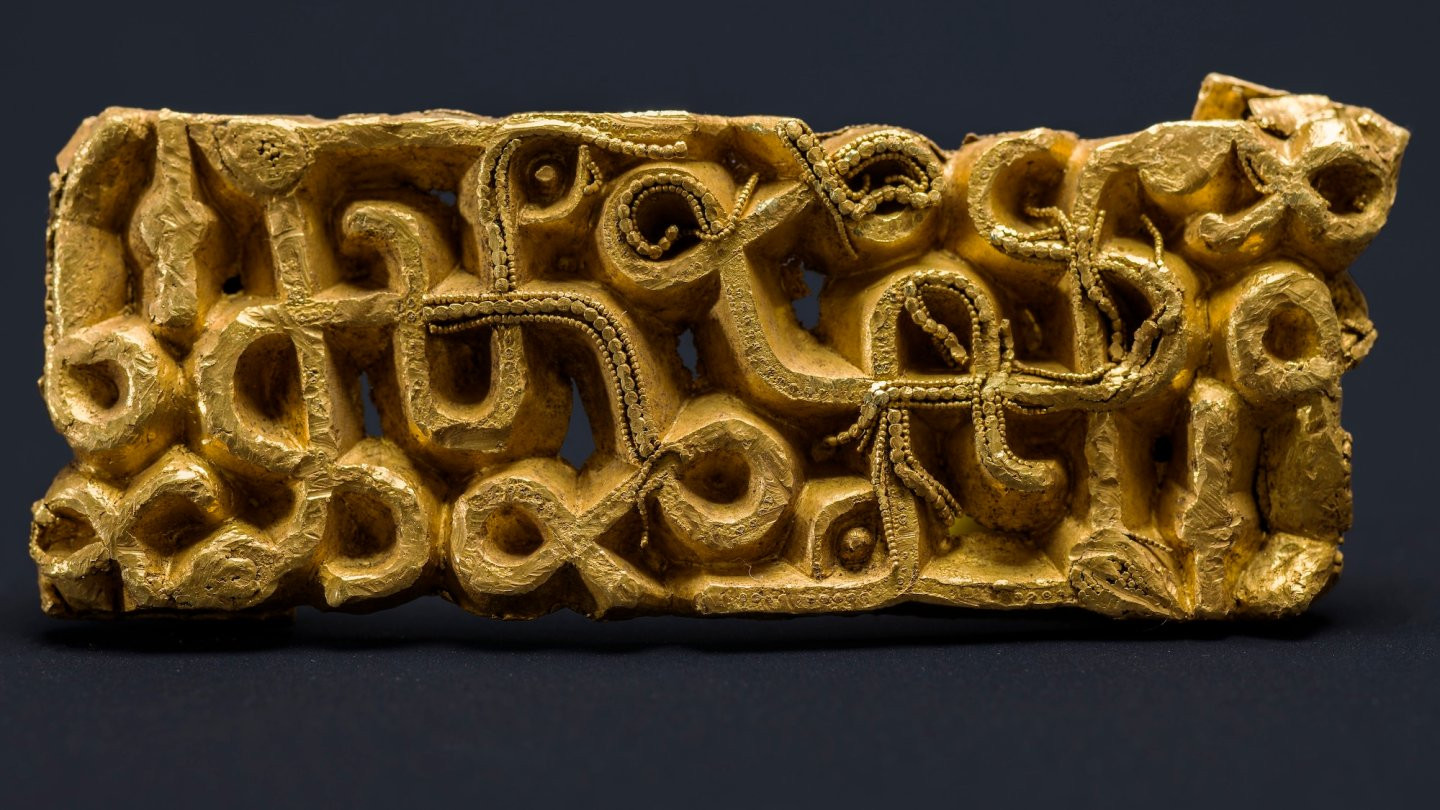
The 6th century saw significant hardship across northern Europe, with communities experiencing economic and social challenges. Leaders may have deposited valuable objects like this to ask for divine guidance or protection. As Reiersen remarks in a University of Stavanger press release:
“We just have to say a big thank you to a very attentive hiker for the fact that we now have a new puzzle piece linked to the power center at Hove from 200 to 550 A.D.”
By concealing the scabbard in a hidden crevice, the ruler likely aimed to signal both earthly authority and spiritual dedication. Kristin Armstrong-Oma, museum director at the University of Stavanger, added:
“This allows us to further research the find itself and the ornamentation and find new answers about the power elite that ruled here at this time.”
- Categories:
- News












0 comments
Sign in to Comment