
Earth’s magnetic poles undergo flips roughly every several hundred thousand years, reversing the positions of north and south. These geomagnetic reversals can span thousands of years, but shorter disruptions called geomagnetic excursions happen more often and can significantly affect the planet.
One notable event, the Laschamps Excursion, took place about 42,000 years ago and lasted nearly 800 years before the magnetic poles returned to their original places. Although scientists have been aware of such magnetic shifts, understanding their precise effects on Earth’s climate and life has remained elusive—until now.
“The Laschamps Excursion represents the latest time the magnetic poles underwent a flip,” said Chris Turney, co-lead author of a 2021 investigation into this intriguing phenomenon. “The poles switched for around 800 years, then reverted back again.”

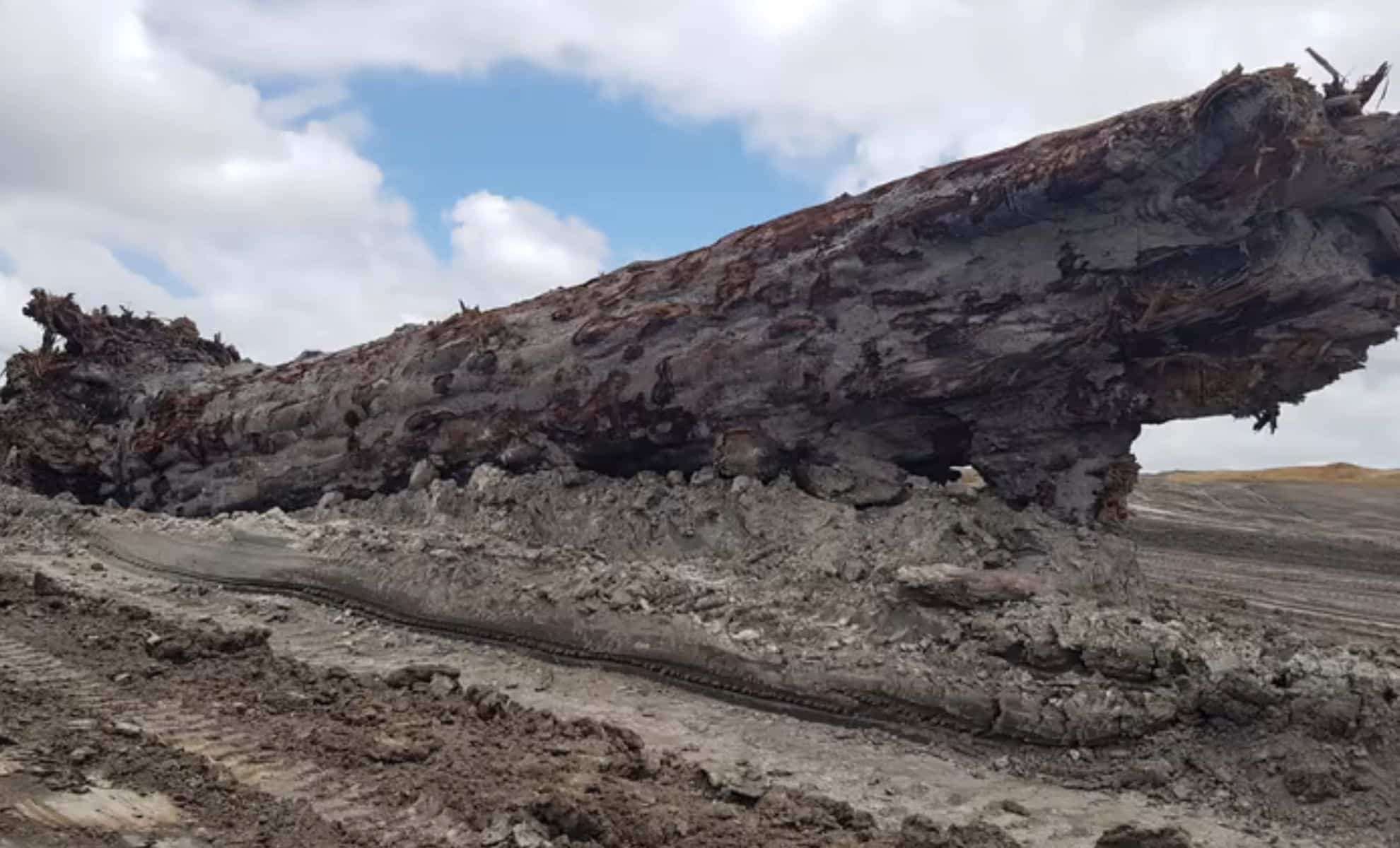
The recent unearthing of a remarkably intact ancient tree in New Zealand is providing critical insights into this magnetic disruption, revealing unprecedented details about its environmental consequences.
A Living Record of Magnetic Field Collapse
During infrastructure work in New Zealand, workers uncovered the fossilized remains of a giant kauri tree preserved for 42,000 years. What makes this find extraordinary is the tree’s growth rings, which serve as a detailed archive of atmospheric changes during a tumultuous era.
By examining carbon isotopes trapped in these rings, researchers reconstructed when Earth’s magnetic field deteriorated, nearly collapsing and enabling hazardous cosmic radiation to penetrate the atmosphere.
“This discovery allowed us to pinpoint the timing and environmental fallout of Earth’s most recent magnetic pole reversal with remarkable precision,” Turney explained. “The ancient tree offers a unique record of the spike in atmospheric radiocarbon caused by the weakening magnetic field.”
The research confirms that as the magnetic shield weakened, cosmic radiation surged dramatically. This spike triggered climatic shifts, impaired the ozone layer, and heightened exposure to dangerous ultraviolet rays, altering ecosystems and possibly affecting human evolution.
Magnetic Field Weakening May Have Influenced Early Human Behavior
The diminishing magnetosphere left the planet vulnerable to increased solar and cosmic radiation, creating hazardous surface conditions. Evidence suggests early humans may have sought protection by retreating underground.
Scientists propose this period coincides with the rise of cave habitation and art, as humans adapted to the environmental changes by spending more time in sheltered, dark spaces.
“Elevated UV levels during solar events could have made caves essential refuges,” noted Alan Cooper, co-lead author. “The frequent use of red ochre handprints in cave art might have served as a primitive sunscreen, a practice still observed today in some cultures.”
If correct, the temporary magnetic collapse not only impacted survival but also spurred cultural shifts in early human societies. Furthermore, these conditions may have contributed to broader biological crises.
Did Magnetic Chaos Contribute to Neanderthal Extinction?
The disappearance of Neanderthals roughly coincides with the Laschamps Excursion. While multiple theories exist for their extinction, some researchers speculate that increased radiation exposure from a weakened ozone layer may have accelerated their decline.
Greater radiation could have caused genetic damage, health problems, and environmental stress, compounding competition with Homo sapiens and potentially delivering a fatal blow.
Although still speculative, this hypothesis raises compelling questions about the magnetic field’s role in shaping evolutionary history. Yet, the crucial concern now lies in what these findings mean for the present and future.
Is Earth Approaching Another Magnetic Pole Shift?
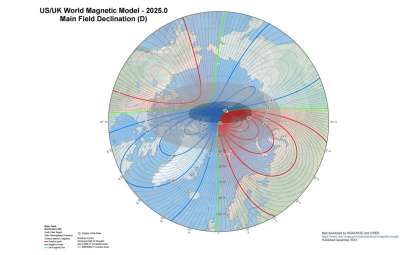
The planet's magnetic field has decreased in strength by about 9% over the past 170 years, with the north magnetic pole migrating rapidly. These trends prompt scientists to consider whether a new geomagnetic excursion is imminent.
“The combination of rapid pole movement and significant weakening could signal an impending reversal,” Cooper warned. “If it occurs now, the effects on modern infrastructure such as power grids and satellites would be catastrophic.”
A contemporary event like the Laschamps Excursion could disrupt GPS, communications, and energy systems, exposing technology and transportation to intense radiation damage without adequate preparations.
Insights from the Past Are Critical for Our Future
Thanks to the ancient kauri tree, we now have a clearer picture of one of Earth’s most extraordinary magnetic phenomena. What unfolded 42,000 years ago was a planet-wide upheaval that reshaped ecosystems and life itself.
The pressing question remains: can it happen again? If the magnetic field continues to weaken, we may face a new era of instability. Whether this occurs within our lifetimes or far beyond, the warning from our planet’s history is unmistakable.
Will we heed it?
This article has been republished from the following materials. Note: material may have been edited for length and content. For further information, please contact the cited source.
- Categories:
- News






0 comments
Sign in to Comment