
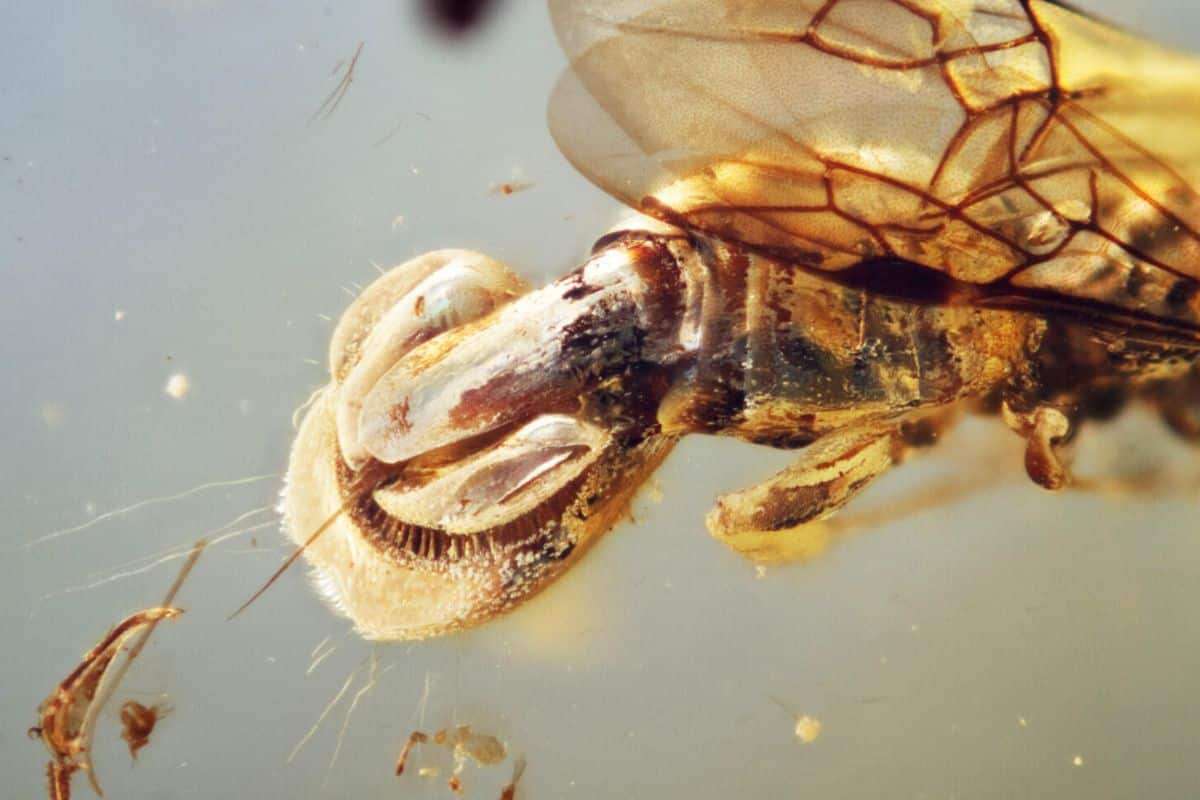
Researchers have unveiled a fascinating wasp encased in amber dating back 99 million years, as detailed in a recent BMC Biology publication. This prehistoric insect features an extraordinary abdomen resembling the carnivorous Venus flytrap, shedding light on the evolutionary diversity during the Cretaceous era.
A Truly Unique Species
Preserved in Kachin amber from what is now Myanmar, this newfound wasp, named Sirenobethylus charybdis, represents an entirely new genus and family. Sixteen well-preserved female specimens enabled scientists to examine its anatomy closely, revealing remarkable characteristics previously unseen.
The front of the wasp resembles a typical modern wasp, yet its rear is strikingly different. Unlike common wasps with tapered stingers, Sirenobethylus displays a broad, paddle-shaped abdomen adorned with bristles, closely imitating the structure of the carnivorous plant Dionaea muscipula, better recognized as the Venus flytrap.

“Nothing similar is known from any other insect,” write the researchers, led by Qiong Wu of Capital Normal University in Beijing.
They liken this structure to “a Venus flytrap (Dionaea muscipula), a carnivorous plant using two opposing specialized leaves to capture insect prey.”
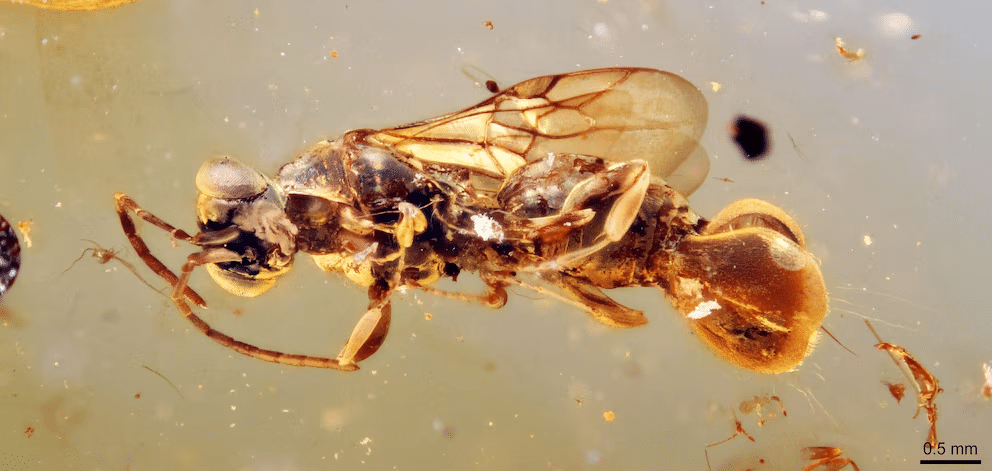
Sirenobethylus charybdis. (Photo credited to Qiong Wu)
A Cretaceous Hunter with a Remarkable Adaptation
This wasp belonged to the group of koinobiont parasitic wasps, which lay eggs inside living hosts, letting larvae consume the prey from within. The flytrap-like rear likely assisted females in capturing and immobilizing quick-moving hosts just long enough to deposit eggs through a central ovipositor.
Where many parasitic wasps target slower prey such as caterpillars or larvae, Sirenobethylus might have used its specialized abdomen to widen its range of host possibilities.
Frozen Actions Preserved in Amber
Beyond anatomy, the amber fossils reveal the wasps in various postures, suggesting movement of the abdominal trap as part of their behavior. The study presents multiple lateral and dorsal angles, highlighting the ovipositor's placement in relation to the trap mechanism.
An Ambush Strategy Rooted in Evolution
Unlike modern dryinid wasps that actively seize prey with their legs, Sirenobethylus may have used a more patient hunting technique. Its Venus flytrap-shaped abdomen might have functioned as a concealed ambush tool.
“We imagine it would have waited with the apparatus open, ready to pounce as soon as a potential host activated the capture response,” the authors write.
Additional trigger hairs on the abdomen's edges likely acted as sensors, enabling instant responses when prey contacted these sensitive bristles.
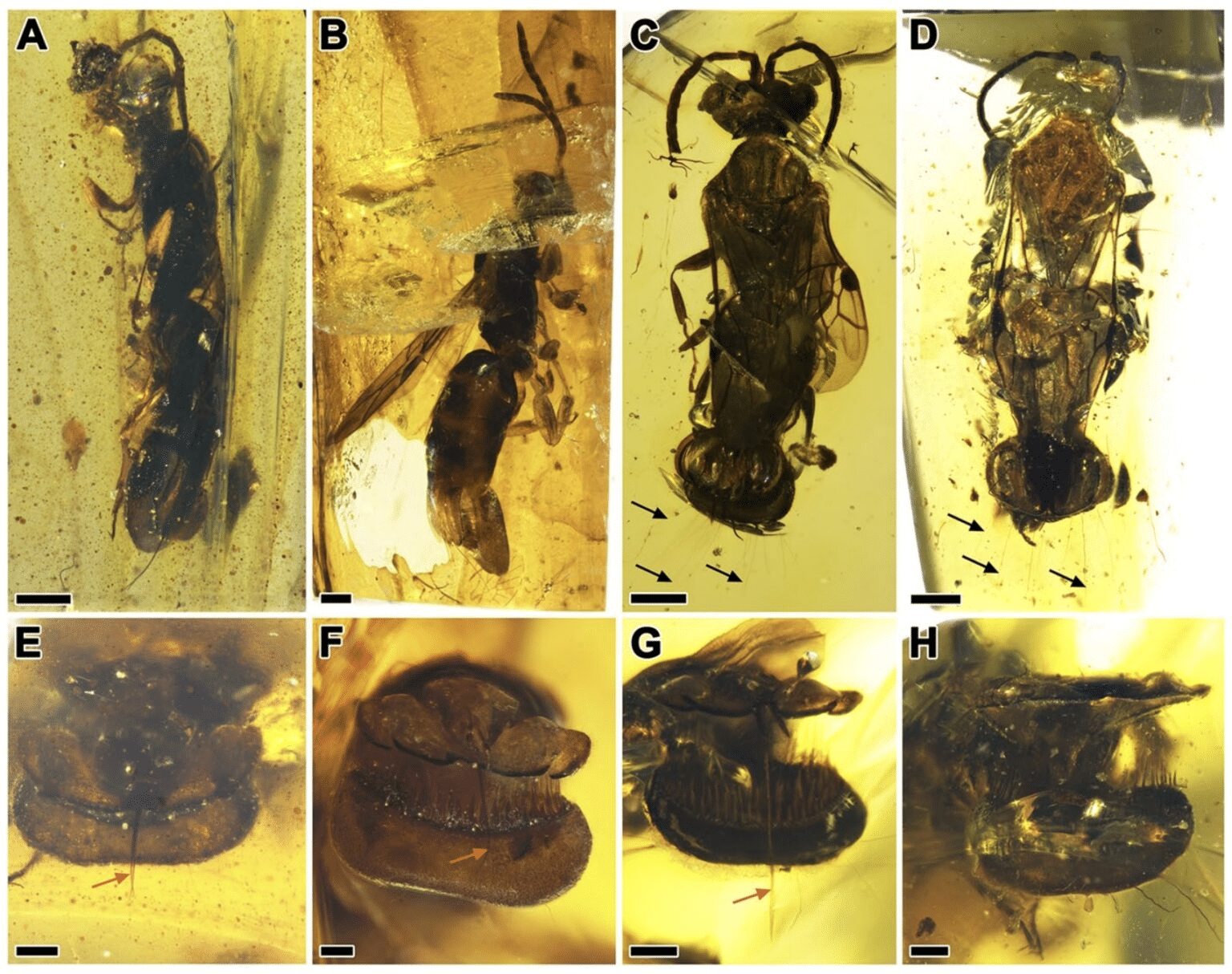
Image credit: Wu et al., BMC Biology, 2025
Absence of Male Specimens Raises Questions
Interestingly, all identified Sirenobethylus charybdis fossils are female, leaving male existence and function unknown. Should males lacking the trap-like abdomen be discovered, this would reinforce the hypothesis that the structure played a role primarily related to reproduction.
“Indeed, it would be unique for insect females to restrain the males during mating, rather than the other way around,” the authors explain. “We consider this an unlikely function of the abdominal apparatus.”
- Categories:
- Science









0 comments
Sign in to Comment