

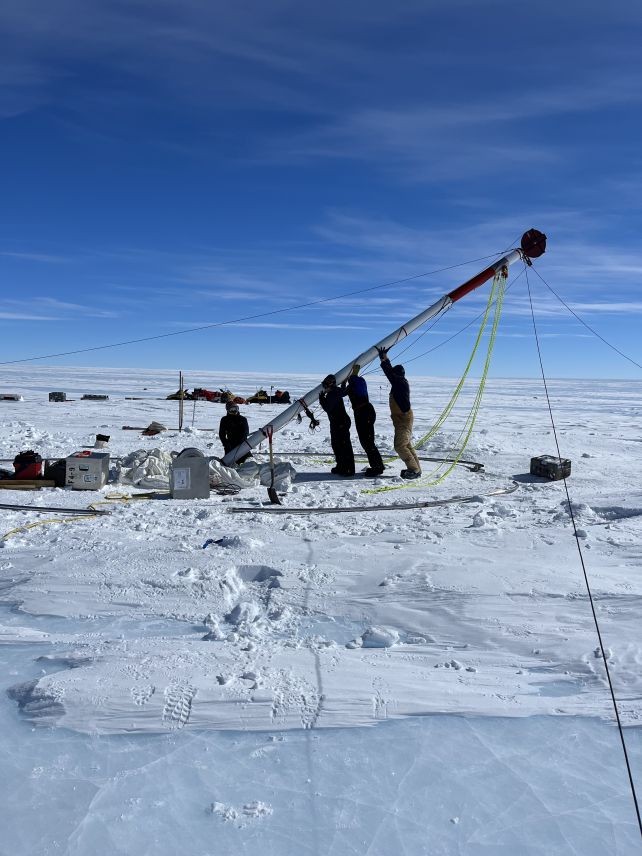
A team from the Center for Oldest Ice Exploration (COLDEX), led by Sarah Shackleton of the Woods Hole Oceanographic Institution and John Higgins of Princeton University, successfully retrieved fragments of ancient ice harboring trapped air bubbles. This ice dates back to a period marked by elevated sea levels and warmer global temperatures.
Unlike traditional deep ice-core drilling for continuous climate records, this initiative targeted isolated, shallow ice deposits. As detailed in their Proceedings of the National Academy of Sciences publication, this strategy enabled researchers to collect crucial, short-term climate “snapshots.” These glimpses offer insights into atmospheric gases, temperature, and ocean warming from a period six times older than earlier Antarctic ice-core datasets.
Pinpointing Age of Air from a Warmer Era
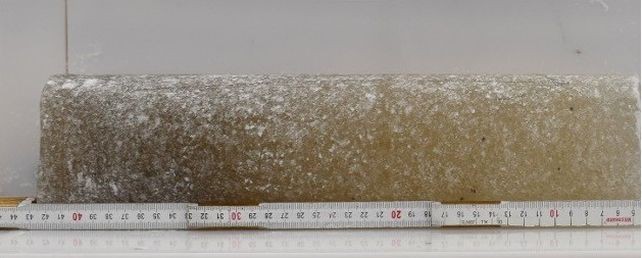
The oldest ice sample recovered from Allan Hills is approximately six million years old, a time when Earth experienced much higher temperatures and sea levels. Instead of relying on surrounding ice or sediment for dating, the scientists determined the age by analyzing argon isotopes in the trapped gaseous bubbles within the ice core.

Earth.com highlights that this direct dating method offers precise chronology without depending on assumptions about local snowfall or ice movement. This approach transforms isolated ice segments into a valuable archive of historical climate data.
“Ice cores are like time machines that let scientists take a look at what our planet was like in the past,” said Sarah Shackleton, who has conducted numerous seasons of fieldwork in Antarctica.
Preserving such ancient air in these shallow ice formations offers an unparalleled chance to deepen understanding of Earth’s atmospheric evolution over millions of years.
Tracing Six Million Years of Cooling in Antarctica
In addition to gas measurements, the researchers examined oxygen isotopes within the ice to reconstruct temperature trends. Their analysis reveals a regional cooling trend of about 12°C (22°F) over the last six million years, providing the first direct continental temperature data from Antarctica. The core also contains evidence of episodic warmth during this timeline.
This information is key to understanding how Antarctic ice sheets react to variations in ocean temperatures and atmospheric CO2 during crucial climatic shifts. COLDEX director Ed Brook explained that the team initially aimed to find ice up to three million years old, but doubling that age was “beyond expectations.” These exposed ancient ice patches, though discontinuous, prove exceptionally valuable scientifically.
Extreme Conditions Enable a Shortcut to Ancient Climate Data
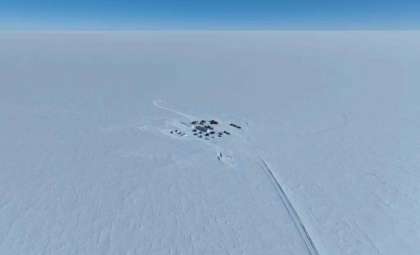
Unearthing six-million-year-old ice just 100 to 200 meters beneath the surface is unique to the harsh environment of Allan Hills. Here, fierce winds remove new snowfall while the slow-moving ice sheet allows these old layers to remain near the surface, frozen yet challenging to access. Shackleton remarked:
“That makes Allan Hills one of the best places in the world to find shallow, old ice, and one of the toughest places to spend a field season.”
Although the environment complicates fieldwork, this shallow ice approach offers a faster route to uncovering Earth’s ancient climate records without drilling kilometers deep. COLDEX plans to revisit the site soon to increase their snapshot collection and investigate if even older ice layers exist nearby. Shackleton concluded, “The Allan Hills cores help us travel much further back than we imagined possible.”
- Categories:
- News




0 comments
Sign in to Comment