
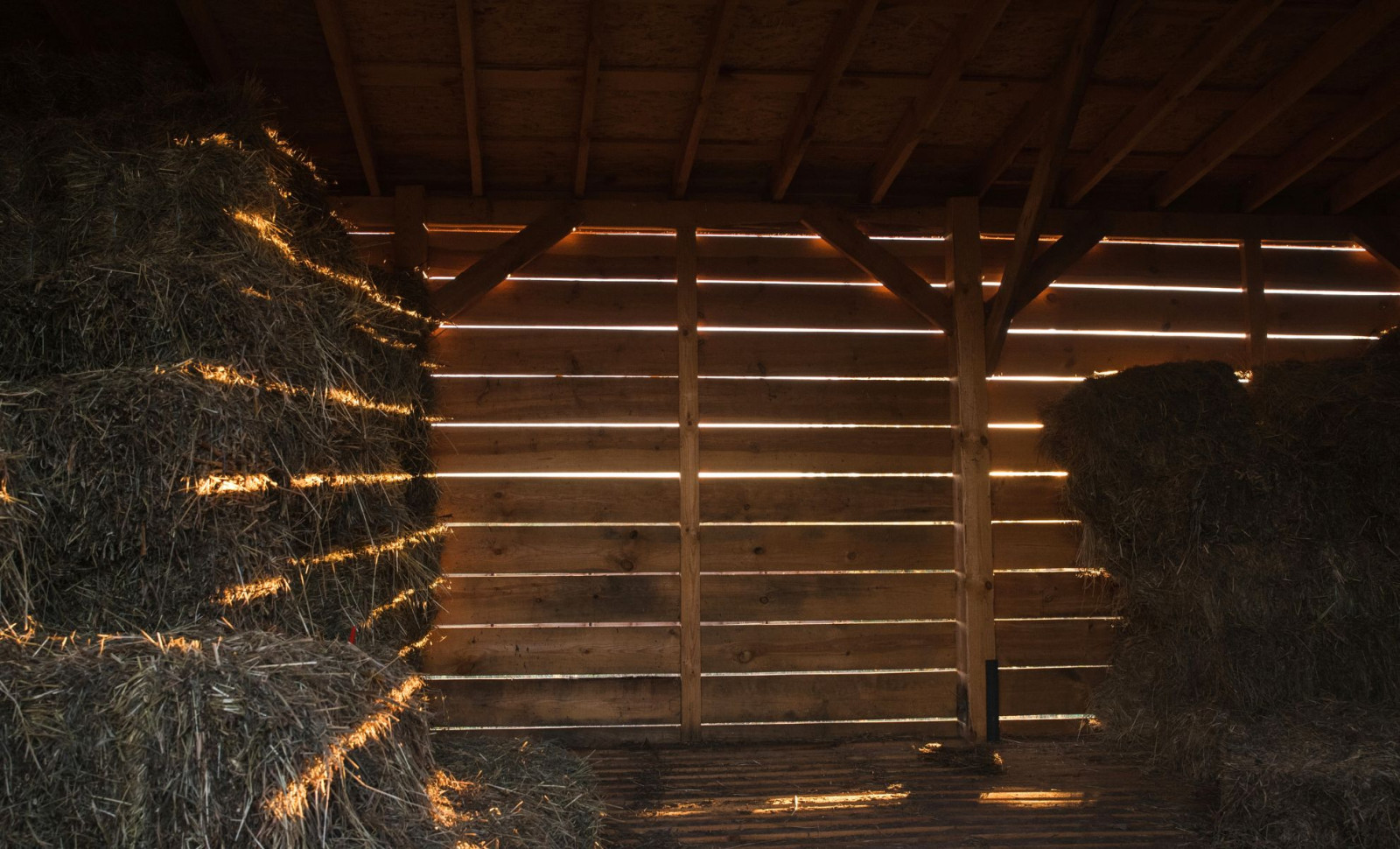
An ordinary-looking rock once forming part of a barn floor in a Czech village has been identified as an extraordinary archaeological find. This stone is actually a rare Bronze Age tool used for casting bronze spearheads more than three millennia ago.
Back in 2007, a resident of Morkuvky, a modest settlement in southeastern Czech Republic, discovered the distinctive stone during barn renovations. Though initially a simple building stone, its unusual features prompted him to reach out to archaeologists. Subsequent examinations revealed that the stone served as a critical weapon-making mold from the Bronze Age.
The Art of Spearhead Production
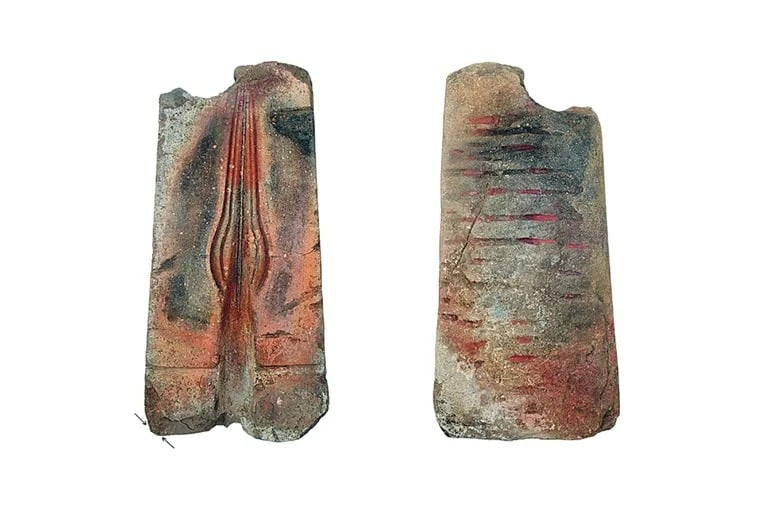
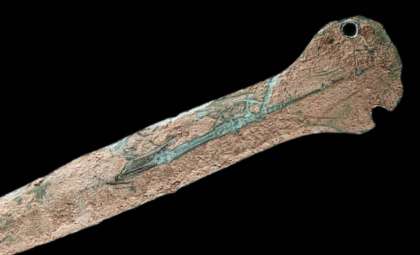
Constructed from volcanic rhyolite tuff and roughly nine inches long, this stone mold was crafted to form specific spearheads favored by warriors of that era. Milan Salaš, an archaeologist affiliated with the Moravian Museum located in Brno, explained:

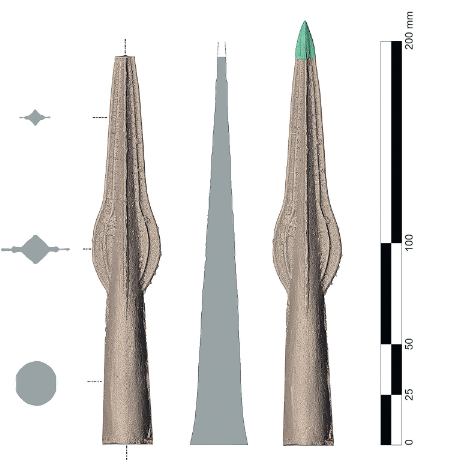
“It is a casting mold, technically called a matrix, for a bronze spearhead.” The mold was used to create a lance-shaped spearhead with a hollow base. “On one side, there’s a very precisely shaped negative impression for casting a bronze spearhead,” Salaš explained.
Insights into Bronze Age Metallurgy
The Urnfield culture and other Bronze Age societies had already developed sophisticated techniques for casting bronze weaponry. A paper published in Archeologicke Rozhledy highlights that producing spearheads of this kind required specialized skills and access to suitable materials. The volcanic rock used for the mold likely originated from northern Hungary or southeastern Slovakia, indicating extensive trade networks spanning large distances.
Milan Salaš emphasized the artifact’s value in enhancing understanding of ancient weapon manufacturing.
“As we can see, it’s a fairly regular rectangular stone slab. On the dividing surface of the mold, on one side, there is a very precisely shaped and very well-preserved negative impression used for casting a bronze spearhead.” he said.
The process of producing bronze weapons involved working with molten metal under carefully controlled conditions. This points to an advanced grasp of metallurgical principles that enabled people to manufacture weapons efficiently and in significant quantities.
The Legacy of the Urnfield Culture
The Urnfield culture, recognized for its distinctive burial customs, spread across Central Europe, encompassing regions of today’s Czech Republic, Austria, and Slovakia. While many artifacts linked to this culture have been uncovered in burial contexts, uncovering a functional mold like this in a contemporary village is unusual.
Salaš and his colleagues theorize that the mold may have originally belonged to a nearby Urnfield settlement. As noted in a Facebook update, although the original site remains unidentified, the volcanic composition suggests long-range trade or movement. It’s believed the artifact was relocated to Morkuvky long after its initial use.
Antonín Přichystal, a geologist at Masaryk University, commented on the artifact’s extensive usage in weapon production.
“It could have been used to cast many spearheads,” he says. The researchers also found evidence of “high thermal stress” on the artifact’s surface, suggesting it was used repeatedly.
- Categories:
- News





0 comments
Sign in to Comment