
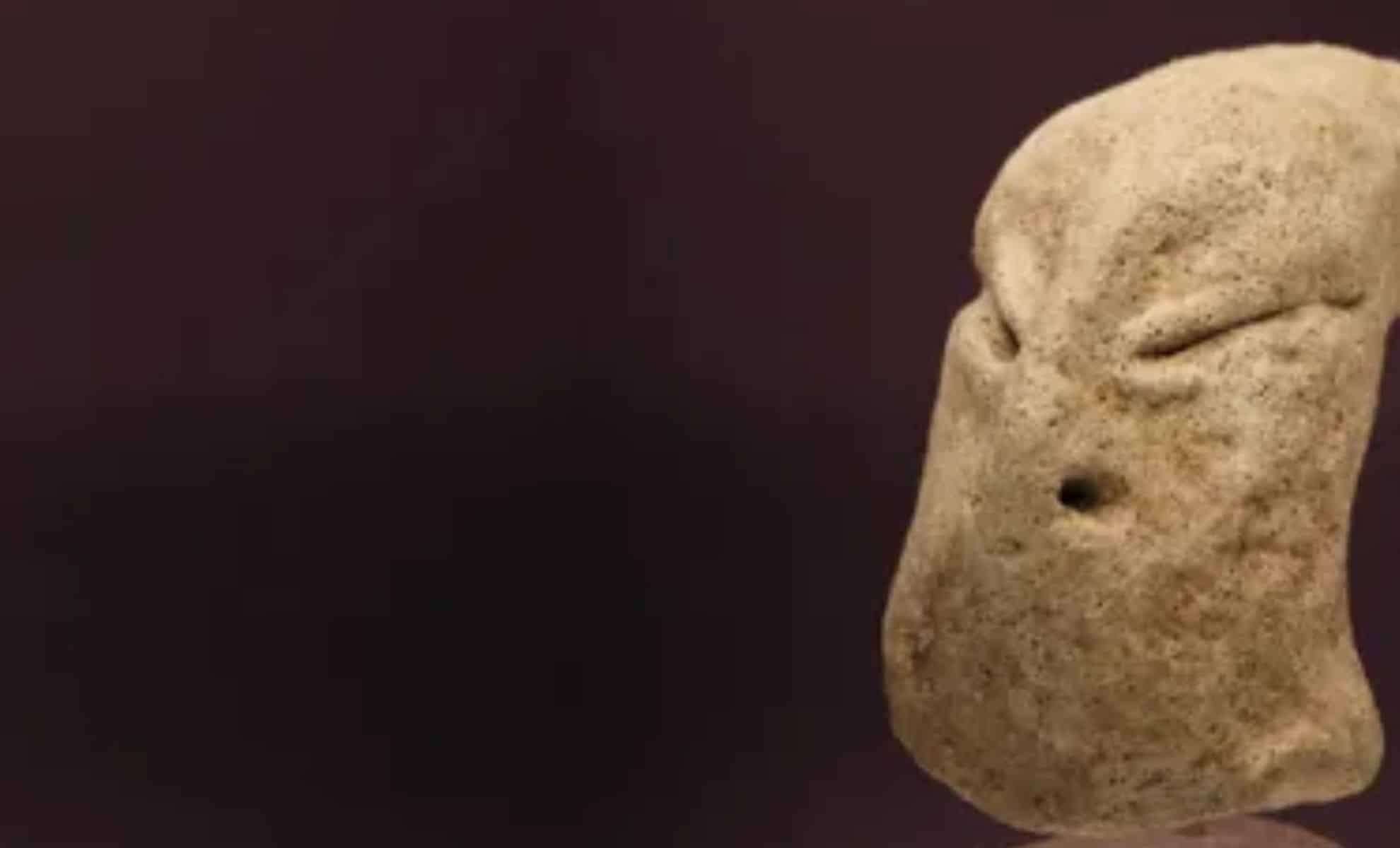
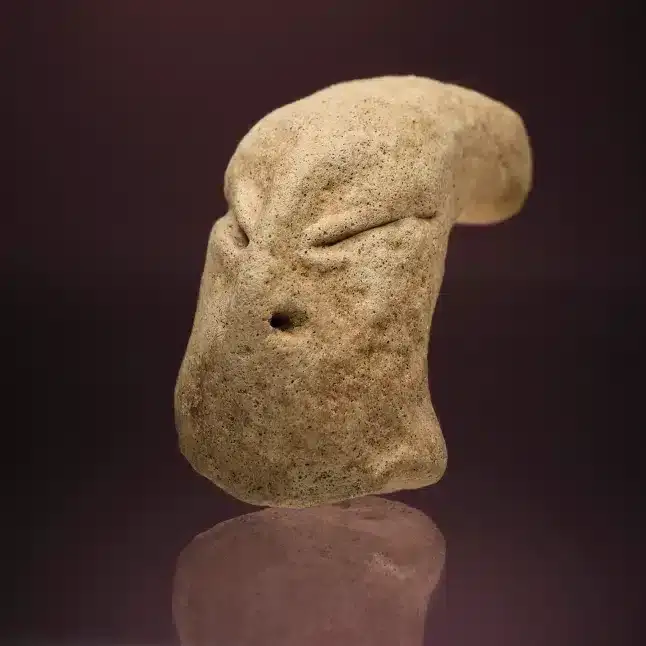
At the Bahra 1 archaeological site in northern Kuwait, researchers have uncovered a small clay figurine depicting a head with striking features. This artifact, estimated to be nearly 7,000 years old, has captured significant scientific interest due to its resemblance to contemporary portrayals of extraterrestrials. Details of this fascinating object were recently shared by the Polish Centre of Mediterranean Archaeology at the University of Warsaw.
The discovery emerged from a collaborative excavation involving the Polish Centre of Mediterranean Archaeology and Kuwait’s National Council of Arts and Letters. This extraordinary find is prompting fresh discussions about the artistic traditions of the Ubaid culture and its role in early human history.
Distinctive Artifact Unearthed in the Arabian Region
This carefully sculpted clay head features narrow, slanted eyes, a flattened nose, and an elongated skull shape, elements that strongly suggest a likeness to alien imagery. While the figurine’s appearance aligns with extraterrestrial motifs familiar today, its style matches known Mesopotamian artistic conventions. It represents the first known instance of such an object emerging from Kuwaiti archaeological layers, although similar items have been discovered in ancient Mesopotamian contexts.

The Bahra 1 site, inhabited by the Ubaid culture between 5500 and 4900 BCE, has a rich archaeological history. Situated within one of the earliest agricultural civilizations of the Middle East, the site has produced numerous pottery artifacts and ritual items. Nevertheless, this particular figurine stands out due to its unusual look and the setting of its recovery.
Archaeologists Taken Aback by the Unexpected Find
The international excavation team, composed of experts from Kuwait’s National Council of Arts and Letters and the Polish Centre of Mediterranean Archaeology, expressed surprise upon revealing the figurine. Agnieszka Szymczak, who manages smaller artifacts at the site, remarked, “This discovery was an entirely unforeseen moment for all involved.”
Among over 1,500 artifacts recovered at Bahra 1, this unique figurine marks a notable departure in style and subject matter. Its striking resemblance to modern alien imagery has ignited debate about its possible symbolic or ceremonial significance.
Renowned for their detailed pottery, the Ubaid people likely attributed special importance to such figurines, possibly connected to spiritual or cultural practices. The figurine’s location within a domestic context rather than a sacred space hints at a potential everyday use, though its exact role remains a mystery.
Interpreting the Figurine’s Peculiar Appearance
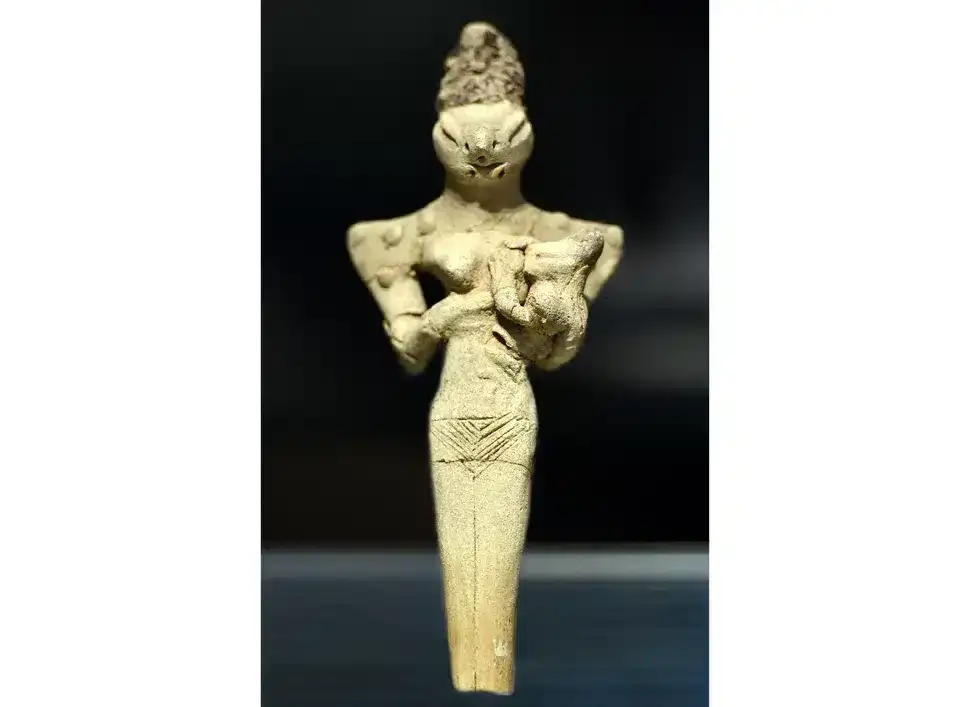
The most notable aspects of the figurine — its elongated head and prominent eyes — have encouraged several hypotheses among scholars. One leading theory is that this object depicts artificial cranial deformation, a custom practiced by the Ubaid to reshape infants’ skulls into elongated forms.
This procedure, executed by binding an infant’s head, often symbolized social rank or group affiliation. Archaeological evidence from Mesopotamia supports that such cranial shaping was prevalent and utilized to express identity.
The figurine’s unusual characteristics may artistically represent this cultural tradition. Whether it reflects an individual or serves a more symbolic purpose remains uncertain. Nevertheless, its strong likeness to common portrayals of extraterrestrials adds an intriguing dimension to its interpretation.
- Categories:
- News






0 comments
Sign in to Comment