
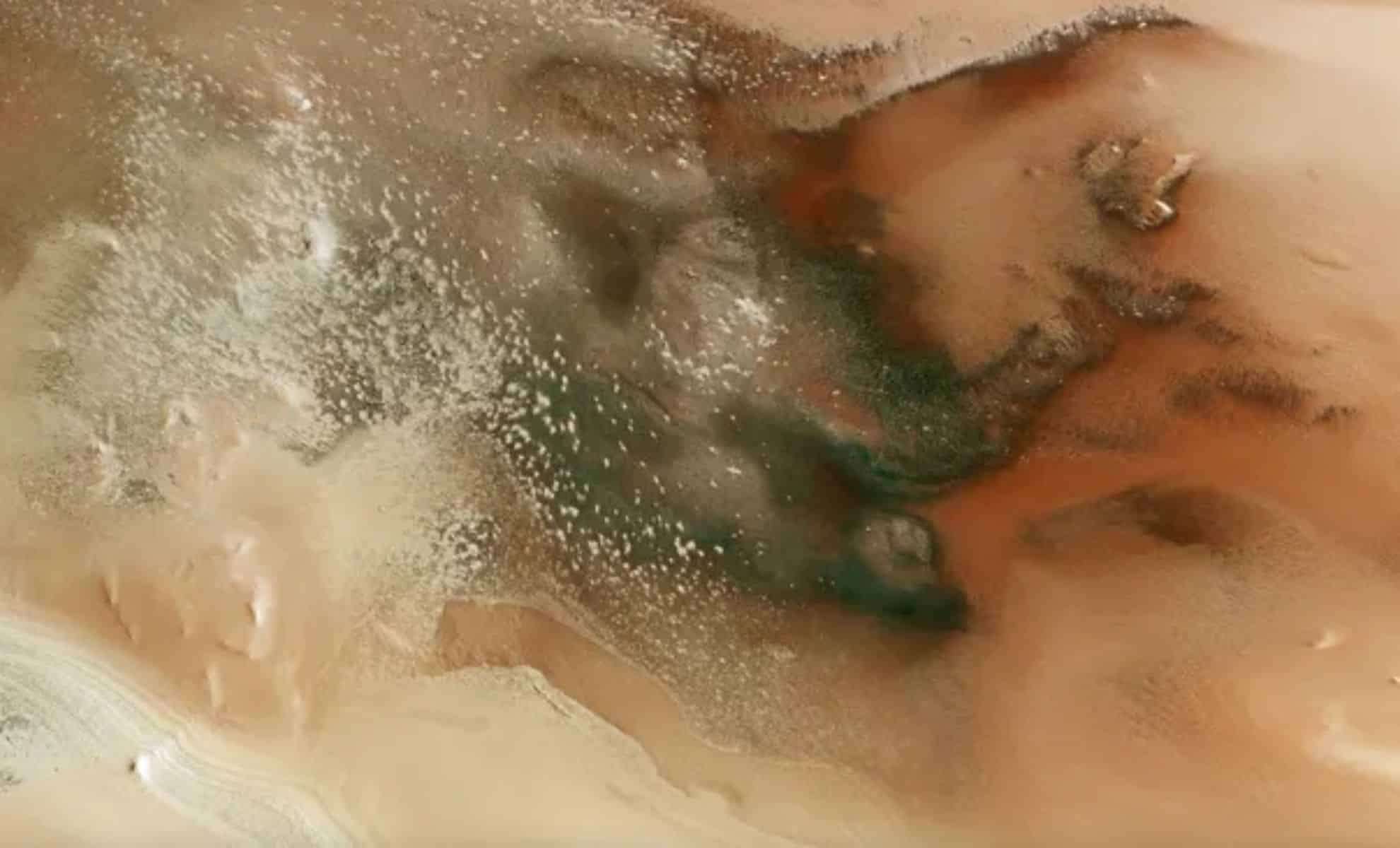
European missions have captured striking visuals of Mars' south polar region, exposing an array of puzzling surface characteristics.
Spotted as Martian southern spring unfolds, these features shed light on the planet’s freeze-and-thaw mechanisms along with distinctive geological dynamics. The European Space Agency’s Mars Express and Trace Gas Orbiter focused on the Australe Scopuli area, unveiling peculiar formations where ice layers intermingle with dust, creating patterns that contrast sharply against the frozen landscape.
Decoding the Enigmatic Terrain
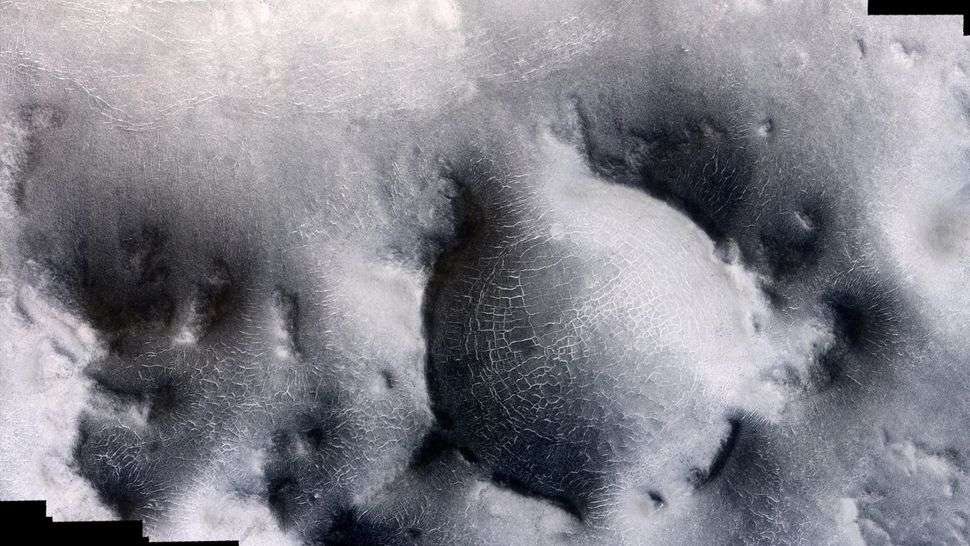
These unusual dark polygons visible in the recent Mars orbiter shots are unlike terrestrial formations. Named “cryptic terrain” for their enigmatic look, these dark shapes starkly contrast the bright icy backdrop. The European Space Agency (ESA) attributes their creation to sublimation, a process where solid carbon dioxide ice transitions straight to gas without becoming liquid. This phenomenon occurs as Martian spring melts the southern ice caps, releasing significant volumes of CO2 into the thin atmosphere.

Detailed examination shows these dark forms often have bright frost edges, amplifying their visual contrast. These structures resemble freeze-thaw cycles similar to those seen in Earth’s polar environments like the Arctic. ESA researchers noted, “The darkness of some cryptic terrain elements stands out against the icy surroundings, highlighting their unique formation.” Repeated freezing and sublimation cycles have gradually molded these formations, providing fresh insights into Mars’ past climate and surface dynamics.
Beyond their striking appearance, these patterns hint at active geological mechanisms. The polygonal designs are reminiscent of permafrost crack patterns on Earth, formed by ground ice expanding and contracting with temperature changes. This suggests that hidden ice deposits beneath the surface influence Mars’ polar topography, showing intricate links among the terrain, atmosphere, and subsurface.
Landscape Sculpted by CO2 Sublimation
One striking feature of Mars' cryptic terrain is the presence of fan-like deposits detected across the southern hemisphere. Captured by the Mars Express and Trace Gas Orbiter, these shapes form through a unique process driven by specific environmental conditions. When spring sunlight penetrates the translucent carbon dioxide ice, it warms the ground underneath, creating trapped pockets of gas. This pressurized gas eventually erupts through the surface in forceful jets, carrying dark dust and material from beneath the ice sheet. The darker deposits left behind then absorb sunlight, accelerating local melting.
The ESA imagery shows these fan structures vary from dozens to hundreds of meters in spread and dot the landscape. These jet-like formations, often dubbed “spiders” for their radial appearance, offer a vivid demonstration of seasonal Martian transformations and atmospheric-surface interactions.
This ongoing sublimation and dust deposition cycle actively remodels Mars’ surface and supplies crucial information about the planetary climate trends. By tracking these phenomena, scientists can better compare Martian seasonal shifts with those on Earth. The escaping gases also hint at the presence of buried water ice reservoirs, vital for planning future manned exploration.
Why These Findings Matter
The recent data from Mars orbiters deepen our understanding of the Red Planet’s geological processes and the potential existence of subsurface ice. These studies contribute to broader efforts to chart Mars’ polar zones and clarify how seasonal factors influence the global climate. Analysis of this cryptic terrain facilitates developing models to trace how Mars’ climate may have changed over millions of years.
These discoveries also provide insight into Mars’ unique polar seasonal cycles, vastly different from those on Earth. The southern hemisphere of Mars endures extreme temperature and pressure fluctuations, creating landforms unfamiliar on our planet. The role of carbon dioxide ice sublimation in shaping these regions is crucial. The ESA has explained that “cooler autumn temperatures cause CO2 vapor to condense, forming thick polar caps,” underscoring the cyclical behavior of Mars’ polar ice dynamics.
The Mars Express mission aims to reveal how these seasonal changes affect ice and dust distribution across Mars. The striped layers seen in the southern ice caps—alternating bands of dust and ice—carry important clues to Mars’ climatic evolution. As ice sublimates, retained dust layers offer a record of past atmospheric episodes, essential for reconstructing the planet's environmental history and evaluating its habitability.
Prospects for Future Mars Missions
Insights gathered from the Mars Express and Trace Gas Orbiter mark only the start of exploring Mars’ polar mysteries. Continued investigation of these cryptic terrains will aid in pinpointing subsurface ice deposits beneath the surface, information critical to future exploration missions, especially those targeting human presence.
Comprehending the freeze-thaw dynamics and the formative processes of these unique landforms is imperative to identifying potential water supplies on Mars. The presence of significant subterranean ice could be a pivotal resource for astronauts. Additionally, studying these active landscapes may offer vital evidence regarding Mars’ capability to support life in its history.
Since its 2003 arrival, the Mars Express orbiter continues to deliver valuable data enriching our knowledge of Martian climate, atmosphere, and geology. Each new image brings scientists closer to grasping the evolution and future potential of the Red Planet. Missions like Mars Express and Trace Gas Orbiter illuminate Mars’ polar regions, setting the stage for upcoming robotic and human exploration endeavors on this fascinating world.
- Categories:
- Astronomy ,
- News ,
- Science







0 comments
Sign in to Comment