
Cutting-edge 3D scanning technology has brought to light surprising reproductive behaviors in dinosaurs from an 80-million-year-old fossil site located in central China. This breakthrough challenges previous notions about how some dinosaur species organized their nests.
Curved Arrangements of Dinosaur Eggs Indicate Complex Nesting Strategies
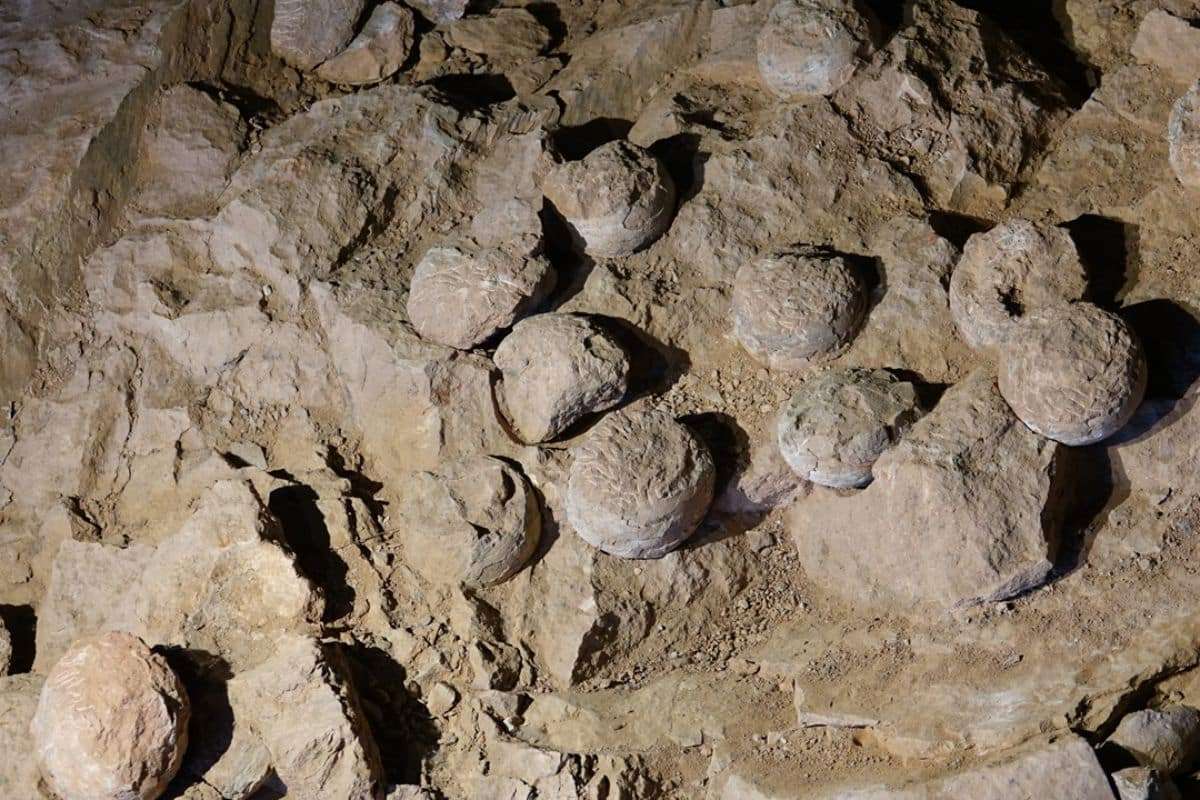
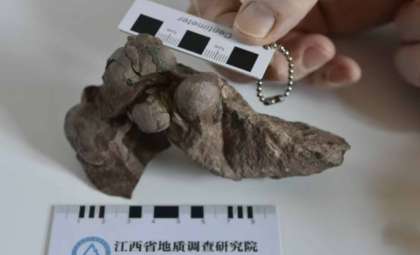
Global Times reports that the Hubei Institute of Geosciences used advanced 3D laser scanning to discover that dinosaur eggs at the Qinglong Mountain fossil cluster were deposited in distinct curved patterns, with clusters of three to five eggs forming arcs.
Project leader Zhao Bi described these formations as "a highly artistic pattern that has never been seen before," standing in contrast to traditional finds where eggs are typically arranged radially or embedded upright within sediments.

By spatially analyzing the fossilized eggs in three dimensions, the team concluded that these curved clusters were a widespread and consistent feature throughout the site, implying a unique reproductive behavior. Zhao suggested these arrangements may have been an adaptive strategy to either shield the eggs post-laying or to optimize hatching chances.
“We are conducting further research to determine the exact nature of this behavior. Advanced technology allows us to obtain invisible information from the site without any intervention,” he added.
Non-Invasive Digital Surveys Illuminate Fossil Site Details
The expansive Qinglong Mountain fossil site spans approximately 8,000 square meters and contains the world's largest and most intact collection of dinosaur egg fossils, totaling over 300,000 eggs.
Researchers employed dense laser terrain scanning to capture highly detailed point cloud datasets, which enabled creation of millimeter-accurate digital maps. These maps reveal precise fossil layouts and site topography without disturbing the delicate specimens.
Digital heritage expert Long Jingquan emphasized that such approaches are designed not just to showcase technology, but to solve practical challenges faced during on-site fossil studies where human intervention risks damaging irreplaceable remains.
Exceptional Preservation Offers Glimpse into Cretaceous Ecosystems
First uncovered in 1995, the Qinglong Mountain excavation is renowned for providing deep insight into dinosaur life during the Cretaceous period. This site is especially valuable due to the excellent preservation of the eggs, which largely remain whole with minimal shell fragmentation. This preservation allows paleontologists to examine developmental stages in unprecedented detail.
“This site has always provided crucial evidence for the reconstruction of the actual egg-laying scenarios of dinosaurs. Its good condition allows us to see how dinosaurs lived during the Jurassic period,” explained Zhao.
Current investigations are focusing on locating possible embryonic remains embedded in the eggs and identifying nearby dinosaur trackways to reconstruct behavioral patterns more comprehensively.
Harnessing Artificial Intelligence for Fossil Analysis
Zhao and his colleagues are incorporating AI technology to refine fossil classification processes. Their goal is to use machine learning algorithms to automatically distinguish between types of dinosaur egg fossils and identify burial strata features.
This initiative aims to build a comprehensive digital repository that serves both preservation and scientific study objectives, integrating technological advancements with paleontological research.
- Categories:
- Science








0 comments
Sign in to Comment