
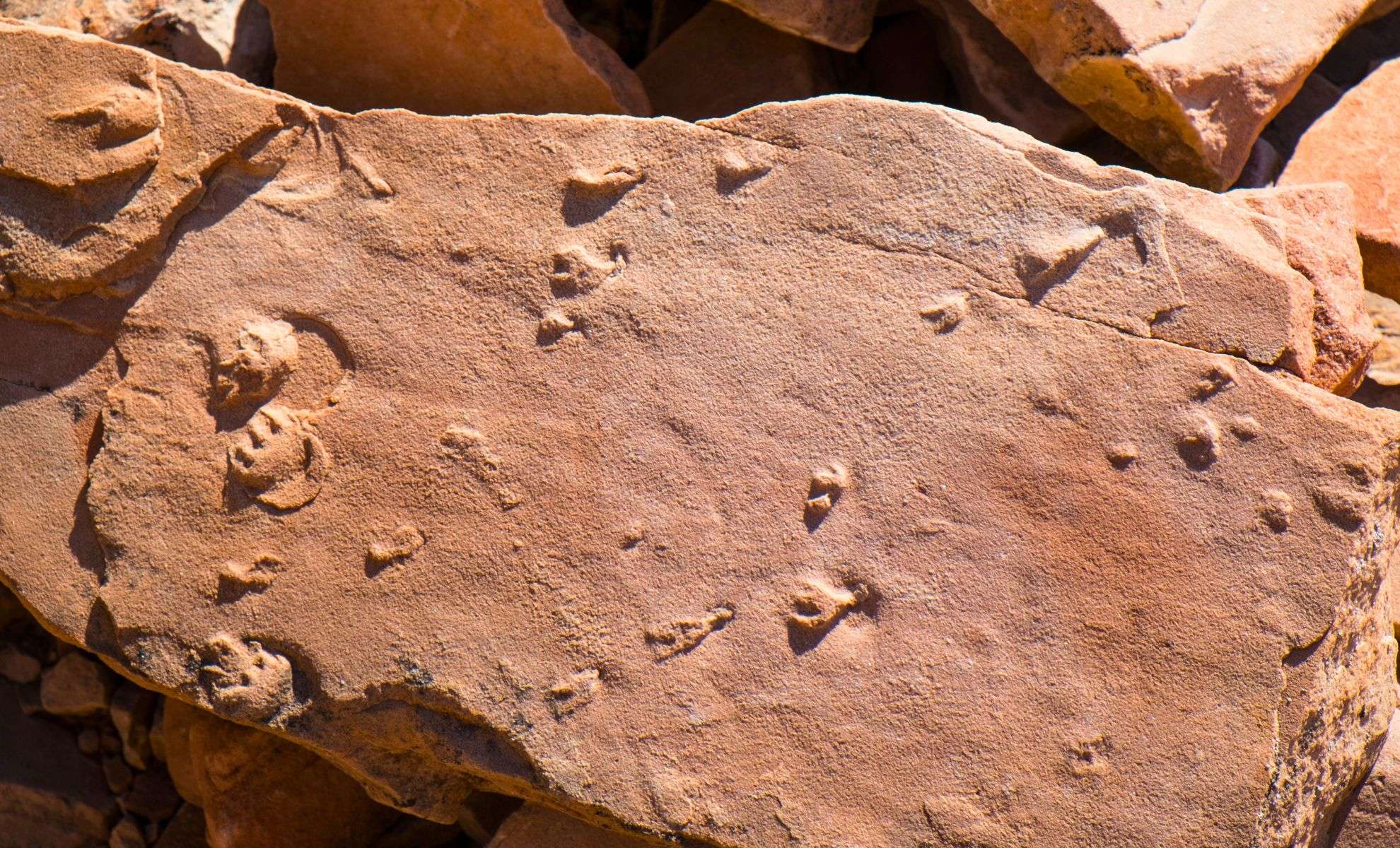
Researchers have uncovered a remarkable collection of fossils in the Grand Canyon that sheds new light on a pivotal era in the history of life on Earth. Embedded within rock formations dating back over 505 million years, the team discovered upwards of 1,500 microscopic fossils dating to the period shortly after the Cambrian explosion, highlighting a phase characterized by increasing biological complexity and inventive evolutionary adaptations.
Published in a recent study led by scientists from the University of Cambridge, these fossils were extracted from the Bright Angel Formation, an ancient seabed that once hosted a shallow marine environment. What makes this find especially fascinating is how vividly it captures an era marked by rapid diversification, experimental body plans, and heightened ecological competition—what researchers have dubbed evolution’s “experimental second album.”
Unveiling a Lesser-Known Epoch of Early Earth’s Biosphere
The Cambrian explosion, which occurred about 508 million years ago, is well known as the origin point for many of the animal phyla we recognize today. Iconic fossil sites like the Burgess Shale in Canada offer an in-depth glimpse of life during this transformative time. However, the subsequent evolutionary developments after this explosion have remained elusive due to the scarcity of fossils from the later Cambrian period.

This newly identified assemblage serves to bridge that gap. Slightly younger than the Burgess Shale deposits, these fossils record a period when ecosystems were becoming more crowded, forcing species to develop new competitive strategies. Preservation quality is exceptional, with the majority comprising priapulid worms, alongside a variety of crustaceans and mollusks exhibiting unique evolutionary traits.
An Unusual Cambrian Worm Equipped with Tool-Like Teeth
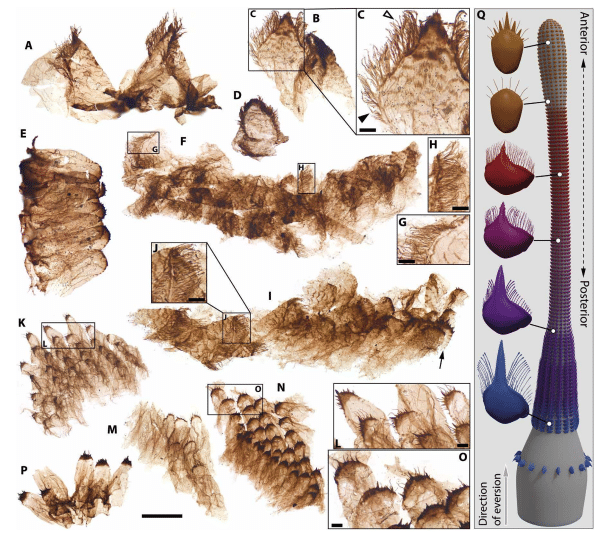
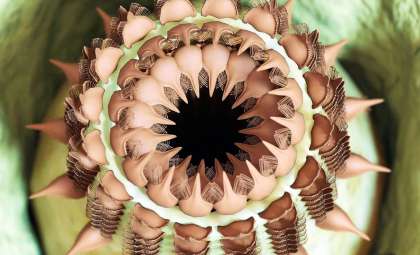
A notable specimen unearthed is the worm Kraytdraco spectatus, notable for its uncommon anatomy. Its body featured numerous tiny tooth-like projections with varied textures—from robust to delicate—paired with filamentous structures that differed depending on their position. Researchers propose that the tougher teeth functioned to scrape surfaces to gather nourishment, while the extended filaments captured fine particulate matter suspended in the water.
This combination of two distinct feeding mechanisms in one organism is quite sophisticated for such an ancient creature, illustrating that early evolution involved not only the emergence of new species but also innovative survival tactics.
Adaptive Feeding Mechanisms in Crustaceans and Mollusks
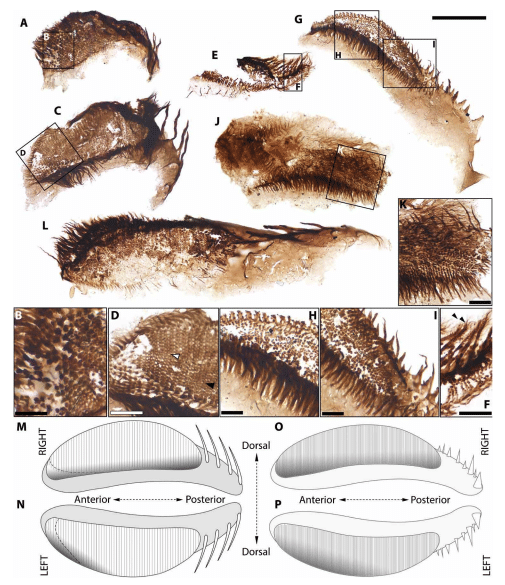
Other fossilized creatures reveal comparable ingenuity. Crustaceans possessed fine hair-like appendages that directed food towards their mouths, where specialized molar-like structures processed the sustenance, functioning much like miniature grinders. Mollusks exhibited rows of shovel-shaped teeth ideal for scraping algae or microbial layers from underwater surfaces.
Collectively, these adaptations suggest a competitive environment that drove species to develop unique feeding tools and behaviors to occupy ecological niches within this diverse aquatic habitat.
Post-Explosion Evolution Focused on Refinement and Innovation
While the Cambrian explosion marked the initial surge in animal diversity, the findings suggest that the subsequent evolutionary interval was characterized by species honing their forms and functions. The researchers note that if this explosion “established the foundation for modern metazoan adaptations,” then this later period was when organisms intensified their evolutionary experimentation to thrive amid increasing ecological rivalry.
The fossils from the Bright Angel Formation highlight a shift from rapid expansion of biodiversity to strategic improvements. Key animal groups such as arthropods and chordates—the lineage that eventually includes humans—likely solidified survival tactics during this transformative phase.
- Categories:
- News









0 comments
Sign in to Comment