
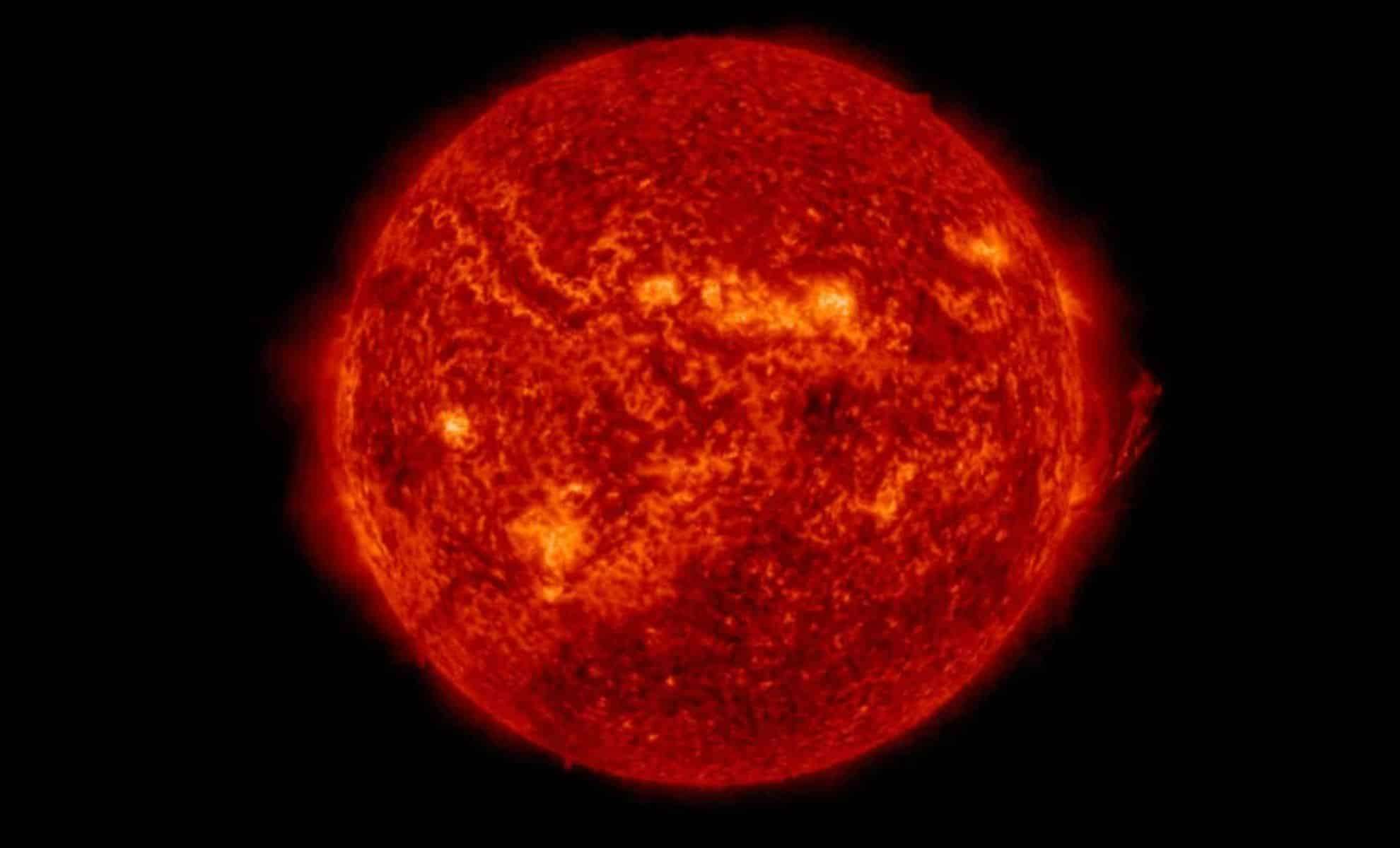
On July 15, 2025, an enormous solar eruption erupted from the Sun’s upper-left region, releasing a wave of energized plasma and magnetic material into space. This explosive event carved out a vast groove on the Sun’s exterior, forming a stunning feature dubbed the ‘Fiery Canyon.’ NASA’s Solar Dynamics Observatory documented the event while closely tracking the unusually large solar filament before it ruptured. Researchers at the Solar and Heliospheric Observatory and the Space Weather Prediction Center (SWPC), part of NOAA, have been monitoring this activity due to the potential for such eruptions to trigger geomagnetic storms affecting Earth. Luckily, this explosion was not Earth-facing, confining its impact to the Sun’s immediate atmosphere.
A Giant Fiery Gorge on the Solar Surface
This solar event produced an enormous scar stretching roughly 250,000 miles across the Sun’s corona. The ‘Fiery Canyon’ was created as the intense blast of plasma and solar debris carved into the Sun’s outer layers. Rising at least 12,400 miles high, the eruption ranks as one of the most powerful seen in recent times. Tony Phillips, an astronomer who manages Spaceweather.com, likened the scale of the event to the Grand Canyon but magnified dramatically. This enormous channel of superheated plasma highlights the volatile and energetic behavior of our star, capable of unleashing immense power without warning.
The Role of Solar Filaments in Triggering Solar Events
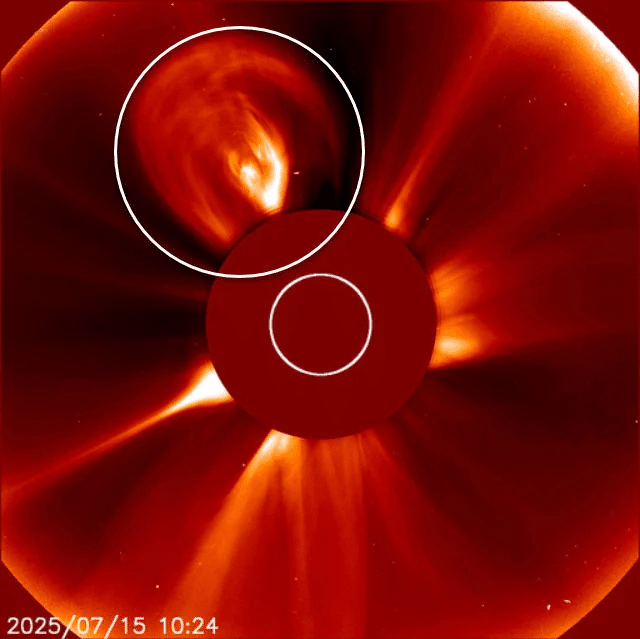
Solar filaments consist of thick ribbons of gas suspended above the Sun by magnetic forces. These structures can grow to impressive proportions before destabilizing and collapsing. In the days preceding the eruption, astronomers observed this particular filament displaying abnormal size and instability. When filaments collapse, they can provoke explosive outbursts that release significant energy. While filaments are fairly common, their eruptions sometimes lead to impactful Coronal Mass Ejections (CMEs) that influence space weather conditions.

How CMEs Can Influence Earth’s Space Environment
Coronal Mass Ejections (CMEs) represent some of the most dramatic results of solar eruptions. These powerful expulsions of plasma and magnetic fields can trigger geomagnetic storms when aimed at Earth, interfering with satellite operations, GPS networks, and electricity grids. The NOAA’s SWPC is vital in forecasting space weather to anticipate CME impacts. Although the July 15 eruption posed no risk to Earth, it underscores the importance of ongoing solar monitoring. CMEs also pose radiation risks to astronauts operating beyond Earth’s protective atmosphere.
The Sun’s Volatility: An Ever Present Cosmic Hazard
While solar filaments and eruptions occur regularly, their volatile and unpredictable nature keeps scientists on alert. As the Sun progresses through its solar cycle, continuous observation by the Solar Dynamics Observatory and other space weather instruments remains essential. Event magnitudes vary widely, with some solar outbursts presenting serious hazards. Tony Phillips aptly described this latest event as “a grand canyon, indeed.” It serves as a powerful reminder of the Sun’s ability to profoundly affect both space and terrestrial environments.
Advancements in Solar Monitoring and Forecasting
Forecasting solar eruptions has improved notably in recent decades. Using instruments like NASA’s Solar Dynamics Observatory and the Solar and Heliospheric Observatory, researchers can analyze solar behavior in exceptional detail. These observatories detect subtle instabilities in the Sun’s magnetic structure that may precede eruptions. Though precisely timing and locating eruptions remains difficult, advances in solar surveillance significantly improve readiness for possible space weather disruptions.
- Categories:
- News







0 comments
Sign in to Comment