
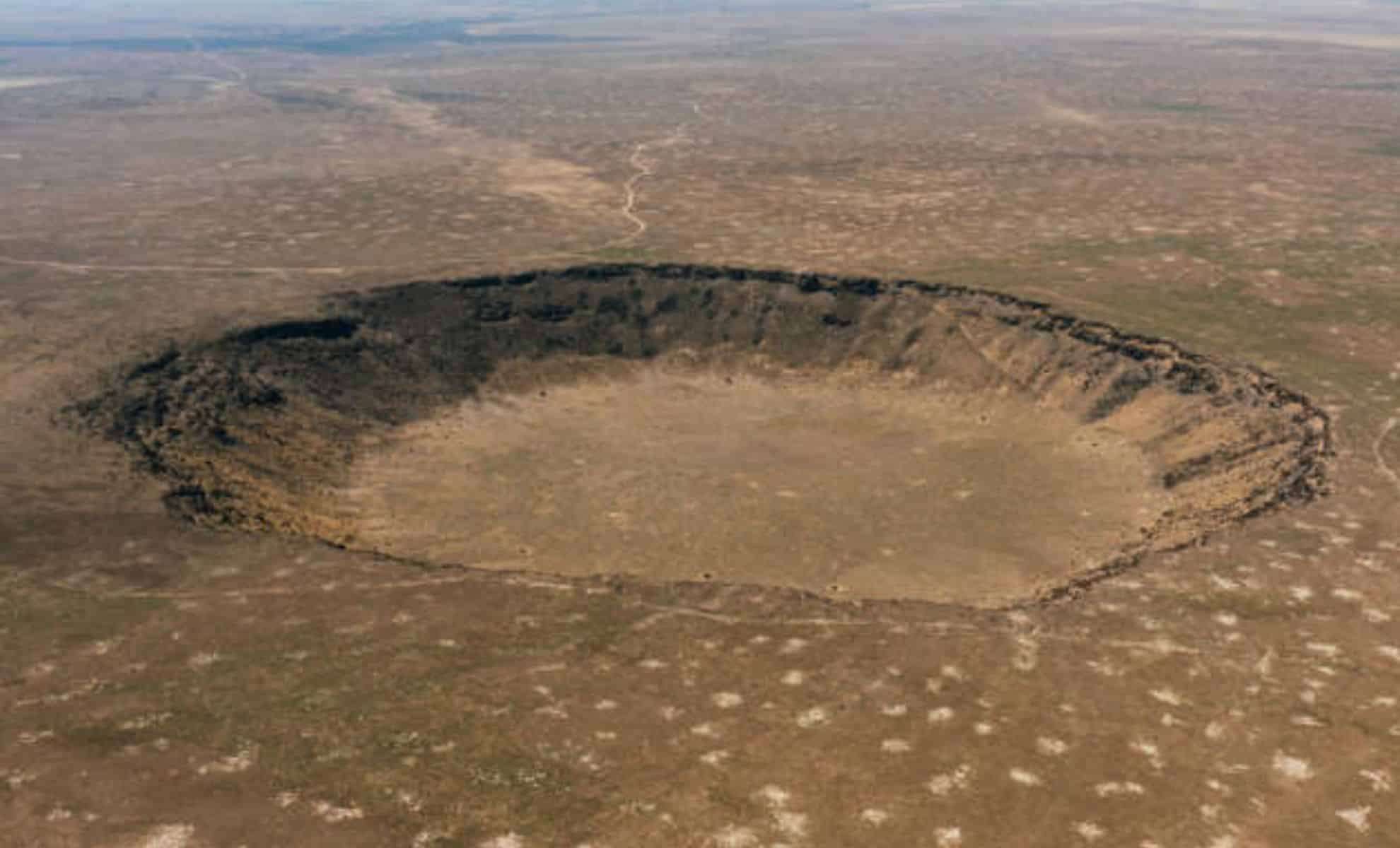
Buried beneath the eastern United States is the Chesapeake Bay impact crater, an immense remnant from a giant asteroid collision that occurred around 35 million years ago. Measuring an impressive 25 miles across, this crater exceeds the Grand Canyon’s size by a factor of three, ranking as the largest impact crater in the U.S. and the 15th largest globally.
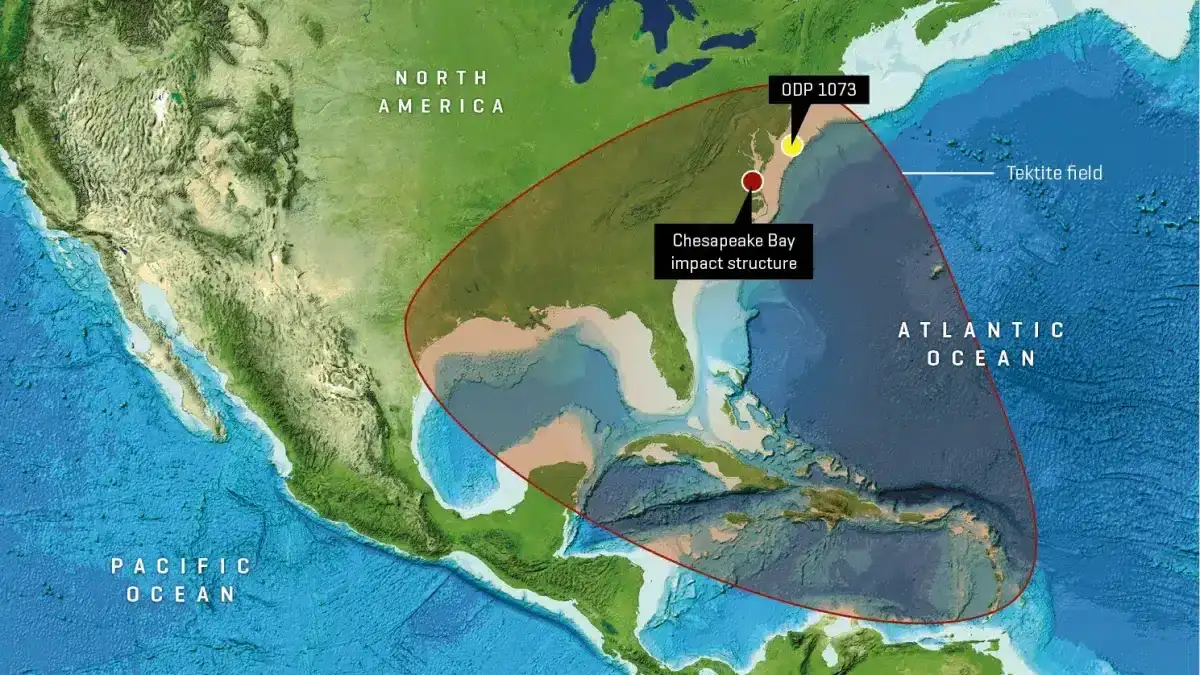
The asteroid strike unleashed catastrophic energy, triggering widespread wildfires, seismic shocks, molten glass precipitation, and a tsunami that dramatically transformed the prehistoric environment. Debris from the explosion was dispersed over an estimated 4 million square miles, forming the so-called North American tektite strewn field, composed of natural glass and shock-altered minerals linked to the impact.
Though discovered through scientific drilling in the early 1990s, the crater’s details remained obscure until a recent investigation leveraged advanced methods to more accurately date its origin and characterize the ejected materials. Scholars from Arizona State University (ASU) and international partners published their results in Meteoritics & Planetary Science, providing fresh insights into the crater’s geological and planetary importance.

Unveiling the Science Behind the Crater
The interdisciplinary team focused on tiny zircon crystals, minerals that capture traces of the extreme pressures and temperatures produced by asteroid impacts. These microscopic crystals, finer than a human hair, were extracted from sediment samples retrieved roughly 250 miles northeast of the crater site in the Atlantic Ocean.
“Central to our work were zirconium silicate crystals found in ocean sediment cores taken nearly 400 kilometers northeast of the impact,” stated Jo-Anne Wartho, a co-author of the study. By applying the uranium-thorium-helium dating technique, a state-of-the-art approach, the researchers could precisely determine the crater’s formation age.
This research highlights the effectiveness of this dating method in examining other impact sites, especially when sample size is limited or when the materials cool rapidly after impact ejection. Lead author Marc Biren noted, “Our findings contribute a valuable tool for the dating of terrestrial impact structures.”
Vital Information About Chesapeake Bay’s Impact Site
The Importance of Studying Impact Events
Asteroid collisions such as the one responsible for forming the Chesapeake Bay crater have played a pivotal role in Earth’s geological and biological evolution. “Obtaining precise and accurate dating of impact events is crucial for understanding our planet’s history,” said Biren.
These impacts have been linked to major changes in evolution and mass extinctions. The renowned 65-million-year-old Chicxulub crater in Mexico, for example, is associated with the demise of the dinosaurs. In a similar way, the Chesapeake Bay impact likely triggered widespread changes to ecosystems, climate, and the geological record.
The study underscores how asteroid impacts have left an enduring mark on Earth's surface and demonstrates the need for ongoing research into their frequency and consequences.
Revealing Clues About Earth’s Geological Past
This breakthrough adds depth to our comprehension of Earth’s complex past. Investigations into the Chesapeake Bay crater and the composition of its ejecta have provided valuable perspectives on the planet's development and its capacity to endure catastrophic events.
“The scientific field increasingly recognizes the fundamental impact of asteroid collisions on Earth’s geological and biological narrative,” Biren emphasized, highlighting how these discoveries contribute to broader planetary science.
As scientists refine their tools and explore further impact sites, the study of craters will continue to reveal crucial details about the forces that have molded Earth. For now, the Chesapeake Bay crater stands as a powerful testament to the planet’s dramatic history and the lasting legacy of asteroid impacts.
This significant finding enhances our understanding of Earth’s past and stresses the importance of preparing for potential future asteroid threats to protect life across the globe for the years ahead.
- Categories:
- News




0 comments
Sign in to Comment