
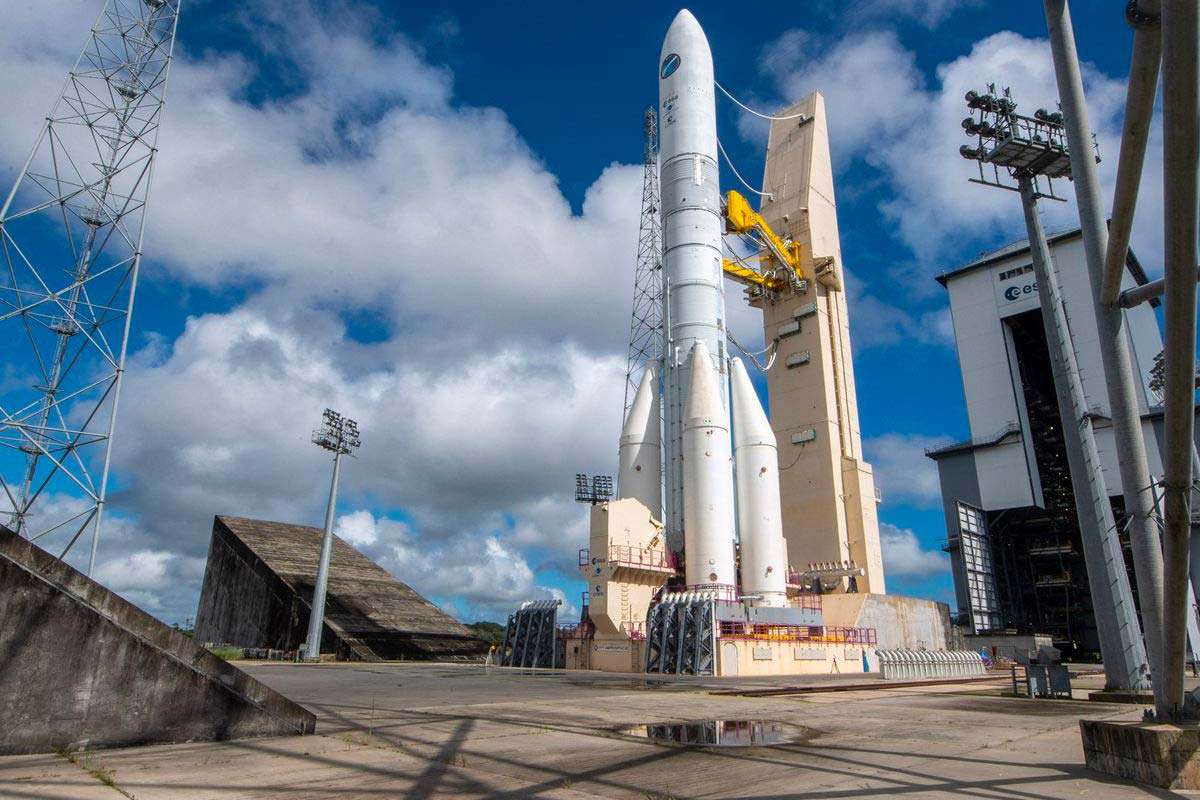
Europe is on the verge of a landmark achievement with the debut launch of the Ariane 6 rocket. In this feature, we explore an in-depth conversation with Toni Tolker-Nielsen, Director of Space Transportation at the European Space Agency (ESA), highlighting the technical progress and challenges encountered during the vehicle's development.
Advancements Over Ariane 5
Engineered to offer enhanced cost efficiency and adaptability, Ariane 6 incorporates notable technological improvements. Its design includes upgraded P120 boosters derived from the P80 units used on Vega rockets, delivering increased thrust and flexibility for a wide range of payloads. Additionally, the rocket is equipped with a Vinci upper stage capable of multiple ignitions, enabling sophisticated mission sequences such as deploying several satellites into different orbits during a single flight.
Cette énorme pince jaune, ce sont les bras cryotechniques qui vont alimenter l'étage supérieur (ULPM) d'#Ariane6 avant son décollage. Imaginez : 20 tonnes et 13 m de long fixés au mât de la table de lancement ! pic.twitter.com/n468RbojW3
Add Cosmo Herald as a Preferred Source— CNES (@CNES) February 5, 2022

Obstacles Faced and Strategic Shifts
The path to Ariane 6’s readiness involved overcoming several technical and strategic hurdles. According to Toni Tolker-Nielsen the interview reveals that developing the cryogenic arm systems and the innovative opto-pyrotechnic mechanisms posed significant engineering challenges. Moreover, changes in funding strategy, including the move toward securing ongoing government subsidies due to market competition and inflationary pressures, were crucial to maintaining Ariane 6’s viability in the launch industry.
Looking Ahead: Upgrades and Market Role
ESA and ArianeGroup plan to continue refining Ariane 6 to keep pace with the dynamic space sector. Potential upgrades may enhance payload limits and improve booster efficiency. As global demand for satellite deployment surges, Ariane 6 is poised to be a cornerstone of Europe’s commitment to independent and flexible space access, supporting both governmental and commercial missions over the coming years.
This new launcher represents Europe’s strategic investment in resilient space transportation, building on Ariane 5’s legacy with modern solutions to the challenges of today’s space environment. With the launch imminent, the global space community awaits to see if Ariane 6 will fulfill its ambitious goals.



0 comments
Sign in to Comment