
A detailed examination of late Ediacaran-aged rocks has revealed fossil evidence indicating that advanced animal groups, including the nearest invertebrate ancestors of humans, might have existed well before the Cambrian explosion.
Published in Science, the research challenges the long-held belief that advanced animal life emerged suddenly. Instead, it proposes that multiple animal lineages were evolving simultaneously with the mysterious organisms that populated Earth's oceans prior to the Cambrian era.
For many years, the Cambrian explosion, occurring about 538 million years ago, has been marked as a landmark period in Earth’s biological history. During this brief geological phase, numerous identifiable animal groups, such as arthropods, echinoderms, and ancestral worms, appeared suddenly in fossil records. The rapidity of this diversification was famously puzzling to Charles Darwin.

The preceding Ediacaran period, spanning approximately 635 to 538 million years ago, remains enigmatic. Fossils from this time often appear as quilted discs, sacs, or flattened shapes without clear links to modern species.
Unveiling the Mystery of the “Bugle Worm”
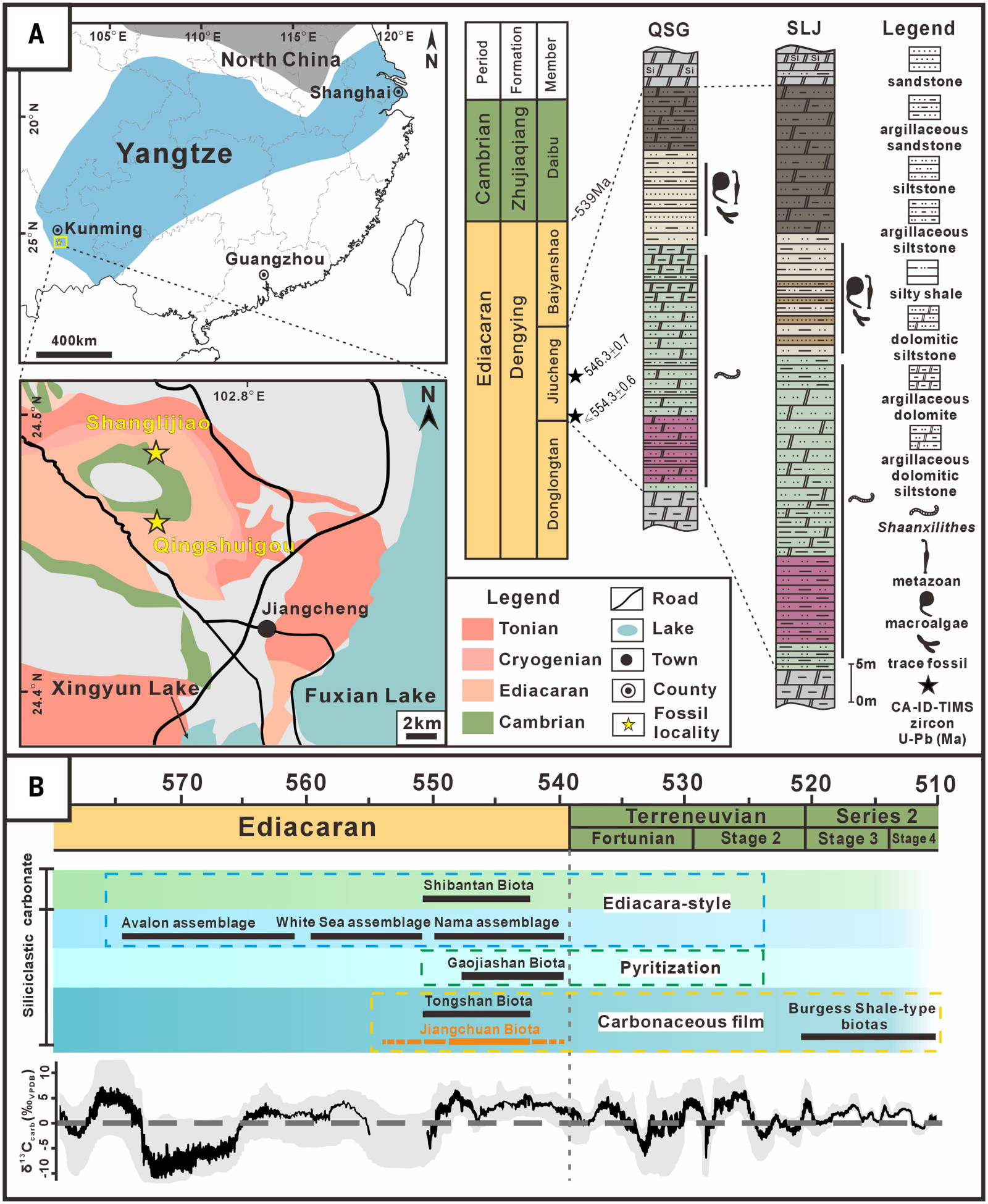
During field research in eastern Yunnan in 2023, Gaorong Li, a Ph.D. candidate at the Yunnan Key Laboratory for Paleobiology, initially sought fossilized algae within the Jiangchuan biota rocks.
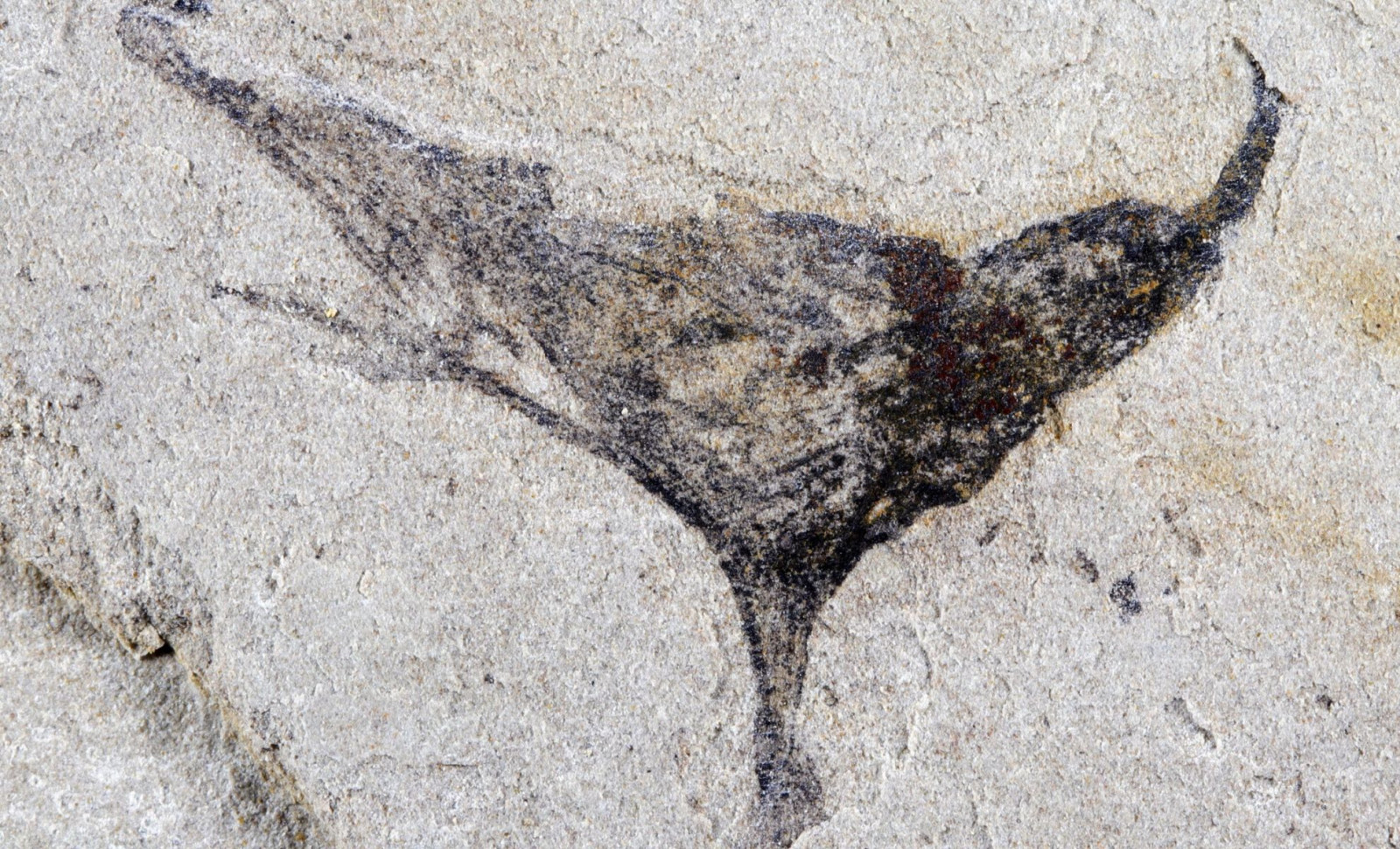
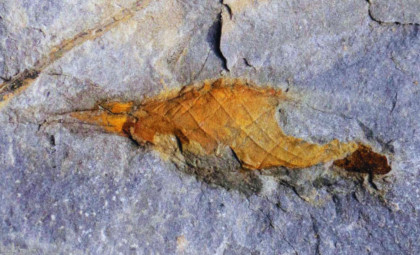
Unexpectedly, the team discovered an unusual worm-like creature anchored to the seabed by a circular attachment. This organism had a proboscis capable of inverting itself to collect food, earning it the nickname “bugle worm.”
The study published in Science revealed that earlier research had recognized only the creature’s anchoring disc and named it Cycliomedusa. The new fossils, showing the full anatomy, exposed a far more intricate morphology than previously known.
Scientists classified the organism as part of a complex group, though its precise taxonomic position remains unresolved. Its body structure was markedly different from contemporary marine life, complicating efforts to classify it even after finding more complete specimens.
Rethinking the Age of Cambrian Lifeforms
Further excavation uncovered that the Jiangchuan biota comprised more than just isolated species. In 2024, an expanded international team including experts from the University of Oxford revisited the site to analyze the fossil assemblage in depth.
They discovered fossils associated with both Ediacaran and Cambrian ecosystems. More surprisingly, some of these creatures had previously only been documented in Cambrian-aged rocks. Among them were early animals resembling Mackenzia, multiple worm-like species, and ctenophores, which are predatory sea creatures commonly called comb jellies.
The coexistence of these forms challenges the sharp division traditionally drawn between the Ediacaran and Cambrian periods. Dr. Luke Parry from Oxford commented:
“This discovery is extremely exciting because it reveals a transitional community: the weird world of the Ediacaran giving way to the Cambrian, the following time period where the animals are much easier to place in groups that are alive today,” adding that: “When we first saw these specimens, it was clear that this was something totally unique and unexpected.”
The fossils from Jiangchuan suggest that complex animal lineages had already begun to develop before the Cambrian explosion's widespread appearance in the fossil record. As noted by University of Oxford researcher Dr. Ross Anderson:
“Our results indicate that the apparent absence of these complex animal groups from other Ediacaran sites may reflect differences in preservation rather than true biological absence.”
Tracing Humanity’s Earliest Invertebrate Ancestors
One of the most notable finds includes fossils related to deuterostomes, the diverse animal group that eventually gave rise to vertebrates, including humans. Several specimens had stalks and tentacle-like appendages closely resembling extinct Cambrian animals called cambroernids. Scientists believe cambroernids share ancestry with modern starfish and acorn worms, the nearest invertebrate relatives of humans alive today.
These fossils extend the timeline for this evolutionary lineage back into the Ediacaran, implying that the early roots of our own lineage might have formed well before the Cambrian explosion.
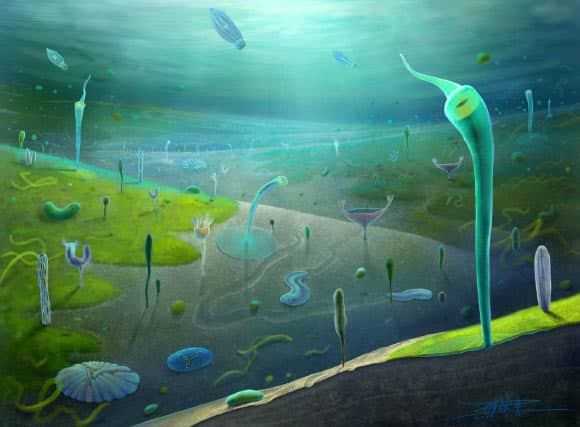
This research also highlights the extended coexistence between complex animal communities and the mysterious Ediacaran organisms. Rather than emerging suddenly, advanced animal life may have evolved through a prolonged transition.
- Categories:
- Science







0 comments
Sign in to Comment