

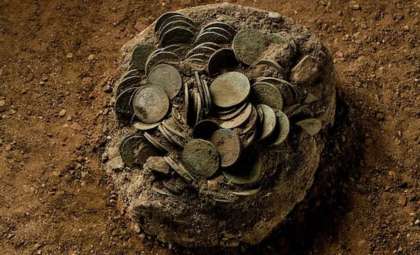
A remarkable collection of gold artifacts, dating back 3,300 years, was discovered in northern Germany, making it one of the most extensive prehistoric gold hoards found across Europe. Known as the Gessel gold hoard, this treasure trove includes 117 items with a total weight exceeding 3.7 pounds. Despite its richness, the reason behind its burial remains elusive.
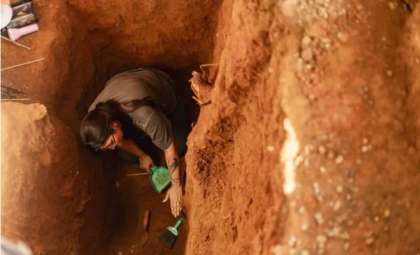
This extraordinary find emerged during pipeline construction work near the village of Gessel, close to Syke, in April 2011. Today, these artifacts are prominently displayed in the Forum Gesseler Goldhort museum.
Originating from approximately 1300 B.C., the hoard provides valuable insight into the wealth and metalworking techniques of the Bronze Age. Its distinctiveness is underscored not only by the volume of gold but also by how the items were intentionally collected and concealed underground.

Despite extensive research, experts have yet to determine who buried this treasure or why it was hidden.
A Discovery That Changes Our Understanding of the Bronze Age
As detailed by Live Science, the Gessel gold hoard was stumbled upon unexpectedly during pipeline installation near Gessel in northern Germany in April 2011. The find instantly attracted attention due to its impressive size, excellent preservation, and the unusual concentration of gold objects all gathered in one spot.
The artifacts had been stored inside a linen pouch fastened with six bronze pins. Unlike typical scattered finds, the hoard was found tightly packed, indicating a deliberate deposit.
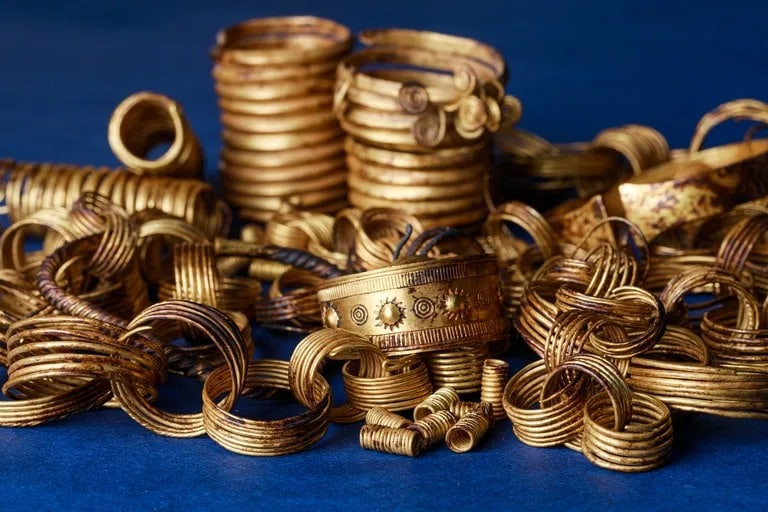
Investigations in the surrounding area revealed no signs of settlement or burial sites from the same era; no contemporary graves, dwellings, or workshops have been located. Due to this lack of context, researchers have mainly analyzed the artifacts themselves to infer the hoard’s purpose, potential ownership, and reasons for remaining hidden for over three millennia.
Gold Objects Likely Served as Currency, Not Jewelry
The bulk of the hoard consists of spiral rings. Archaeologists documented 82 spiral rings arranged into eight chains of ten rings each and one smaller chain of two rings, along with 32 separate spiral pieces of varying dimensions. Research suggests these spirals functioned as a form of currency during the Middle Bronze Age rather than ornamental jewelry. Prehistoric expert Babette Ludowici also highlighted that the gold was likely recycled material.
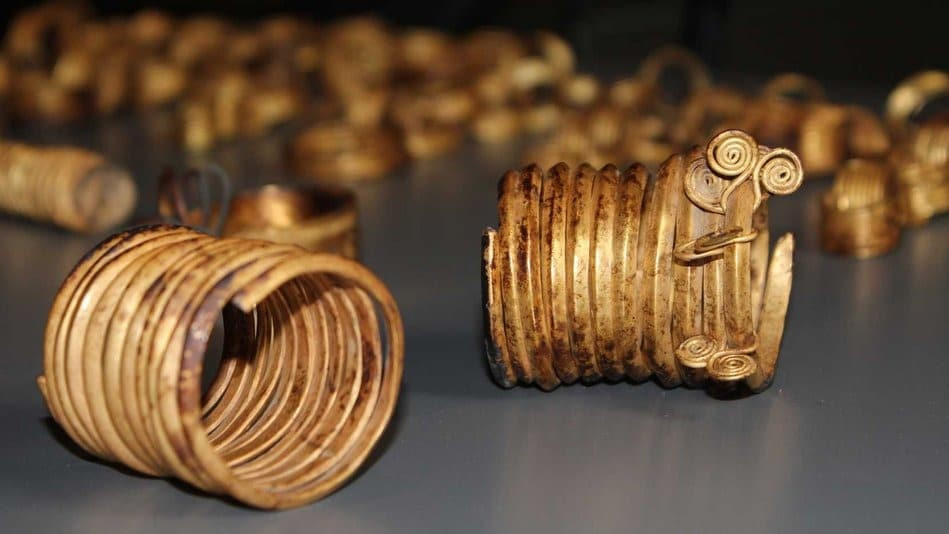
Only three individual items were clearly ornamental: a large gold bracelet, a twisted armlet, and a decorative brooch. The bracelet and armlet appear to be incomplete, whereas the brooch reflects intricate workmanship, featuring a ladder-band pattern, five elevated sun motifs, and six clusters of concentric circles embossed on its surface.
The Enigmatic Brooch and the Reasons Behind Burial
The brooch originally measured about 6.3 inches long. Prior to burial, it was deliberately bent and its pin removed. A 2012 investigation cited in the original source identified this piece as the only known ancient gold brooch found in Central Europe.
The way the objects were arranged is critical to interpreting the deposit. Archaeologist Stefan Winghart proposed that the close grouping and intentional bending of certain artifacts indicate a carefully curated hoard, rather than a hasty hiding.
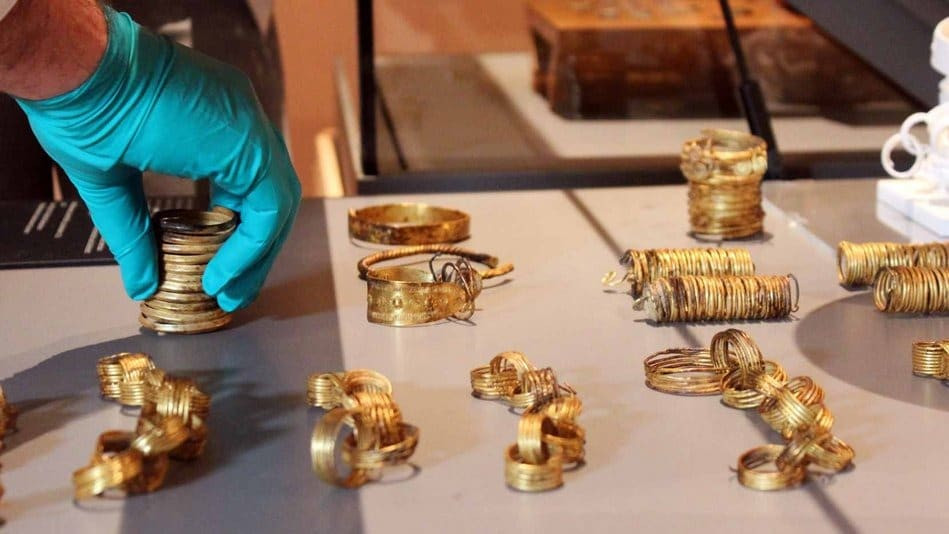
The mystery endures, with experts hypothesizing that the collection might represent a personal treasure or belong to a metalsmith. A new research initiative announced for spring 2026 aims to trace the gold’s origins, with early analyses pointing toward Central Asia. Scholars hope to shed light on the hoard’s owner and uncover the motives behind its concealment more than 3,000 years ago.
- Categories:
- News









0 comments
Sign in to Comment